EN
EN


What Is a Lorry Mounted Crane? Applications, Key Components and How It Works
Imagine you need to deliver a set of steel beams to a mid-rise construction site, narrow street, no overhead crane, no forklift access. This is exactly the scenario where a crane lorry earns its place. Combining a transport truck with a built-in hydraulic lifting arm, a lorry mounted crane lets a single vehicle handle both delivery and placement in one trip. For first-time buyers, understanding what this machine actually is, and what separates a good one from a basic one, starts with its definition, core components, and real-world applications.
What Is a Lorry Crane?
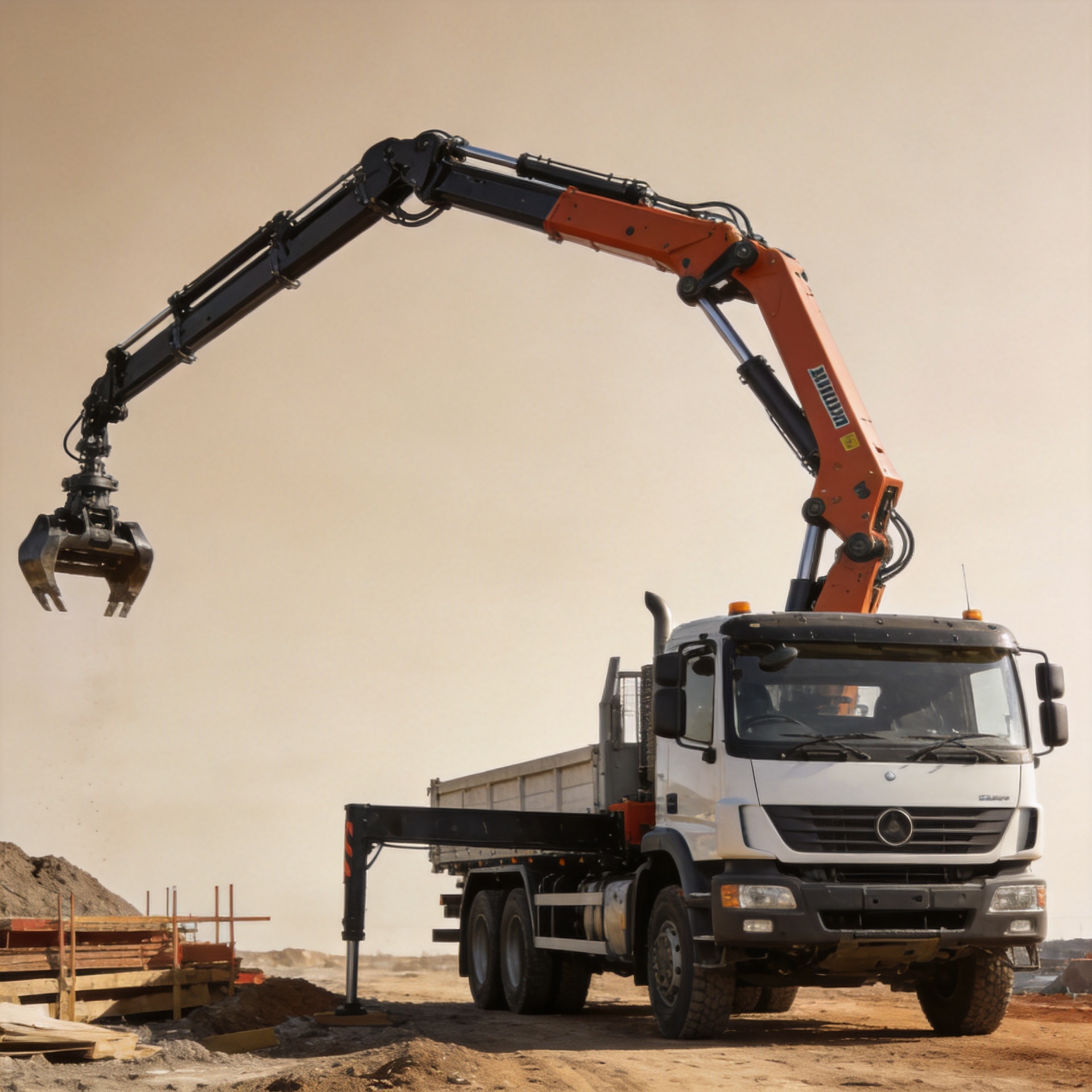
A crane lorry (also called a lorry mounted crane, truck-mounted crane, or boom truck) is a commercial truck fitted with a hydraulic crane mounted directly onto the chassis, typically behind the cab or over the rear axle. The crane unit and the truck work as a single integrated system: the truck provides mobility and payload capacity, while the crane handles loading, unloading, and placement of heavy or bulky goods.
It is worth noting a common point of confusion: a crane lorry is not the same as a dedicated mobile crane. While both can travel on public roads, a dedicated mobile crane is built specifically for crane operations and has limited cargo-carrying ability. A lorry mounted crane, by contrast, is first and foremost a transport vehicle, the crane is a working tool that eliminates the need for a separate lifting machine at the destination. This dual-purpose design makes the crane lorry attractive for construction logistics, manufacturing delivery, and port handling scenarios.

Key Components of a Lorry Mounted Crane
When evaluating a crane truck mounted unit, it helps to break the system into three functional groups: the boom, the hydraulic drive, and the ground stabilization system. Focusing only on the payload rating, without understanding how these three components interact, is a common mistake that leads to mismatched crane lorry purchases.
1. Boom Types: Telescopic (Straight Arm) vs. Knuckle Boom (Folding Arm)
The boom is the extending arm that does the actual lifting work. Two main configurations exist for a lorry mounted crane:
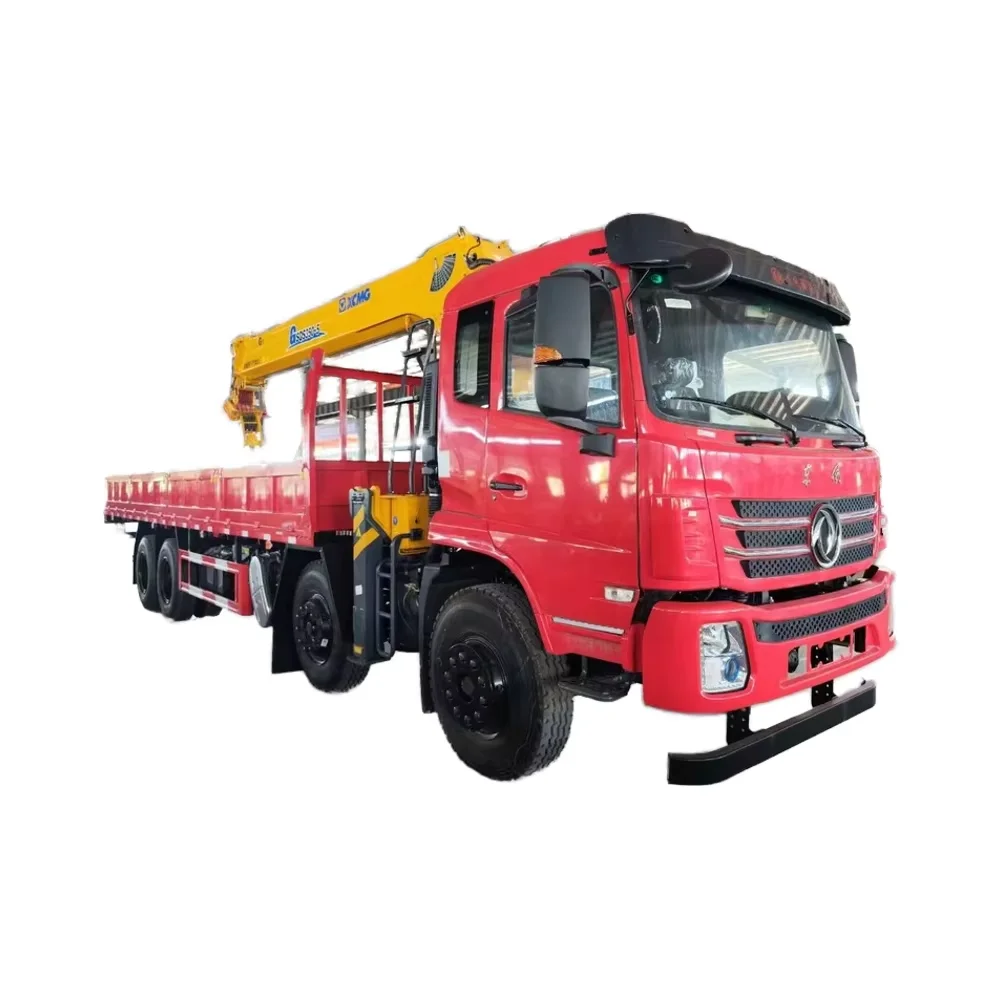
- Telescopic (straight arm) boom: Sections slide outward along a single axis, like a retractable antenna. This design offers maximum vertical reach and a predictable straight-line lift path. It suits tasks where loads need to be lifted directly overhead, for example, placing building materials onto scaffolding floors. Boom lengths on standard lorry cranes typically extend from around 8 m to over 20 m when fully deployed.
- Knuckle boom (folding arm): The arm bends at one or more joints, allowing it to fold compactly when not in use and articulate around obstacles when working. This makes the crane lorry highly effective in tight urban environments or when the load needs to reach over a wall or parked vehicles. Knuckle booms are common on lorry mounted cranes used for building material deliveries in congested city centers.
The right choice depends on where and how the crane lorry will be used, not simply which boom length looks most impressive on paper.
2. Hydraulic System
Every movement a crane lorry makes, extending the boom, rotating the slewing ring, raising or lowering the hook, is powered by the hydraulic system. This system draws power from the truck's engine via a power take-off (PTO) unit, converting mechanical rotation into pressurized hydraulic fluid that drives each actuator.
The hydraulic system's working pressure, pump capacity, and fluid temperature management directly affect lift precision and sustained performance. A common real-world issue with lower-specification lorry crane units is hydraulic performance drop during extended continuous operation, the kind of situation that does not show up in a spec sheet rated at standard ambient temperature and short-duration cycles.
3. Outriggers (Stabilizer Legs)
Outriggers are retractable support legs that extend horizontally and then press vertically into the ground before lifting begins. Think of them as a temporary tripod that converts a narrow-track crane lorry into a wide, stable platform. When fully deployed, outriggers can double or triple the effective support base of the vehicle, preventing tipping under off-center or maximum-capacity loads.
Without properly deployed outriggers on firm, level ground, even a correctly rated lorry mounted crane can be unsafe to operate at its stated capacity. Ground conditions at the destination are as important as the rated lifting tonnage, this is one detail that experienced operators consistently evaluate before positioning the crane lorry.
How Does a Lorry Mounted Crane Work?
The operating sequence of a typical crane lorry follows a consistent pattern:
- Position and stabilize: The driver parks the lorry crane at the intended lift zone and deploys the outriggers onto prepared ground or outrigger pads.
- Engage the PTO: The engine-driven power take-off is engaged, routing hydraulic power to the crane unit.
- Rig the load: Slings, hooks, or specialized attachments are connected to the load.
- Lift and position: The operator uses controls, typically at the side of the truck body or via a remote pendant, to extend the boom, slew (rotate), and raise or lower the hook until the load reaches its destination.
- Retract and move: After placement, the boom is folded or retracted, outriggers are stowed, and the crane lorry can proceed to the next stop.
The entire sequence can typically be completed by a two-person crew, driver and operator, which is one reason lorry mounted cranes are cost-effective for multi-drop construction supply routes.
Common Applications of a Crane Lorry
The versatility of the lorry mounted crane means it appears across several industries:
- Construction materials transport: Delivering and placing structural steel, precast concrete panels, roofing trusses, and window frames directly where the site crew needs them, without a separate mobile crane booking.
- Machinery and equipment installation: Moving industrial machinery, generators, transformers, or HVAC units onto factory floors, rooftops, or into basement plant rooms where fixed cranes cannot reach. A crane lorry is often the only practical solution for confined-space lift requirements.
- Port and logistics operations: Loading and unloading heavy cargo, marine equipment, and oversized pallets at smaller ports or inland container yards that lack gantry cranes.
- Utility and infrastructure work: Positioning utility poles, pipe sections, and road infrastructure components during maintenance or new-build projects.
Choosing the Right Lorry Mounted Crane
When evaluating a crane lorry purchase, resist focusing solely on maximum rated capacity. The more relevant questions are: What is the working radius at your typical lift distance? What are the actual ground conditions at your sites? Does the boom type match your access constraints?
CLW Trucks manufactures a range of lorry mounted cranes suited to different payload and reach requirements. The Dongfeng 12 Ton Hydraulic Telescopic Boom Mounted Crane is designed for construction and transport applications requiring reliable vertical reach and efficient telescopic straight-arm operation. For operations requiring both knuckle-boom versatility and a Euro 5-compliant heavy-duty chassis, the Beiben 6x4 Lift Stiff Crane Truck with Straight Knuckle Telescopic Boom offers a purpose-built 6x4 platform suited to demanding export markets.
Understanding the three component groups — boom, hydraulic system, and outriggers — and matching each to actual job site requirements will put any first-time buyer in a much stronger position when comparing crane lorry specifications and maximizing the return from the investment.