EN


Small Truck Refrigeration Units: What Buyers Should Compare
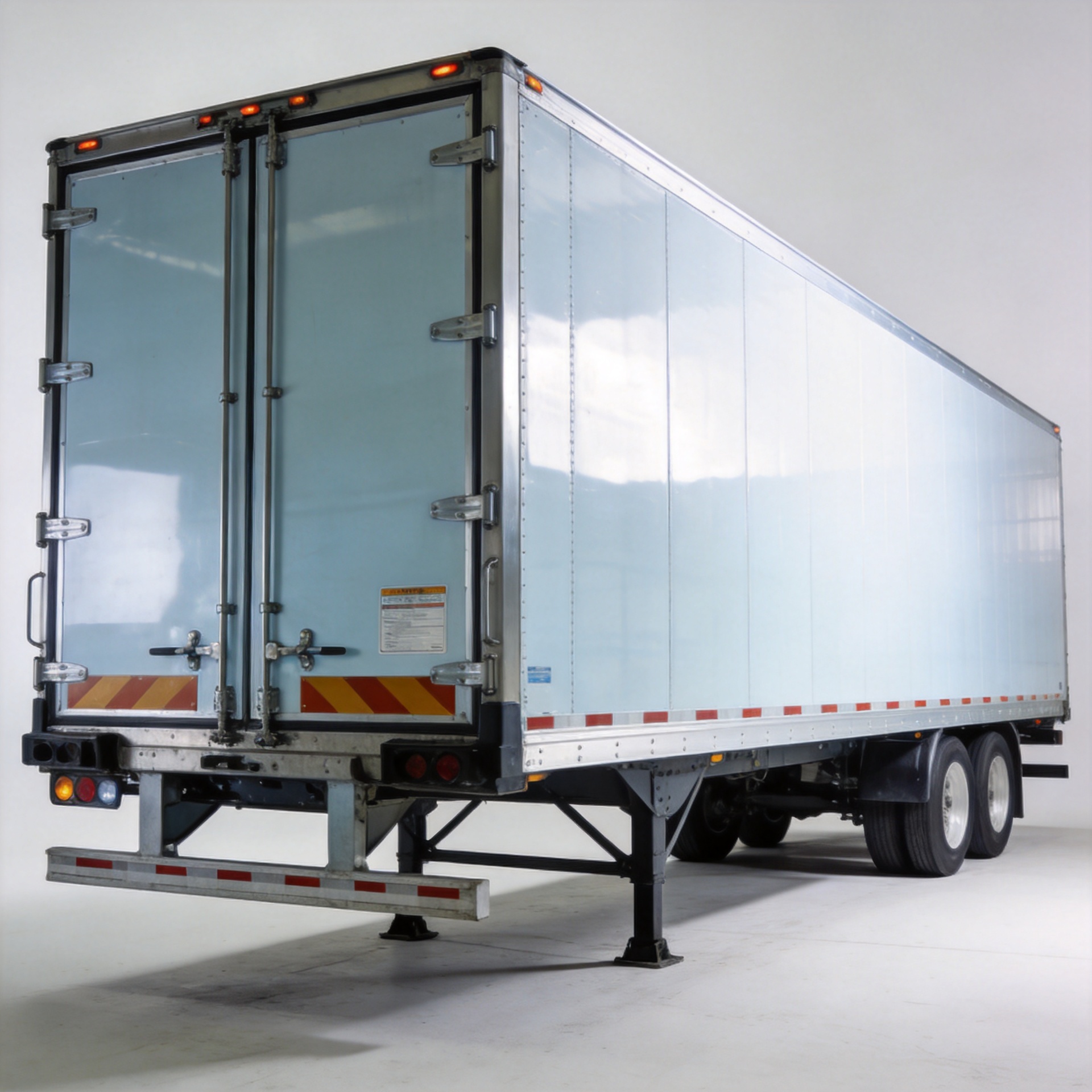
Buying small truck refrigeration units is not simply a matter of choosing the lowest quoted capacity or the most familiar brand. In cold-chain transport, the unit, insulated body, cargo, route, driver routine, and service plan work as one system. A unit that looks adequate on a quotation can still struggle if the box loses heat quickly, doors open often, or the vehicle makes repeated urban stops.
For food operations, the required temperature depends on the product and local rules. As a general food-safety reference, the FDA advises keeping refrigerated food at or below 40°F (4°C) and freezer temperature at 0°F (-18°C). Buyers should confirm the actual setpoint, pull-down expectation, and compliance requirements for each load before comparing equipment.
For procurement teams, small truck refrigeration units should therefore be compared as part of a cold-chain package rather than as a standalone appliance. That framing makes it easier to identify a proposal that fits the route instead of merely looking attractive on paper.
Start With the Temperature Job, Not the Unit Nameplate
The first comparison should be the temperature duty: chilled distribution, frozen delivery, mixed loads, or a route that needs rapid recovery after many door openings. Small truck refrigeration units may all be described as “refrigeration,” but their useful performance changes with ambient heat, product loading temperature, insulation quality, air circulation, and stop frequency.
- Chilled distribution: prioritize stable control around the product’s approved range and quick recovery after deliveries.
- Frozen transport: compare the ability to pull down and hold lower temperatures under the intended route conditions.
- Mixed or multi-drop work: ask whether the operating plan needs separate zones, partitions, or a revised loading sequence.
Many buyers focus only on a rated cooling figure. The more useful question is whether the proposed refrigeration system can maintain the target condition in the actual body, with the planned payload and door-opening pattern. That is the difference between a catalog comparison and a workable cold-chain specification.
Before asking suppliers to quote small truck refrigeration units, document the daily operating profile in writing. A shared operating brief reduces the chance that each supplier sizes a different job and produces proposals that cannot be compared fairly.
Match Capacity to the Cargo Box and Heat Load
When comparing small truck refrigeration units, request a clear match between the unit and the vehicle body. Insulation and compartment airtightness help limit heat entering a refrigerated truck or van, so unit capacity should not be reviewed in isolation. A larger unit does not automatically solve a poorly insulated body, and an oversized configuration can add acquisition cost, fuel use, weight, and maintenance burden.
Give each supplier the same operating brief: interior dimensions, insulation construction, expected ambient range, target setpoint, payload type, loading temperature, number of daily stops, and planned route duration. Then ask how the recommendation changes if the route becomes hotter, longer, or more delivery-intensive. This makes the comparison more meaningful than comparing headline capacity alone.
Compare Direct-Drive and Independent Operation by Route Pattern
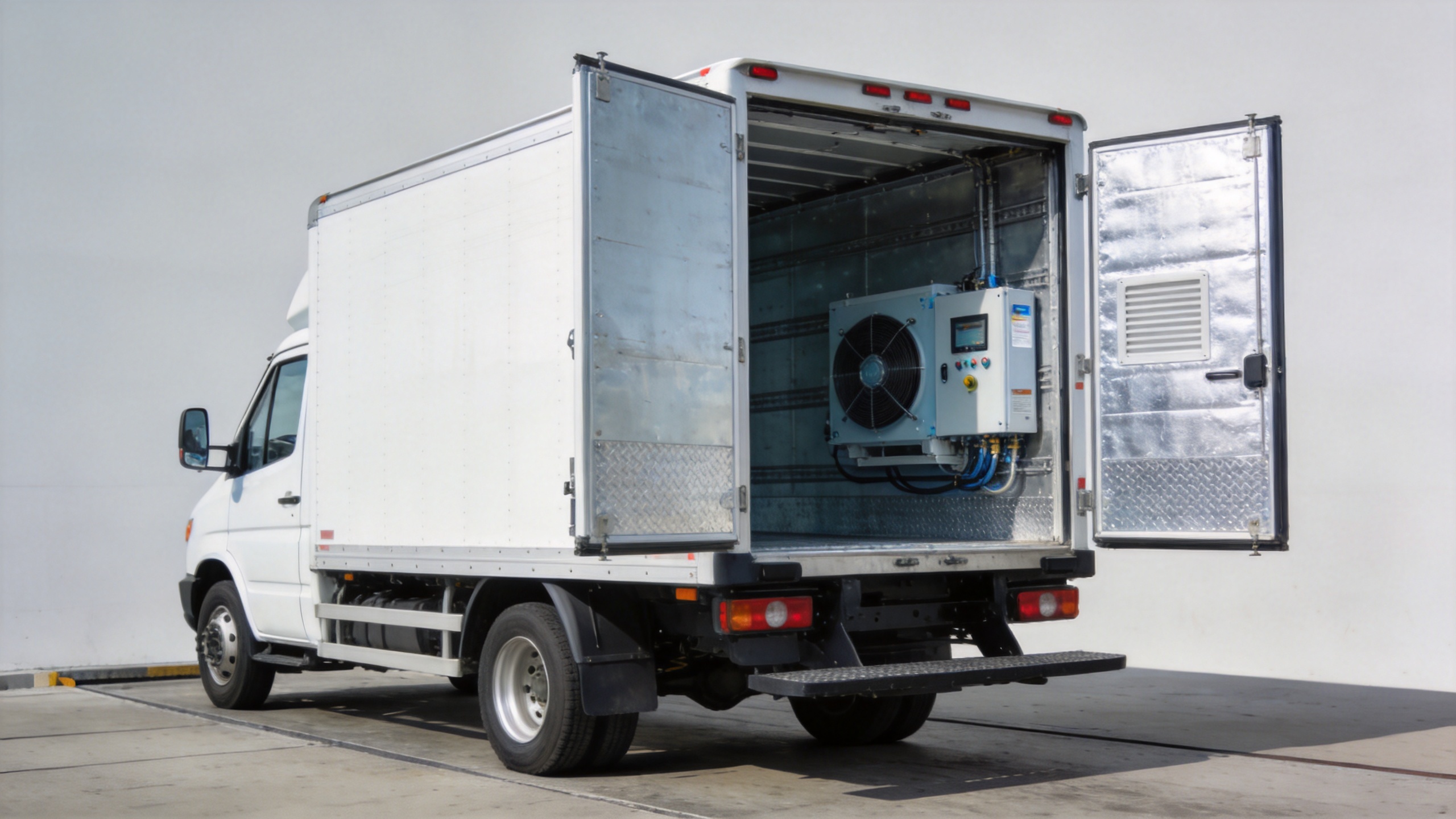
Direct-drive systems generally use vehicle power while the engine is running, whereas independent systems have their own power arrangement. Neither approach is automatically better. The practical choice depends on how the truck works.
| Comparison point | Direct-drive approach | Independent-operation approach |
|---|---|---|
| Typical fit | Routes where the vehicle is moving for most of the cooling duty | Operations needing cooling while parked or during extended loading |
| Key question | Will engine-on time cover the required cooling cycle? | How will fuel, service, noise, and operating permissions be managed? |
| Procurement focus | Vehicle integration, engine load, and route discipline | Runtime planning, maintenance support, and parking-site conditions |
A common mistake is to buy a configuration based on peak capacity without testing the duty cycle. For example, a multi-stop urban route may create more heat ingress than a longer highway route because each delivery opens the insulated space. If your priority is uninterrupted temperature control during loading, evaluate that condition directly rather than assuming road-running performance will translate to stationary operation.
Small truck refrigeration units also need enough practical control for the people who load, drive, and receive the cargo. A sophisticated option that cannot be checked consistently during a busy route may add complexity without reducing operational risk.
Evaluate Airflow, Control, and Verification Together
Cooling capacity alone does not prove that every part of the load sees the required temperature. Buyers should ask about evaporator placement, air-return paths, loading practices, and whether pallets or cartons can block circulation. Good airflow supports more consistent cargo conditions; it also makes routine temperature verification easier to interpret.
Temperature sensors or data loggers are worth comparing as part of the operating system. They help teams track conditions during transport and investigate excursions. Confirm what is measured, where sensors are placed, how records are retrieved, and who is responsible for responding when an alarm occurs. This is especially relevant for distribution teams that must document handling for customers or internal quality processes.
When comparing small truck refrigeration units, ask suppliers to state exactly what is included in the price: the refrigeration equipment, installation, body integration, commissioning, operator instruction, and the documents available at handover. This avoids treating an incomplete scope as a lower-cost equivalent.
Look Beyond Purchase Price to Uptime and Serviceability
For a small fleet, one refrigerated truck out of service can disrupt an entire delivery day. Compare spare-parts availability, diagnostic access, training needs, warranty scope, and the response process in the regions where the truck will operate. The lowest purchase price can become expensive if a routine repair leaves a vehicle idle while cargo commitments continue.
Ask suppliers to separate the initial vehicle price from the ongoing cost drivers: preventive maintenance intervals, consumables, fuel or energy use, likely wear items, and service reach. If you are sourcing a complete vehicle rather than only a unit, also check whether the refrigerator body, chassis, and refrigeration installation have a clear responsibility boundary after delivery.
A disciplined comparison of small truck refrigeration units also protects the buyer from making a decision on a single attractive specification. The unit must work through the hottest expected day, the busiest stop pattern, and the service conditions of the intended market.
Use a Comparable Procurement Checklist
To make proposals comparable, give every supplier the same checklist:
- Required cargo temperature range and permitted tolerance.
- Body dimensions, insulation specification, and door configuration.
- Payload, loading temperature, ambient conditions, and stop frequency.
- Expected driving and parked-cooling time.
- Airflow layout, controls, alarms, and temperature-recording needs.
- Service coverage, parts lead time, warranty, and maintenance plan.
- Total delivered configuration, including the body, installation, and handover documentation.
This format prevents a supplier from appearing stronger simply because the proposal contains more headline specifications. It keeps the decision focused on whether the system fits the job.
For buyers comparing small truck refrigeration units within a complete vehicle program, it is useful to review the refrigerated body, chassis, and cooling arrangement as one procurement package. The final configuration should be confirmed against the buyer’s cargo and route data.
A Practical Vehicle Option to Review
Buyers seeking a complete refrigerated-transport vehicle can review the available 4x2 LHD 5 TONS Diesel Refrigerator Truck for Frozen Meat Transport as one starting point for a vehicle-level discussion. Before ordering, confirm the final temperature requirement, body configuration, operating environment, and after-sales scope against your own route plan.
In practice, small truck refrigeration units deliver value when the specification translates into stable cargo conditions and predictable fleet uptime. That is why the comparison should be based on operating evidence and support terms, not just a capacity figure.
Choose the System That Fits the Route
A suitable small truck refrigeration units configuration is not necessarily the largest or lowest-priced option. They are the units that match the cargo’s temperature requirement, the insulated body, the real route, and the team’s ability to maintain and monitor the vehicle. Start with the operating profile, compare proposals on the same inputs, and treat serviceability as part of cooling performance—not an afterthought.