EN

Tilt and Slide Recovery Truck: When Is This Design Suitable?
A tilt and slide recovery truck is most useful when a recovery team needs to load a disabled vehicle onto a flat deck with controlled geometry rather than tow it with its driven wheels on the road. The body tilts and slides rearward to create a loading surface; the exact approach, deck height, winch capacity, and payload depend on the chosen vehicle and body specification.
For fleet managers, road-assistance companies, and distributors, the better question is not simply “is a tilt and slide body versatile?” It is: which calls make its lower, ground-oriented loading method worth the investment? The answer depends on the vehicle mix, access conditions, daily recovery volume, and the operator’s ability to secure each load correctly.
How the Tilt-and-Slide Loading Method Changes Recovery Work
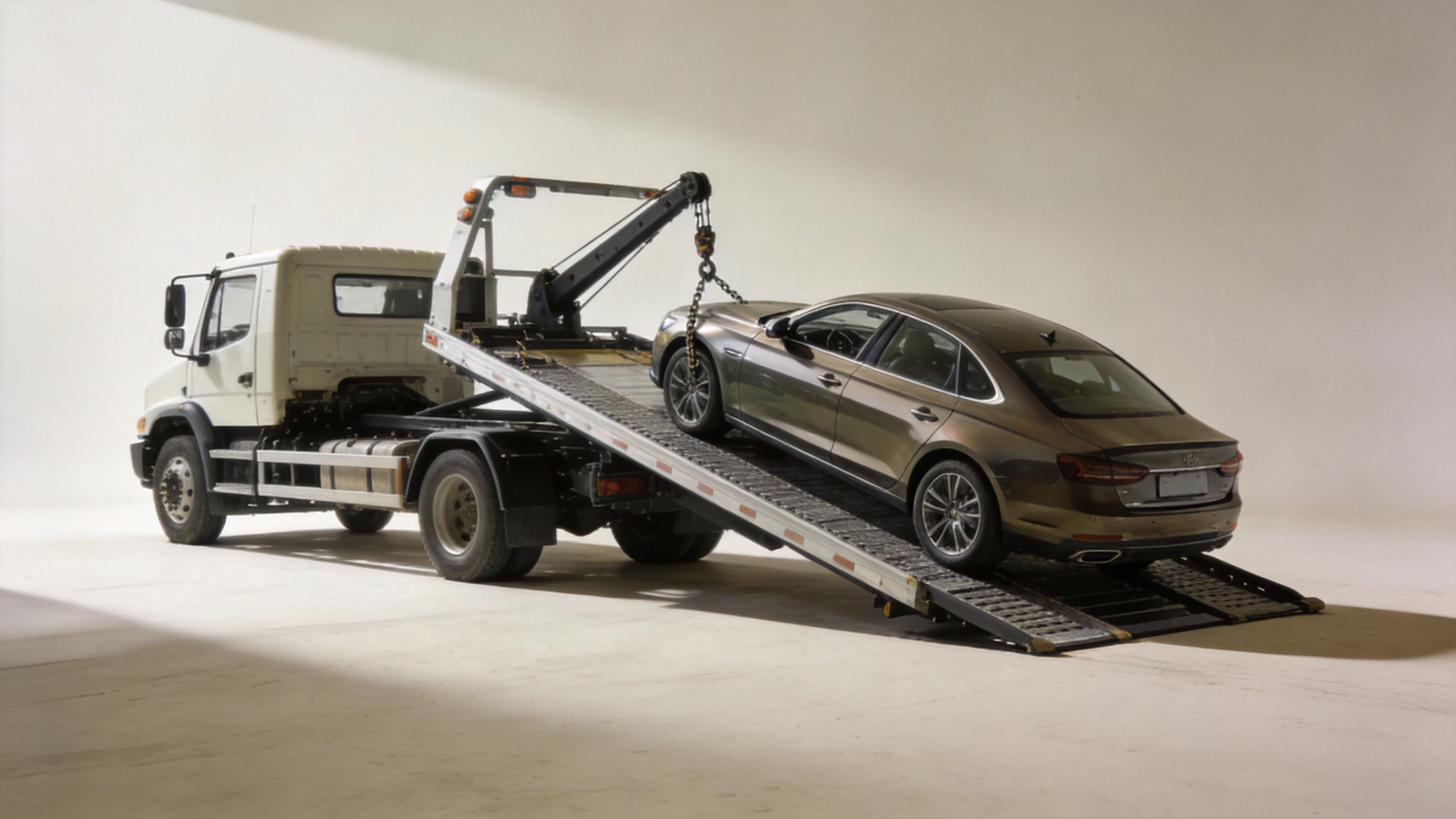
With a conventional tow arrangement, part of the casualty vehicle may remain on its own wheels. That can be practical for straightforward, short-distance moves, but it may not be the preferred method when a vehicle should be carried fully. A tilt and slide recovery truck instead brings the deck down and rearward, then uses the winch and approved attachment points to draw the vehicle onto the platform.
That sequence is particularly valuable when the operator needs a gradual loading path. It can reduce the risk of contact at the front or rear of a low-clearance vehicle, provided the actual deck angle, ramp arrangement, and ground conditions are suitable. In practice, a low approach is a configuration question—not a promise that every sports car, modified vehicle, or damaged vehicle can be loaded without assessment.
For buyers comparing recovery bodies, this shifts the evaluation away from a brochure’s peak ratings alone. Check how the body behaves on uneven shoulders, how far it projects when sliding, how the winch line is managed, and how operators will secure different wheelbases. Those details affect turnaround time and damage-control procedures on real calls.
Suitable Scenarios for a Tilt and Slide Recovery Truck
1. Low-clearance passenger cars and performance vehicles
A tilt and slide recovery truck is often a sensible choice for cars with low spoilers, long overhangs, lowered suspension, or limited underbody clearance. A flatter loading path can make the operation more controlled than pulling the car up a steeper deck or lifting from a point that is not appropriate for the vehicle. The operator should still inspect tyre condition, suspension damage, ground clearance, and approved towing points before loading.
2. All-wheel-drive, four-wheel-drive, and EV recovery
Full-deck transport can be a useful option for AWD, 4WD, and electric vehicles when the recovery plan calls for keeping all wheels off the road. It also provides a more contained arrangement when drivetrain condition is unknown after a breakdown or collision. The body itself does not replace the vehicle manufacturer’s recovery guidance: operators must follow the applicable instructions for parking brakes, tow mode, high-voltage precautions, and approved connection points.
3. Accident-damaged or non-running vehicles
When a casualty cannot drive, cannot roll freely, or should not be moved with one axle on the ground, a winch-assisted deck is a strong operational fit. The tilt-and-slide arrangement gives the team a defined surface for loading and securing the vehicle. However, severe wheel, steering, suspension, or body damage may require skates, dollies, lifting equipment, traffic management, or an alternative recovery method. A tilt and slide recovery truck expands options; it does not make every damaged vehicle a routine winch pull.
4. Multi-use roadside assistance fleets
For a company responding to a mixed stream of passenger-car breakdowns, dealer transfers, workshop moves, and light commercial recoveries, the design can provide a useful common platform. The key is to match the deck payload and usable deck length to the heaviest and longest vehicles the team expects to carry—not merely the most common call. A body selected around a compact-car workload may not be appropriate for a fully loaded van or a heavier commercial vehicle.
5. Vehicle transport where reduced handling matters
A flat deck can also suit movements where the vehicle needs to arrive in broadly the same condition in which it was collected: post-repair transfers, dealership movements, auction collection, or specialist transport. The benefit is not that loading becomes automatic. It is that the recovery process can be planned around a stable carrying surface, suitable restraint equipment, and a documented inspection before departure.
When Another Recovery Method May Be Better
It is easy to treat a slide-bed body as the universal answer, but it is not. Tight urban access can limit how far a deck can slide rearward. Soft verges, steep cambers, very heavy casualties, or a location with inadequate space can call for another vehicle, additional equipment, or a staged recovery. Similarly, a wheel-lift or underlift configuration may be more efficient for certain quick relocations when the casualty type and local rules allow it.
The practical decision tree is simple: assess the casualty’s condition, confirm its dimensions and weight, examine the recovery area, then choose the loading method. Do not reverse that order because a particular truck is already dispatched.
What B2B Buyers Should Specify Before Ordering
For consideration-stage procurement, a useful specification conversation starts with work patterns rather than a generic “flatbed wrecker” label. Ask suppliers to address:
- Payload and axle loading: What vehicle classes can be carried within legal limits after the body, tools, crew, and fuel are accounted for?
- Deck length and usable width: Will the deck accommodate the wheelbases and track widths seen in the service area?
- Loading geometry: What is the actual loading angle in the proposed configuration, and what accessory options are available for low-clearance work?
- Winch and restraint plan: Are winch capacity, line routing, tie-down points, and restraint equipment appropriate for the intended vehicle types?
- Chassis and local compliance: Can the chassis, axle arrangement, lighting, and body configuration be matched to the destination market and operating rules?
- Serviceability: Can the operator obtain hydraulic, electrical, and body-service support where the truck will work?
These questions also help separate a genuine operational specification from a price-only comparison. A lower purchase price can lose its advantage if the body cannot handle the planned vehicle mix or remains off the road while key components are unavailable.
A Practical Starting Point for Flatbed Recovery Procurement
CLW manufactures special-purpose vehicles and can discuss body and chassis matching around a buyer’s intended recovery work. For a light-to-medium flatbed recovery application, the Dongfeng 4x2 flatbed wrecker for recovery and repair work is a relevant starting point for reviewing a real product category. Before specifying any unit, confirm the exact configuration, legal payload, optional equipment, and local operating requirements with the supplier.
Conclusion: Choose the Design for the Work, Not the Label
A tilt and slide recovery truck is particularly suitable for controlled full-deck loading of low-clearance cars, drivetrain-sensitive vehicles, non-running casualties, and mixed roadside-assistance workloads. Its value comes from the loading method and the operational flexibility it can provide. The final choice should be based on the actual vehicle mix, recovery environment, payload requirement, operator procedure, and after-sales support—not on the assumption that one deck design fits every job.