EN

How Do Municipal Garbage Trucks Support Waste Collection Operations?
A municipal garbage truck is more than a vehicle that moves waste from one location to another. It is a working link between households, commercial collection points, transfer stations, and treatment facilities. For public-service managers, the useful question is not simply whether a truck can carry refuse. It is whether the municipal garbage truck fits the collection method, route conditions, crew workflow, and maintenance capacity of the service area.
In a typical collection cycle, a municipal garbage truck receives waste, keeps it contained, reduces its volume when a compaction body is used, and transports the load for unloading. That sequence sounds straightforward, yet each stage affects route productivity, operator safety, neighborhood cleanliness, and the number of trips a fleet must make. This article explains the operational role of a municipal garbage truck, with particular attention to rear-loading compactor configurations and PLC-assisted hydraulic control.
What a Municipal Garbage Truck Does During a Collection Route
The core task of a municipal garbage truck is to collect municipal solid waste and move it safely to the next point in the waste-management chain. Depending on the local service model, a municipal garbage truck may receive bags manually, lift wheeled bins, work with a side-loading device, or operate as a rear loader at communal collection points. The loading method should match the container system and the available working space, rather than being selected only by body volume.
After waste enters the hopper, a compactor-style municipal garbage truck uses the body mechanism to move material into the enclosed container area. This helps the crew continue collecting without stopping after every small load. Enclosure also matters: it supports cleaner transport and reduces the chance that loose material escapes during travel. At the end of the route, the same municipal garbage truck must unload in a controlled manner that suits the receiving facility.
For municipal planners, it helps to view the vehicle as part of a system. Collection frequency, bin sizes, street width, transfer-station access, and crew practices all influence how effectively a municipal garbage truck can work. A large body can be useful on long routes, but it may be less practical where turning room, bridge limits, or narrow streets constrain access.
Why Compaction Matters for Waste Collection Efficiency
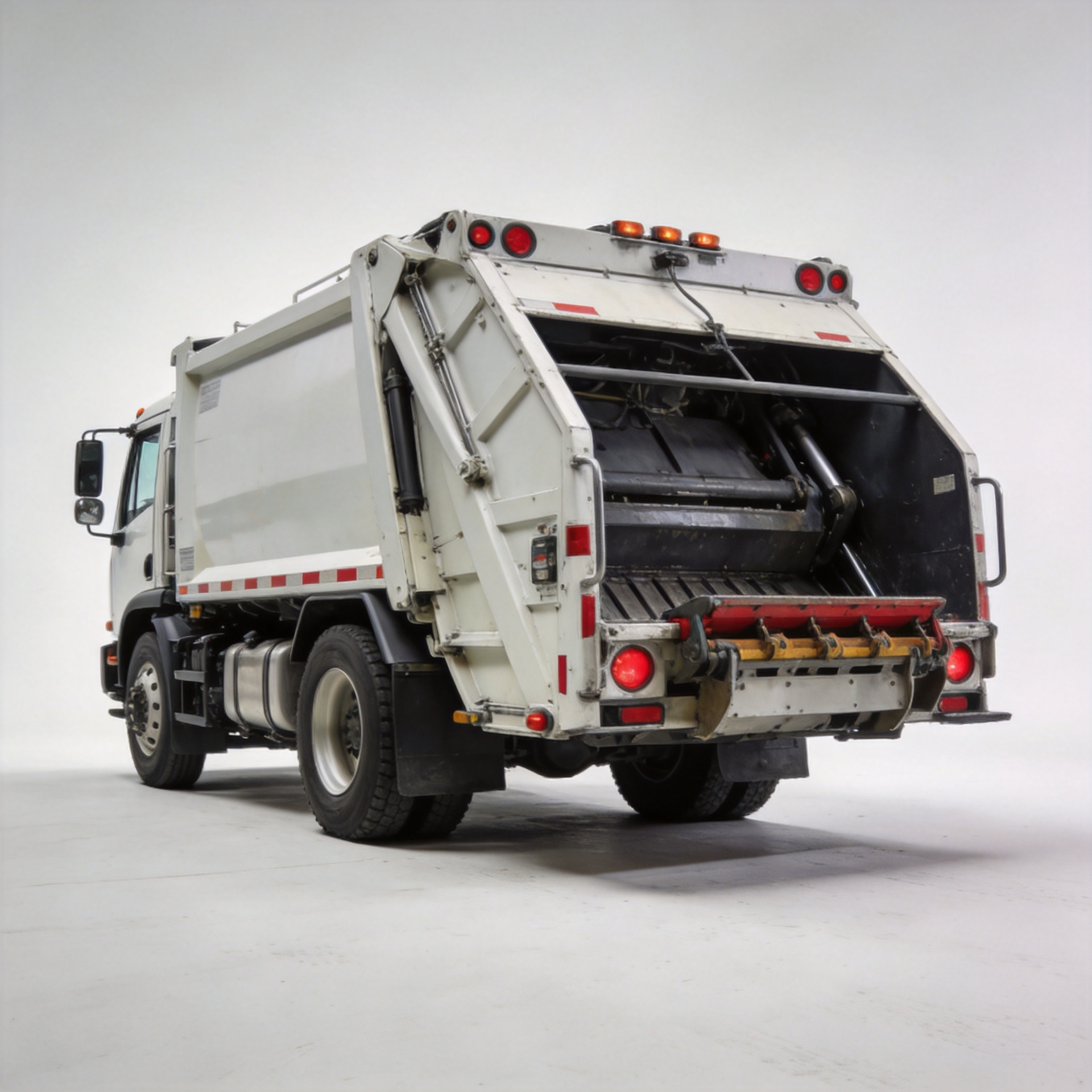
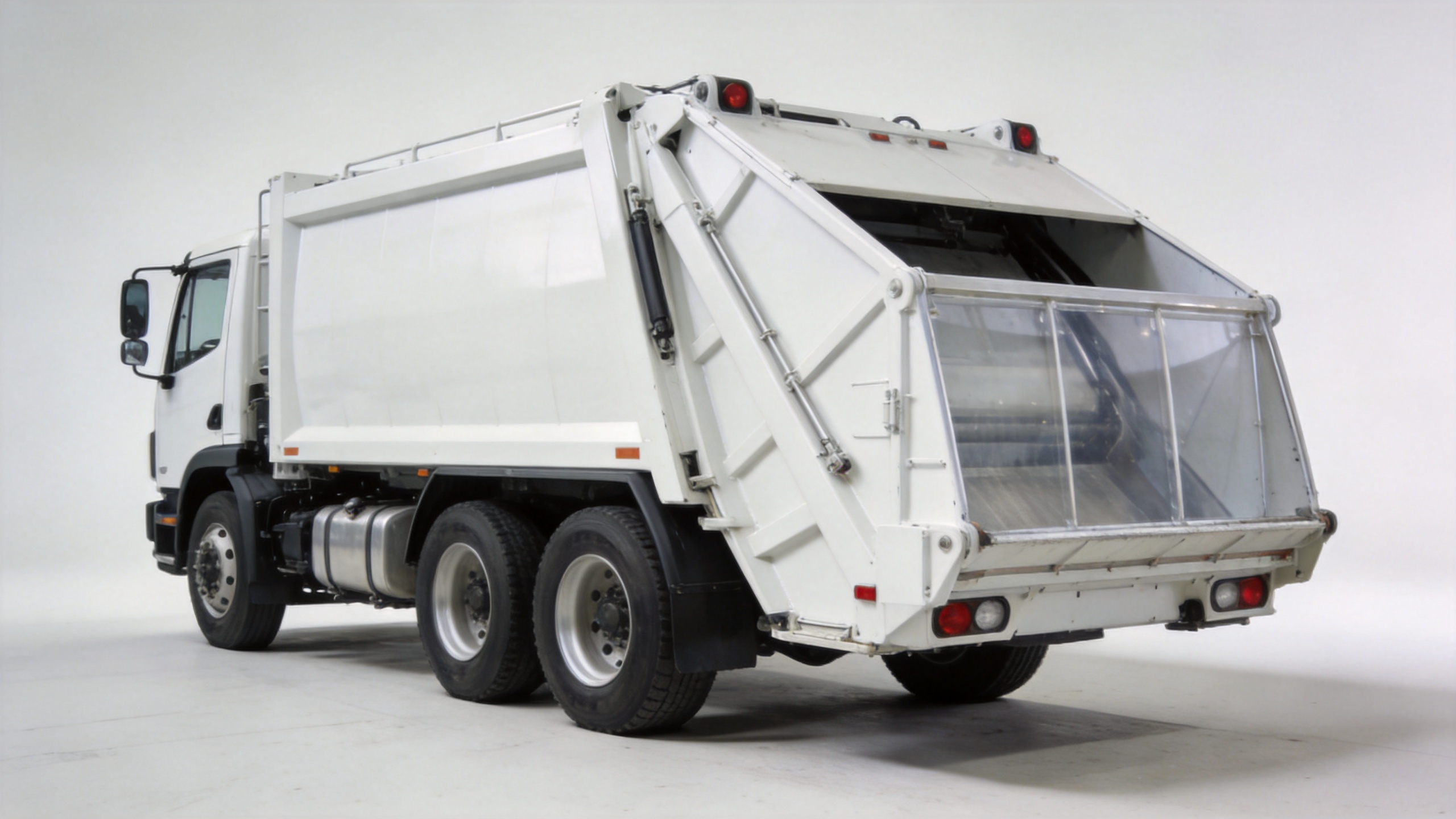
Compaction is one of the reasons a rear-loading municipal garbage truck can support dense urban collection routes. Loose waste often contains a great deal of empty space. By consolidating material inside the body, the truck can make better use of the available payload volume before it travels to unload. The benefit is operational rather than automatic: the actual result depends on waste composition, loading discipline, legal weight limits, and route design.
A municipal garbage truck with a compaction body also gives crews a more repeatable loading sequence. Waste is placed in the hopper, the cycle transfers and compacts it, and the crew prepares for the next stop. This is particularly relevant for routes with many short stops, where inconsistent loading practices can slow the operation. Still, compaction is not a substitute for sensible collection planning. Wet waste, bulky material, prohibited items, and overloaded containers should be managed under the local operating rules.
In practical terms, purchasing a municipal garbage truck is not just buying capacity on paper. It is checking whether the body, loading arrangement, and discharge process can perform steadily in the intended collection scenario. That scenario-based view is more useful than relying on brand familiarity alone.
How PLC and Hydraulic Controls Support the Work Cycle
Hydraulic systems commonly provide the force for lifting, loading, compacting, and ejecting waste in a compactor-style municipal garbage truck. A programmable logic controller (PLC) can coordinate parts of that process through defined operating sequences. In a suitable configuration, this can make routine movements more consistent and can help operators follow a repeatable cycle.
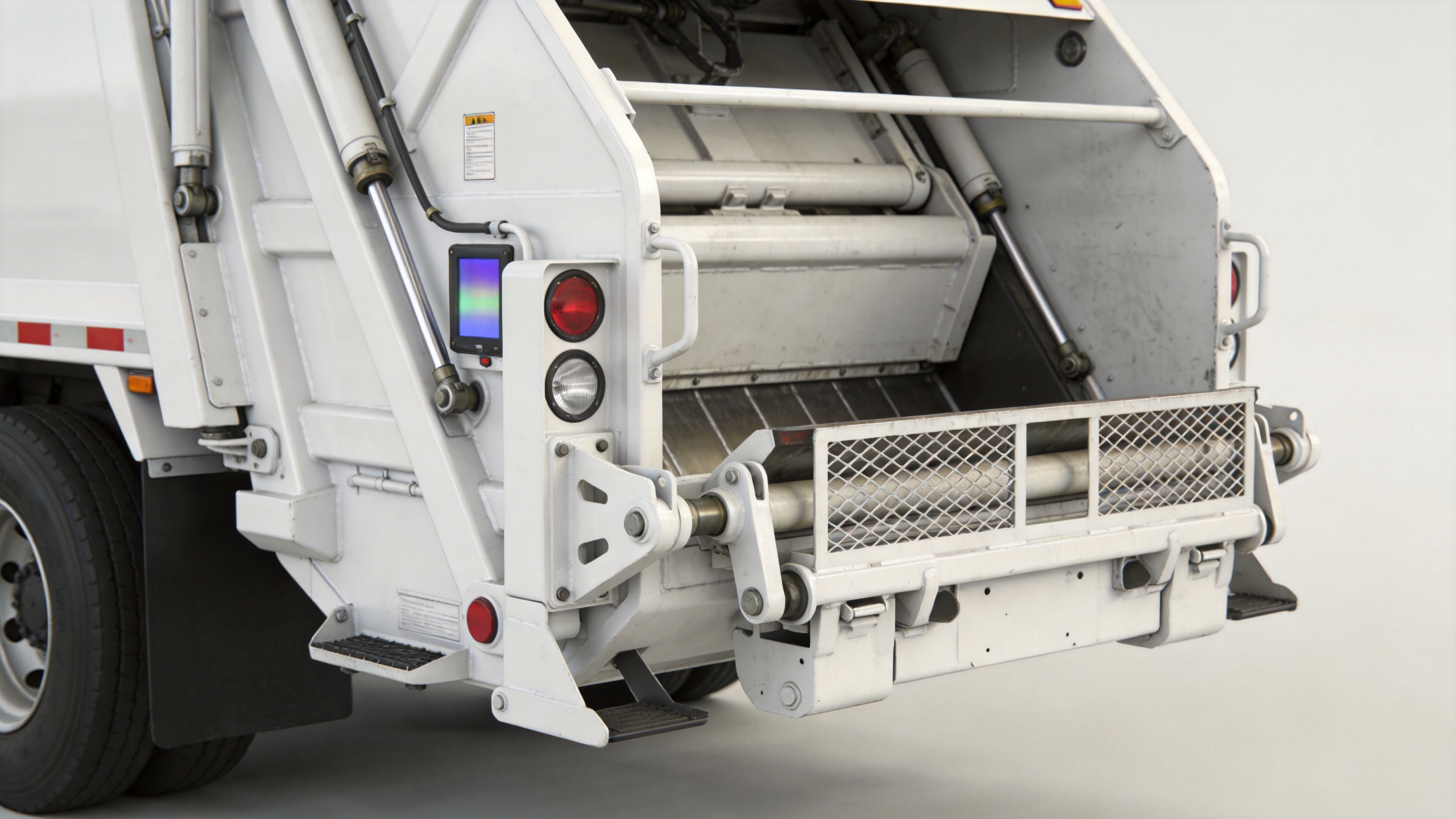
For example, a rear-loading municipal garbage truck may use hydraulic functions to position loading mechanisms, move waste from the hopper, and compact it into the body. A PLC-assisted control arrangement can support automatic cycles while retaining controls that operators need for safe, supervised work. The exact control logic, safeguards, and override arrangements vary by model and local requirements, so buyers should request the applicable technical documentation rather than assume that every PLC system operates the same way.
What should a procurement team check? First, ask how the municipal garbage truck handles routine collection cycles and whether its controls are understandable for the intended crew. Next, confirm emergency-stop provisions, maintenance access, warning systems, and the training needed before use. Finally, consider after-sales support for the hydraulic and electrical components. A control system is valuable only when the fleet can inspect, service, and operate it reliably.
Match the Truck Type to the Collection Environment
Different collection environments call for different municipal garbage truck configurations. Rear loaders can be a practical option where crews collect bagged waste or use a rear hopper at shared collection points. Side-loading or automated systems may better suit routes built around standardized carts. Smaller units can help in constrained districts, while larger compactor bodies may suit longer, higher-volume routes with adequate road access.
Before specifying a municipal garbage truck, map the route rather than starting with a catalog. Record road widths, turning locations, collection-point spacing, container types, daily waste patterns, disposal-site access, and workshop capability. A truck that fits one route can create avoidable delays on another. The same is true for chassis choice: local road conditions, axle requirements, and service availability should be assessed alongside the upper-body design.
Where a rear-loading solution is under review, buyers can examine the configuration of this HOWO 6×4 20cbm compactor garbage truck with PLC hydraulic system as one product reference. The final decision should still be based on the municipality’s operating conditions and confirmed specifications.
A Daily Operating Checklist for Municipal Teams
Reliable collection starts before the first stop. A municipal garbage truck should be checked according to the operator manual and the fleet’s established inspection procedure. Teams commonly verify visible leaks, lights, alarms, tires, guards, controls, and the condition of the loading area before departure. Any condition that affects safe operation should be handled through the fleet’s maintenance process instead of being deferred to the route.
- Confirm that the planned route matches the selected municipal garbage truck and its loading method.
- Brief the crew on stop-by-stop hazards, pedestrian exposure, and traffic conditions.
- Keep people clear of moving loading and compaction mechanisms during each cycle.
- Use the manufacturer’s specified operating sequence; do not bypass protective devices.
- Record abnormal noises, slow movements, leaks, or control warnings for maintenance follow-up.
These checks do not replace local regulations or manufacturer instructions. They create a disciplined handoff between the vehicle, the crew, and the maintenance team—three parts that must work together if a municipal garbage truck is to deliver dependable collection service.
Key Takeaway for Vehicle Selection
A municipal garbage truck supports waste collection by combining collection access, containment, compaction where needed, transport, and controlled unloading in one coordinated workflow. For awareness-stage planning, the most useful next step is to define the collection environment before comparing models. Review the loading method, route constraints, body configuration, PLC and hydraulic-control documentation, safety provisions, and local service support. With that checklist in place, a municipality can evaluate a municipal garbage truck as an operational asset rather than simply a vehicle with a large body.