EN
EN


How to Choose a Refrigerator Truck for Food Distribution and Cold Chain Logistics
Selecting the right fridge truck is one of the most consequential procurement decisions a food distribution operator can make. The wrong choice leads to spoiled cargo, regulatory violations, or an operational cost structure that erodes margins for years. A fridge truck must match your specific logistics workflow, cargo type, and route profile.
Five critical decision dimensions every operator should evaluate before buying a fridge truck: refrigeration unit brand selection, insulation body structure, chassis tonnage matching, multi-temperature zone configuration, and long-term maintenance costs. These factors determine whether your investment performs under real operating conditions, whether you are buying your first reefer truck or expanding an existing fleet.
1. Refrigeration Unit Brand for Your Fridge Truck: Thermo King vs. Carrier
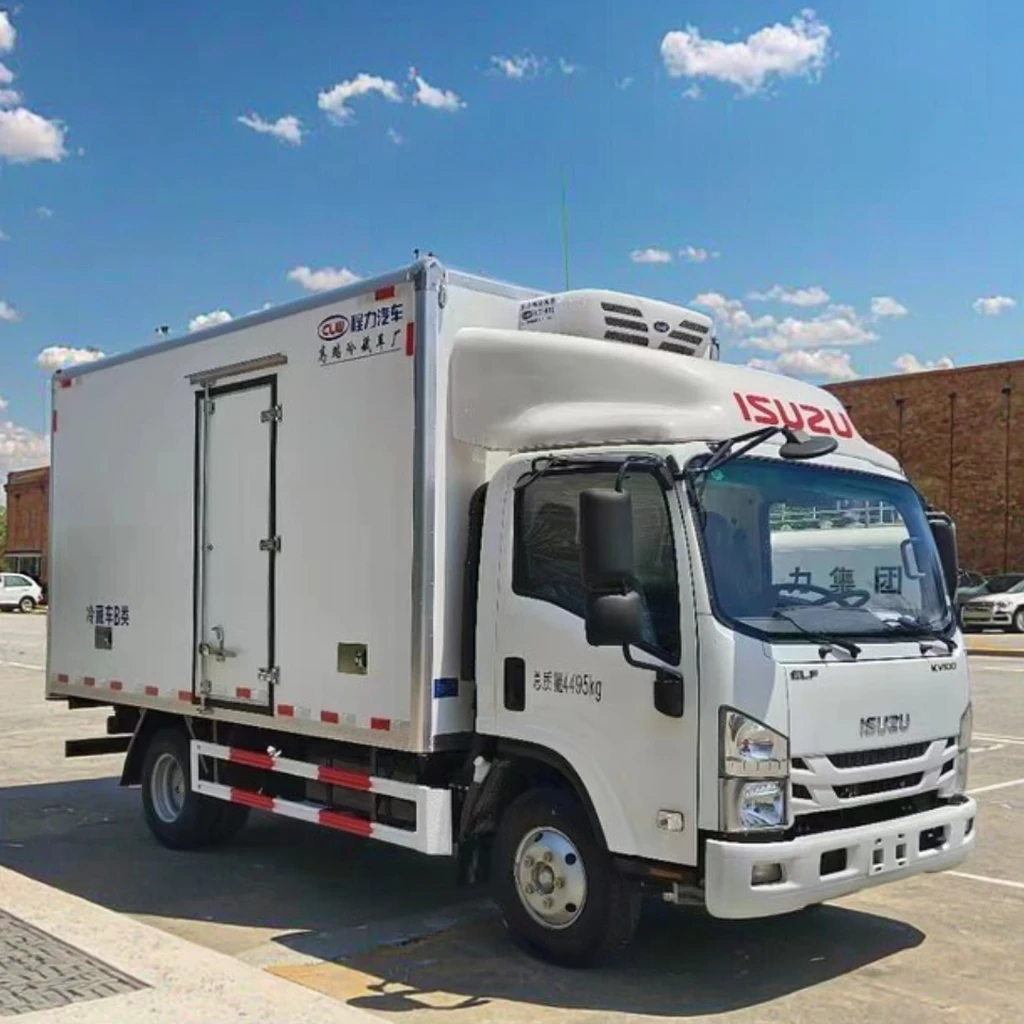
The refrigeration unit is the core functional component of any fridge truck. Two brands — Thermo King and Carrier — dominate the global transport refrigeration market. Choosing between them for your reefer truck requires understanding their strengths for your operating environment.
Thermo King units are widely recognized for reliability across extreme temperature ranges, with truck refrigeration units typically operating from -30°C to +25°C. For frozen meat transport, fish distribution, or dairy delivery, this range covers virtually all food cold chain requirements. Thermo King's global service network is a significant advantage when routes span multiple countries or remote regions — verified service availability should weigh heavily in your fridge truck specification decision.
Carrier Transicold offers comparable performance and is particularly noted for its flexible product lineup, which includes both single-temperature and multi-temperature configurations. If your reefer truck operation handles mixed cargo — chilled produce alongside frozen goods — Carrier's multi-zone systems accommodate that complexity. In many export markets, both brands are equally well-supported; the deciding factor is which distributor in your region provides better parts availability and service response time for your fridge truck fleet.
Worth noting: a higher-priced refrigeration unit from a premium brand does not automatically deliver better value for every fridge truck operation. If your routes are primarily urban and short-haul with daily maintenance access, a well-specified mid-range system may meet your requirements more cost-effectively than a heavy-duty long-haul unit.
2. Insulation Body Structure for Fridge Truck Operations: Foam Thickness and Materials
The insulation body determines how efficiently the refrigeration unit on your fridge truck can maintain target temperatures — and how hard it has to work. Insufficient insulation forces the compressor to cycle more frequently, increasing fuel consumption and shortening refrigeration unit service life.
Polyurethane foam is the industry standard for reefer truck insulated bodies. The critical variable is foam thickness, matched to the cargo temperature requirement:
- Dairy and fresh produce (0°C to 4°C): 50–80 mm foam thickness is typically sufficient for most ambient conditions in a fridge truck at this temperature range.
- Chilled meat and seafood (-2°C to 2°C): 60–100 mm is standard, with higher thickness recommended for hot-climate markets where the reefer truck operates in high ambient temperatures.
- Frozen goods and frozen meat transport (below -15°C): 80–120 mm is appropriate; for fridge truck operations in tropical or subtropical regions, lean toward the upper end of this range.
Body panel construction also matters for a fridge truck operating in challenging environments. Fiberglass-reinforced panels offer a better strength-to-weight ratio and resist corrosion better than aluminum in high-humidity conditions — a key consideration for reefer truck operations in tropical markets. For meat hooks or direct food contact applications, stainless steel interior liners are preferred for hygiene compliance.
3. Chassis Tonnage Matching for Fridge Truck Distribution Routes
Matching chassis tonnage to actual route and payload requirements is essential when specifying a fridge truck. Operators who under-specify risk overloading a chassis not designed for the weight; those who over-specify pay for carrying capacity they will rarely use.
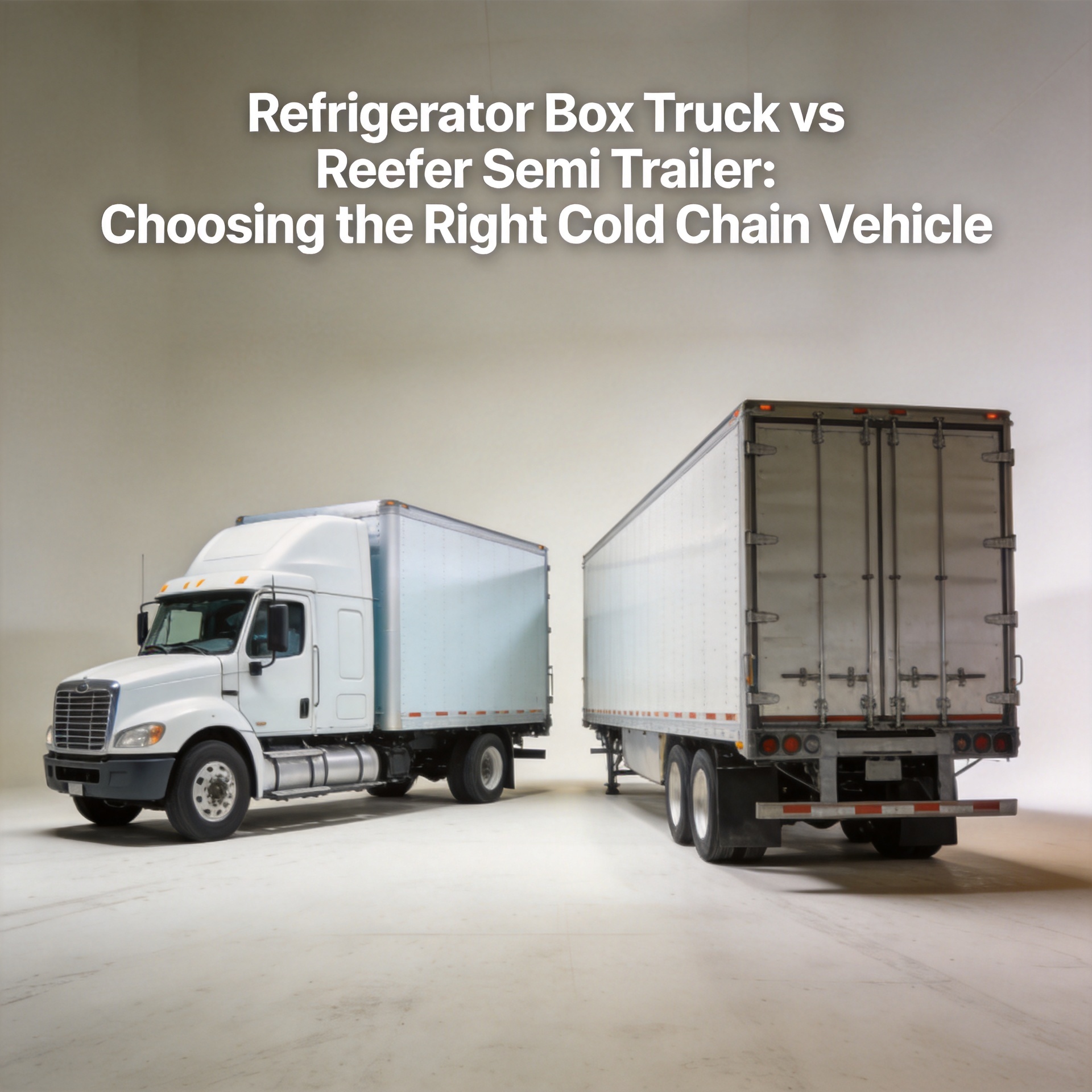
For urban and suburban food distribution — supermarket restocking, restaurant supply, convenience chain replenishment — a 4x2 light- to medium-duty fridge truck in the 3–8 tonne GVW range typically offers the right combination of maneuverability and payload. A purpose-configured 4x2 LHD 5-ton diesel fridge truck rated to -15°C for frozen meat transport is a practical choice for operators needing Euro 6 emission compliance and flexibility in urban environments.
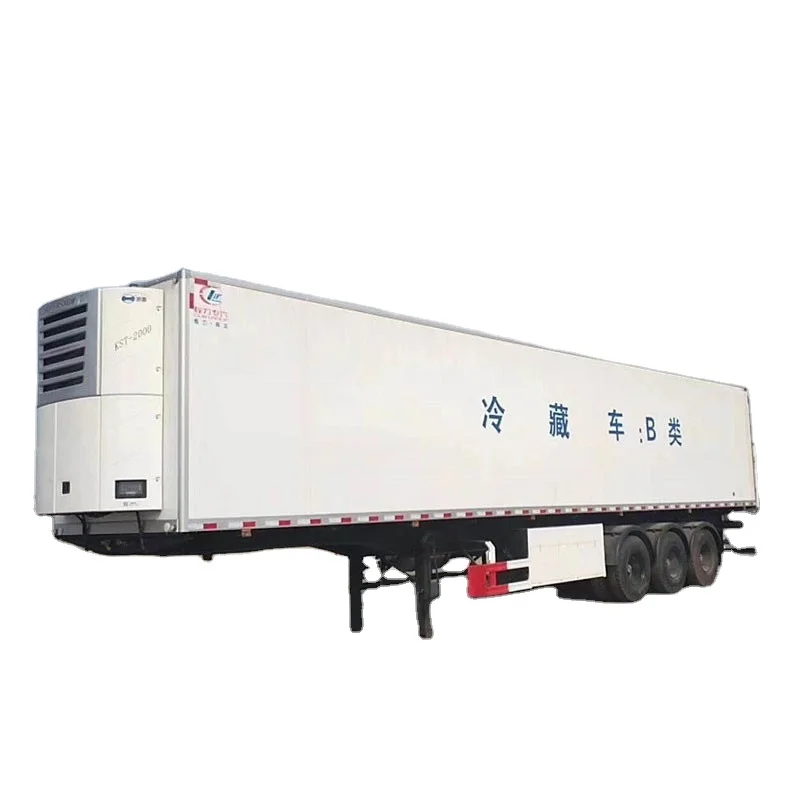
For longer intercity routes or cross-border cold chain operations, semi-trailer configurations offer significantly higher payload and are better suited to sustained highway operation. A 3-axle reefer truck semi-trailer also allows for specialized configurations — including meat hook rails for hanging carcasses, which a rigid body cannot accommodate. CLW's 3-axle reefer truck semi-trailer with meat hook configuration addresses this requirement for operators running protein cold chain logistics.
Many operators underestimate the relationship between fridge truck chassis configuration and body insulation performance. A heavier, more rigid chassis platform supports thicker body panels, improving temperature retention — particularly relevant when hauling frozen goods on long routes in warm climates.
4. Multi-Temperature Zone Configuration for Mixed Cargo Fridge Truck Operations
If your distribution operation requires different temperature ranges — say, fresh dairy (4°C) alongside frozen protein (-18°C) delivered to the same destination — a single-zone fridge truck forces a costly choice: two separate trips or compromised product temperature. A multi-zone reefer truck eliminates that constraint.
Multi-temperature zone fridge trucks use a partition wall with separate evaporator units to maintain independent temperature zones within a single cargo body. This configuration increases upfront cost and requires more complex maintenance, but for mixed cargo operations, it can reduce fleet size requirements and fuel consumption per delivery.
Before specifying a multi-zone fridge truck, assess your actual cargo mix honestly. In certain distribution scenarios, a single-temperature reefer truck paired with insulated tote bins for chilled items is a simpler, more maintainable solution — and a lower total cost of ownership — than a multi-zone system requiring specialized technicians to service both refrigeration circuits.
5. Daily Maintenance Costs and Total Cost of Ownership for Your Fridge Truck
The purchase price of a fridge truck represents only part of what it will actually cost to operate over its service life. Refrigeration unit maintenance, diesel consumption (the refrigeration engine runs independently of the drive engine on most reefer truck configurations), compressor fluid service, and body seal replacement all accumulate into significant ongoing cost.
Key cost variables to evaluate before finalizing your fridge truck purchasing decision:
- Refrigeration unit service intervals: Major brand units typically require scheduled maintenance every 500–1,500 operating hours; verify local service availability and estimated labor cost for your primary fridge truck operating base.
- Fuel consumption of the refrigeration unit: A standalone diesel refrigeration engine on a reefer truck typically consumes 1–3 liters per hour depending on ambient temperature and set-point; over a 5-year operational period, this adds significantly to total operating cost.
- Body seal replacement: Door seals and access panel gaskets degrade over time and are a common cause of temperature excursions in aging fridge truck fleets; factor seal replacement into annual maintenance budgets from year three onward.
- Chassis drivetrain costs: For Euro 6 diesel fridge truck units operating in markets with limited DEF (AdBlue) infrastructure, confirm reliable DEF supply availability before specifying Euro 6 vehicles.
Over a 5–7 year operating horizon, the total cost of ownership calculation often shifts the ranking of fridge truck options significantly compared to purchase price alone. Operators who evaluate only upfront cost frequently discover that lower initial prices are offset by higher service costs, shorter major component lifespans, or limited spare parts availability for their reefer truck in their operating region.
Choosing the Right Fridge Truck for Your Cold Chain Operation
The right fridge truck for your operation is the one that most closely matches your specific temperature requirements, route profile, cargo mix, maintenance infrastructure, and emission compliance needs — not necessarily the most feature-rich or most expensive option available.
If your cold chain operation spans multiple cargo categories or export markets, working with a supplier that can configure a fridge truck to specification — including refrigeration unit selection, insulation thickness, chassis tonnage, and body layout — gives you more control over long-term operational performance than purchasing off-the-shelf units. CLW Special Trucks manufactures and exports refrigerated vehicles across Asia, Africa, South America, and Oceania, with customization support for different regulatory environments and cargo requirements.
Evaluate each reefer truck purchasing decision against all five dimensions covered in this guide. The investment in getting the specification right at procurement is considerably smaller than the cost of re-specifying or replacing fridge trucks that were not matched to actual operating requirements.