EN
EN


Refrigerator Box Truck vs Reefer Semi Trailer: Choosing the Right Cold Chain Vehicle
Not all reefer trucks are the same. Whether evaluating a compact reefer truck for urban last-mile delivery or a semi trailer for long-haul frozen distribution, the choice shapes your fleet economics and total cost of ownership for years.
This guide compares both reefer truck configurations across four key dimensions: payload capacity, operational flexibility, acquisition cost, and maintenance expense—so you can match a reefer truck type to your actual business model.
What Is a Reefer Truck? Understanding the Two Vehicle Types
The term reefer truck covers any commercial vehicle fitted with a mechanical refrigeration unit to maintain cargo temperature during transit. In practice, procurement teams use "reefer truck" to describe both straight-body refrigerated vehicles and tractor-trailer combinations. Two distinct reefer truck configurations account for the majority of B2B cold chain purchases.
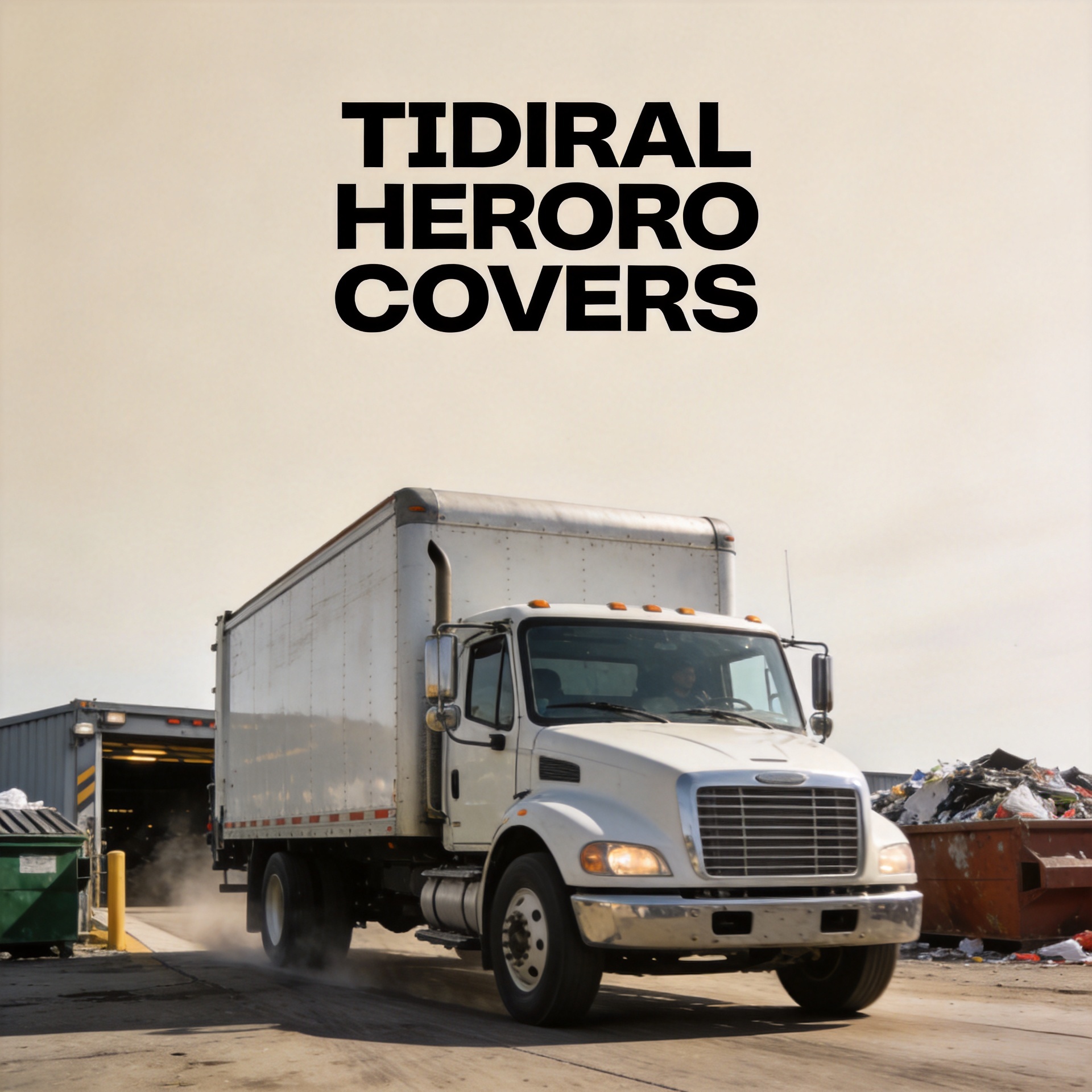
A refrigerator box truck (also called a straight reefer truck or reefer van) integrates the cargo compartment and the powertrain into a single unit. The driver operates one vehicle with no trailer coupling required. Common reefer truck configurations in this category run from 3.5 tonnes to around 10 tonnes GVW, with body lengths typically between 4 metres and 8 metres.
A reefer semi trailer is a separate refrigerated trailer hauled by a tractor unit. The trailer itself carries the cargo and the refrigeration unit; the tractor provides propulsion. This reefer truck configuration dominates long-haul and high-volume cold chain logistics, where decoupling trailer from tractor maximises asset utilisation.
Payload Capacity: How Much Can Each Vehicle Actually Carry?
Payload is usually the first number buyers look at—and also the one most often misread. Here is how the two categories compare in practical terms.
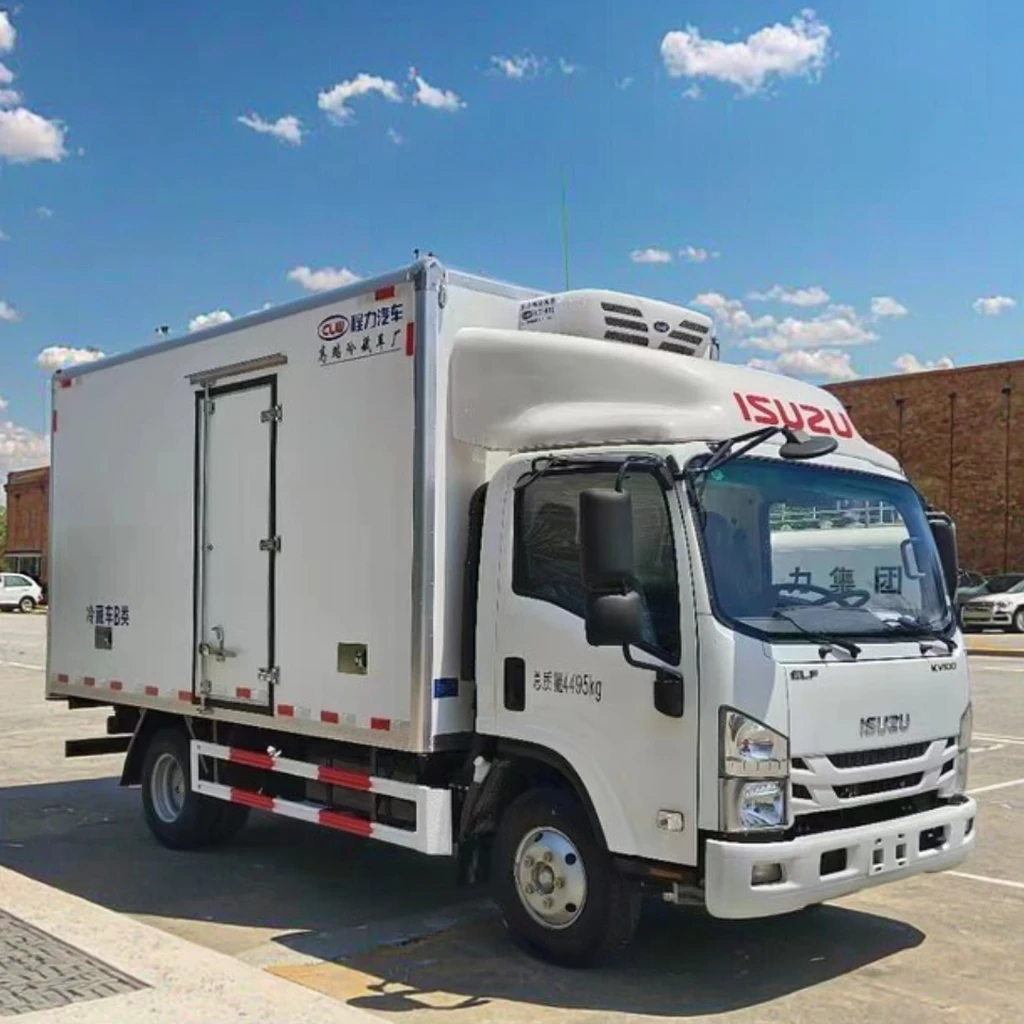
Box-style reefer trucks in the light-to-medium segment typically carry between 1 tonne and 7 tonnes of net payload. Medium-duty reefer truck units in the 18-to-26-foot range can handle up to approximately 15,000 lbs (around 6.8 tonnes), with cargo volume reaching up to 1,600 cubic feet. A purpose-built urban delivery reefer truck like a 4x2 5-tonne diesel refrigerator unit is well suited for daily fresh food distribution loops, meat and poultry deliveries, and pharmaceutical last-mile runs. Its compact footprint allows access to loading bays that are not designed for articulated vehicles.
Reefer semi trailers operate at a fundamentally different scale. A standard 3-axle refrigerated trailer has a GVWR of approximately 65,000 lbs, with usable payload capacity in the range of 42,000 to 43,000 lbs—roughly 19 to 20 tonnes of temperature-sensitive cargo per trip. That differential in tonnes-per-journey makes the semi trailer the dominant vehicle for intercity meat distribution, cross-border fish and seafood shipments, and large-scale frozen food consolidation. The trade-off is that every tonne of insulation and refrigeration equipment reduces net cargo, so buyers should verify the refrigeration unit weight before committing to a specific trailer specification.
Operational Flexibility: Routes, Stops, and Maneuverability
Payload numbers only tell part of the story. A reefer truck that cannot navigate your actual delivery routes—or requires a CDL class your drivers do not hold—adds cost and complexity regardless of its capacity rating.
Box-type reefer trucks and reefer vans excel on urban routes involving multiple stops. Their shorter wheelbase makes reverse-loading in tight urban yards far more manageable. For businesses running daily routes—flower distributors, pharmaceutical wholesalers, or fresh produce e-commerce operators—a compact reefer truck or reefer van reduces per-stop dwell time and simplifies scheduling. Driver licensing requirements for a box-type reefer truck are typically lighter than for articulated vehicles, broadening the pool of qualified operators.
Reefer semi trailers are designed for sustained highway operation over long distances. Once loaded and sealed, a refrigerated trailer can maintain target temperatures across hundreds of kilometres without driver intervention in the cargo area. For meat processors shipping full loads to regional distribution centres, or for importers consolidating frozen goods at a seaport and distributing inland, the cost-per-tonne-kilometre of a semi trailer is significantly lower than any reefer truck box configuration. The requirement is that you have sufficient volume to fill the trailer; a half-empty semi trailer running daily is rarely more economical than an appropriately sized reefer truck.
Acquisition Cost and Long-Term Maintenance
Cold chain vehicles carry two cost layers that dry-cargo equipment does not: the refrigeration unit itself, and the insulated body. Understanding these layers separately helps buyers budget more accurately.
A straight reefer truck (box configuration) typically has a lower purchase price than a full tractor-trailer combination, and it requires only one set of running gear and one engine to maintain. For small and medium cold chain operators, the single-asset simplicity of a reefer truck reduces workshop complexity. The refrigeration unit on a box-type reefer truck is generally a compact transport refrigeration unit (TRU) sized for the smaller compartment, which also means lower fuel consumption for cooling.
For reefer semi trailers, the refrigeration unit is a larger, independently powered machine—often a diesel-powered TRU mounted on the trailer nose. Industry data suggests that the refrigeration unit alone adds approximately $4,000 per year in dedicated fuel costs and $1,500 in specialised maintenance on top of standard vehicle operating expenses. Tractor maintenance is separate. Buyers taking on a semi trailer operation for the first time should model these costs across a five-year horizon rather than comparing only purchase prices.
Euro 6 emission standards—required in many markets for new diesel vehicles—add to the initial cost of both vehicle types but typically unlock access to low-emission zones and reduce fuel consumption over the vehicle's life. A Euro 6 refrigerator truck configured for sub-zero frozen meat transport can operate legally in urban restricted zones where older vehicles cannot enter, which has direct implications for last-mile route planning.
Which Cold Chain Vehicle Type Fits Your Operation?
Three variables tend to settle the box truck vs. semi trailer question quickly: cargo volume per trip, route type (urban/multi-stop vs. highway/long-haul), and driver availability.
- Fresh food e-commerce, urban catering supply, or pharmaceutical last-mile: A refrigerator box truck or refrigerator van (reefer van) is typically the right starting point for most operators. The lower acquisition cost, simpler licensing, and urban agility outweigh the capacity limitation at typical order volumes.
- Regional meat and poultry distribution with moderate volumes: A medium-to-heavy refrigerator box truck (5–10 tonnes payload) balances capacity and flexibility. Purpose-built configurations like a 5-tonne frozen meat transport unit with a –15°C hold temperature can handle primary distribution to supermarkets and restaurants on daily routes.
- Large-scale frozen food, seafood, or livestock feed distribution: A 3-axle refrigerated semi trailer becomes the economically rational choice once consistent full loads are achievable. The lower cost-per-tonne-kilometre and higher utilisation of the tractor unit justify the added operational complexity.
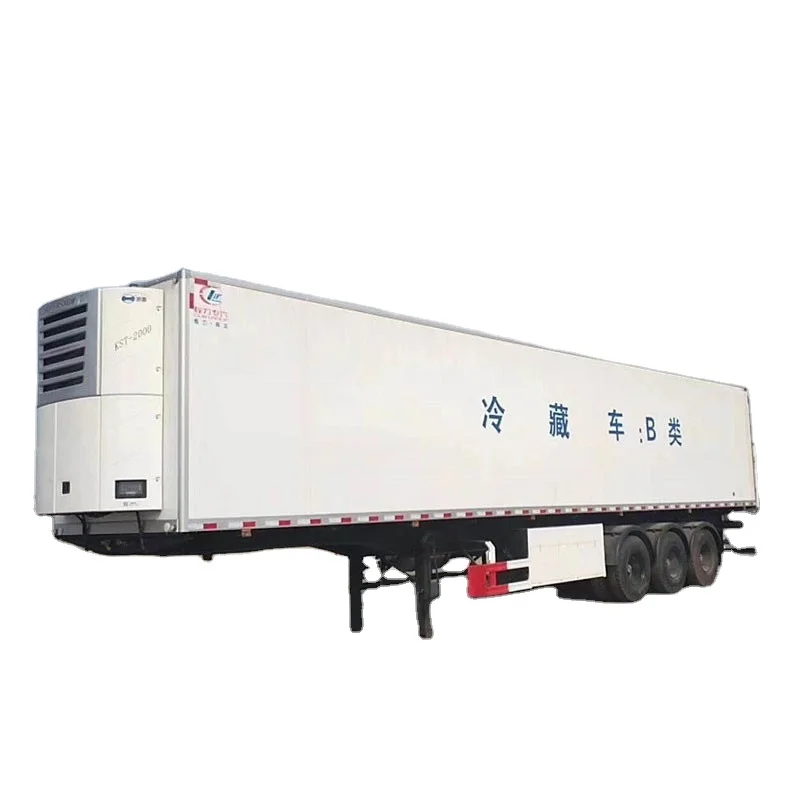
CLW Trucks offers both configurations within a single product range. The 4x2 LHD 5 Tonnes Diesel Refrigerator Truck is a Euro 6-compliant reefer truck rated to −15°C for frozen meat transport, suited to medium-volume cold chain operators running urban and semi-urban routes. For higher-volume long-haul requirements, the 3 Axle Refrigerator Semi-trailer with Meat Hook System provides heavy-duty capacity for full-load frozen or chilled cargo with hanging rail infrastructure for carcass transport.
Conclusion
Choosing the right reefer truck—box truck or semi trailer—is a question of matching vehicle design to operational reality. Box-type reefer trucks and reefer vans deliver flexibility, lower entry cost, and urban accessibility. Semi trailers deliver scale and lower cost per tonne-kilometre at high volume. Most growing cold chain businesses start with a straight reefer truck to establish routes and volumes, then add semi trailer capacity once the lanes justify it.