EN

Choosing Blue Trash Trucks: A Guide for Commercial Vehicle Buyers
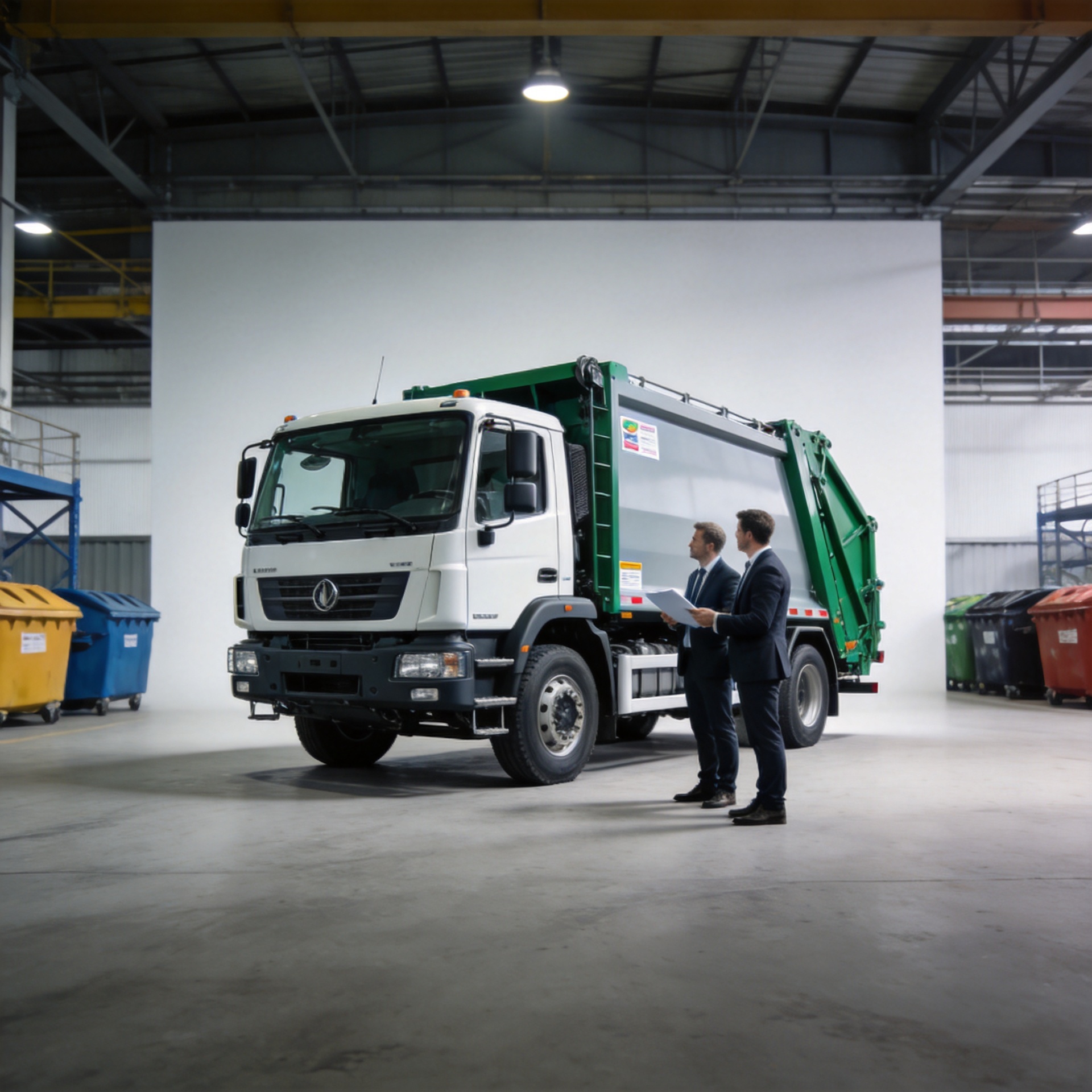
Searches for blue trash trucks can lead to toys, photos, and local fleet stories. For a commercial buyer, however, the term should mean a working refuse-collection vehicle specified for a defined route, waste stream, crew model, and service plan. The blue finish may support municipal or contractor fleet identification, but it does not determine payload, compaction performance, safety, or operating cost.
This guide helps procurement teams turn a broad search into a defensible buying decision. The starting point is not paint color or a headline capacity figure. It is the collection job: what material is collected, where the truck operates, how often it tips, and what support must be available during its service life.
Start by defining what a blue trash truck must do
A refuse truck collects waste and transports it to a transfer station, treatment facility, or disposal site. That simple description hides important differences. Residential curbside collection, commercial-bin service, market waste collection, and transfer-haul work create different loading patterns, route lengths, turning requirements, and body choices.
Before comparing blue trash trucks, document these operating conditions:
- Waste stream: bagged municipal waste, commercial waste, recyclables, bulky material, or another defined stream.
- Collection method: rear loading, side loading, front loading, or a container-handling arrangement.
- Route reality: road width, grades, stop frequency, transfer-station distance, and available turning space.
- Crew model: driver-only operation or a driver and loaders, including safe standing and access procedures where locally permitted.
- Discharge workflow: where the body unloads, how often it tips, and whether the facility has its own access or queuing constraints.
Many buyers initially compare only nominal body volume. When evaluating blue trash trucks, record body volume beside legal payload, axle distribution, and route access—not as a stand-alone score. In real operation, the better question is whether the body, chassis, payload limit, and daily cycle fit together. A larger body can be useful, but not if it creates axle-load, access, or turnaround problems on the actual route.
Choose the loading body around the route, not the color
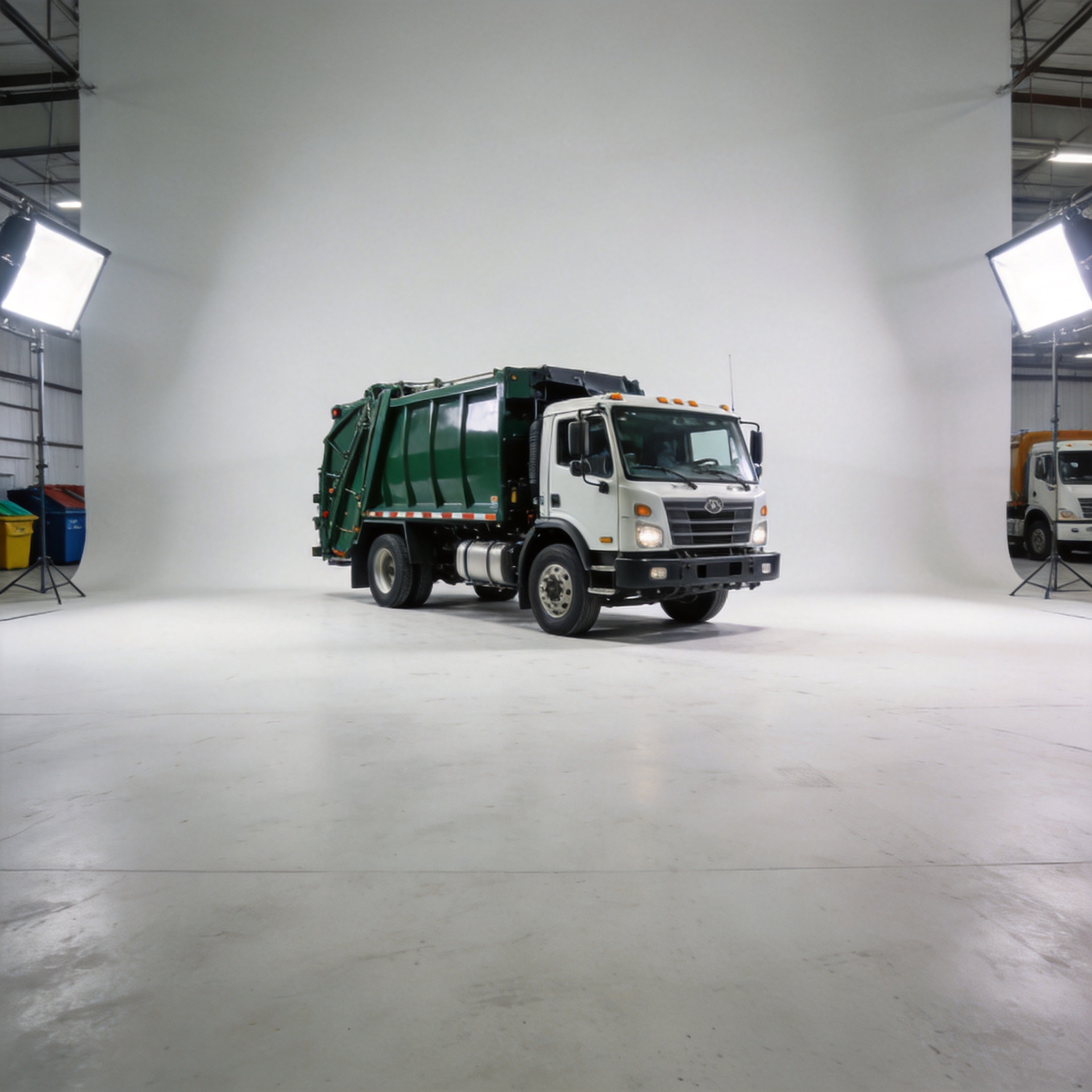
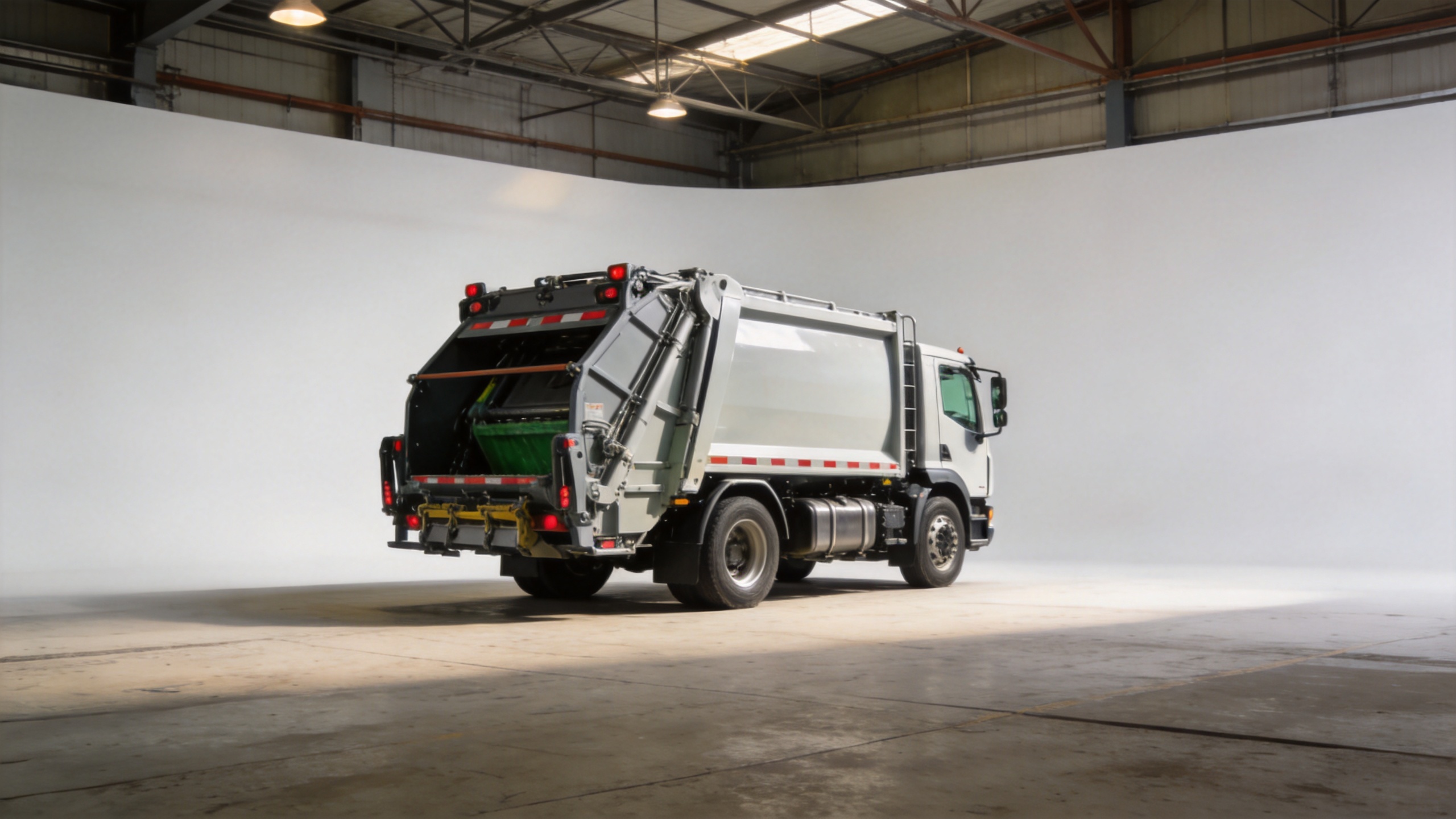
For routine municipal and commercial collection, a compactor body is often evaluated because it can consolidate loose waste and support repeated collection stops. Rear-loading configurations are commonly considered where crews handle bags or bins at the back of the vehicle. Other collection methods may be better where container type, site geometry, or mechanized loading drives the decision.
When reviewing blue trash trucks, ask the supplier to explain the loading sequence in plain operational terms: what is loaded, how the material moves into the body, what controls the hydraulic cycle, and what routine cleaning or inspection points are required. This makes it easier to assess the truck against local safety rules and operator training needs.
A real product page can be useful as a starting point for the discussion, not as a substitute for a specification review. For example, buyers considering a rear-loading compactor format can examine the confirmed listing for the HOWO 6×4 20cbm Compactor Garbage Truck with PLC Hydraulic System Rear Loading Rubbish Waste Management Vehicle. Confirm the final chassis, body dimensions, controls, axle ratings, and market-specific requirements in the quotation and contract documents.
Verify chassis, payload, and hydraulic compatibility together
Commercial vehicle buyers should treat the chassis and body as one operating system. For blue trash trucks, the visual fleet specification should be approved only after this operating-system review is complete. The body can be well designed and still be a poor match if the chassis wheelbase, axle ratings, power take-off arrangement, or suspension do not suit the intended duty cycle.
| Verification area | Questions for the supplier | Why it matters |
|---|---|---|
| Payload and axle distribution | What are the legal payload assumptions and loaded axle weights for the proposed configuration? | Helps prevent a specification that looks suitable on paper but is difficult to operate legally on route. |
| Chassis and wheelbase | Which chassis is quoted, and how does its wheelbase suit the body and turning environment? | Supports access, maneuverability, and body integration. |
| Hydraulic system | What powers the compaction and unloading functions, and what inspection intervals apply? | Hydraulics affect daily uptime, maintenance planning, and safe operation. |
| Controls and diagnostics | What operator controls, interlocks, warnings, and fault information are included? | Clear controls support training and faster issue identification. |
| Documentation | Which drawings, manuals, parts lists, and inspection records are supplied? | Documentation is essential for acceptance, local registration, and service handover. |
Paint specification should be documented too—especially if the blue color is tied to fleet identity, visibility markings, or a public contract—but it belongs alongside the technical schedule rather than ahead of it.
Put safety and acceptance tests into the purchase plan
Refuse collection creates frequent pedestrian, worker, and vehicle interactions. Backing visibility deserves attention. OSHA notes that when a vehicle has an obstructed rear view, applicable requirements can call for a backup alarm or a spotter during backing. NIOSH also advises audible alarms on refuse vehicles to alert workers and pedestrians. Those points are not a universal approval of any one truck; they are prompts for the buyer to verify local legal requirements, site procedures, and the supplied warning equipment.
Build a pre-delivery acceptance list for blue trash trucks that covers hydraulic operation, emergency stops, lights and alarms, body lifting and tipping functions, leaks, guards, labels, camera or visibility provisions if specified, and the full documentation set. If a feature is important to a tender or operating license, require it in the signed specification rather than relying on a brochure image.
Compare total operating value, not only the purchase price
It is easy to focus on the initial offer for blue trash trucks. Yet recurring downtime, hydraulics service, wear parts, operator training, and parts availability can carry more weight over the working life of a refuse vehicle. The lowest upfront quote is not automatically the lowest-cost choice.
Request an itemized commercial comparison for blue trash trucks that separates the vehicle, body, optional equipment, delivery terms, commissioning support, recommended spares, and documentation. Then ask each supplier to state what is included and what remains the buyer’s responsibility. A transparent comparison makes changes in chassis choice, body volume, or blue fleet finish easier to evaluate without losing sight of core operating needs.
A practical procurement checklist
- Define the waste stream, route, crew model, daily trips, and discharge point.
- Select a loading-body concept suited to the collection method and site access.
- Verify chassis, body, payload, axle, and hydraulic compatibility as one configuration.
- List mandatory local compliance, warning, visibility, and documentation requirements.
- Specify the blue finish, markings, and branding separately from performance requirements.
- Compare blue trash trucks against the same route and payload assumptions so the color choice does not hide a configuration difference.
- Require drawings, an itemized quotation, acceptance criteria, manuals, and parts support information.
- Run a pre-delivery inspection against the approved specification before final acceptance.
Make the final choice fit the route
The right blue trash trucks are not defined by a color alone. Across the evaluation process, use “blue trash trucks” as a fleet-identification requirement while validating the actual refuse body and chassis configuration. They are vehicles whose body type, chassis, payload plan, controls, safety provisions, and support package match the collection route. If the intended work is regular municipal or commercial waste collection, start with the operating cycle and turn it into a written specification. That approach gives procurement teams a clearer basis for comparing suppliers and approving the final truck configuration.