EN

Choosing Ecodiesel Fire: A Guide for Commercial Vehicle Buyers
Searching for ecodiesel fire can produce an unhelpful mix of consumer-pickup recall stories and owner discussions. For a commercial buyer sourcing a diesel fire apparatus, that is the wrong decision frame. The practical question is whether a proposed fire truck has the right duty profile, water-and-pump arrangement, chassis support, documentation, and service plan for the emergency work it will actually perform.
This guide uses ecodiesel fire as a search term for buyers evaluating diesel-powered fire-fighting vehicles. It does not assess consumer EcoDiesel pickups or make claims about any unrelated recall. Before comparing quotations, define the mission, verify the configuration, and make the supplier show how the vehicle will be supported after delivery.
Start by separating the search term from the procurement requirement
A search phrase is not a technical specification. In the available results for ecodiesel fire, much of the discussion concerns consumer vehicles, alleged engine-fire incidents, or legal actions. A commercial fire apparatus should instead be evaluated as a system: chassis, body, tank, fire pump, hose layout, electrical system, payload, crew arrangement, and local operating conditions all interact.
That distinction matters because a vehicle can look suitable in a catalogue yet be unsuitable for its station coverage area. A compact municipal unit may favor access and quick deployment; a rural or industrial operation may need longer water autonomy, different pump duty, and a different equipment layout. No single ecodiesel fire configuration fits every task; the appropriate configuration is the one verified against the stated operational requirement.
Define the incident profile before asking for a quotation
Put the following information into a written requirement sheet before you request pricing:
- Operating environment: urban streets, industrial plants, airports, mining roads, rural routes, or mixed terrain.
- Primary incident types: structural response, water supply, industrial risk, rescue support, or initial attack.
- Water strategy: expected onboard water autonomy, refill access, drafting needs, and relay-supply conditions.
- Access constraints: turning space, bridge limits, garage height, road width, ground clearance, and axle-load restrictions.
- Climate and fuel conditions: heat, altitude, dust, cold starts, available diesel quality, and local emissions requirements.
- People and equipment: crew seating, breathing apparatus, ladders, hose, rescue equipment, communications, and their installed weight.
A procurement reference for fire trucks identifies water capacity plus pump and hose configuration as early requirements, alongside legal and compliance issues. That is a useful starting point, but it is not a substitute for your local authority’s specification. Ask the operations team to validate the mission sheet before the supplier converts it into a drawing.
Compare the pump, tank, and chassis as one operating system
Buyers often begin with a single headline number such as tank capacity or rated pump output. It is understandable, but incomplete. The more useful review asks whether the water tank, pump curve, hose deployment, chassis payload, and expected duration of use work together.
| Decision area | What to verify | Why it matters |
|---|---|---|
| Water tank | Usable capacity, baffling, fill method, drain arrangement, and effect on axle loading | Tank size changes endurance, handling, payload, and access needs. |
| Fire pump | Rated duty point, priming method, inlet/outlet arrangement, test evidence, and sustained-operation expectations | Peak figures alone do not demonstrate practical performance under the buyer’s hose layout and water source. |
| Chassis and drivetrain | Wheelbase, axle ratings, braking, power take-off integration, service availability, and road suitability | The chassis carries the loaded vehicle and must be supportable where it will operate. |
| Body and storage | Equipment mass, compartment access, corrosion protection, wiring protection, and maintainability | Unaccounted equipment can affect payload and daily readiness. |
Specifications are normally measured under stated conditions. Long hose runs, elevation, ambient temperature, water-source limitations, and continuous use can change field behavior. Request a configuration-specific technical sheet and factory test documents rather than treating a generic brochure as proof.
Use standards as a verification path, not a marketing label
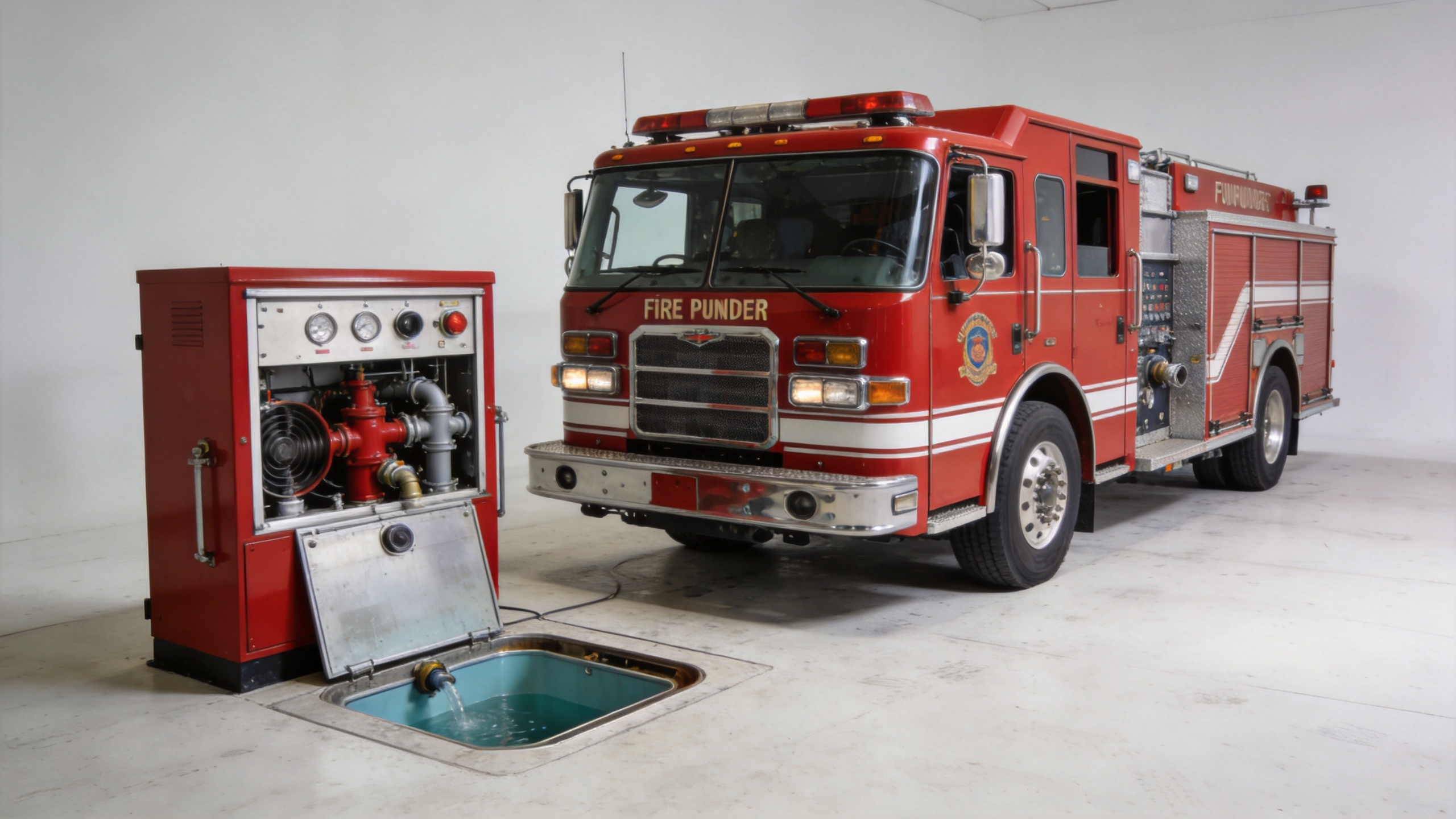
Buyers should identify the rules that apply in the deployment market before contract award. NFPA 1900 is an active reference covering automotive fire apparatus and related vehicle categories, but applicability depends on the edition required, the local authority, and the country where the truck will be registered and operated. Other national, regional, tender, or insurer requirements may apply.
Ask the supplier to map the offered configuration to your applicable requirements line by line. For each claimed standard or approval, request the exact scope, evidence, exclusions, and whether the evidence applies to the proposed vehicle rather than a similar model. This avoids a common mistake: accepting a broad compliance statement when the purchasing team needs traceable proof for a specific build.
Evaluate the supplier beyond photos and a low initial price
A fire apparatus is a long-life asset, so total cost of ownership deserves equal weight with purchase price. A lower quote may be less attractive if spare parts, technical documents, commissioning assistance, or repair communication are difficult to obtain after shipment.
- Request a complete configuration list with make, model, and source for key purchased components.
- Ask for the proposed production inspection points, acceptance-test scope, and document package.
- Confirm who will answer technical questions after delivery and how parts identification will work.
- Check export packing, shipping documents, destination-market compatibility, and training or handover expectations.
- Compare warranty terms by component and clarify what evidence is required for a claim.
For buyers seeking a concrete product reference, review the published details for the Dongfeng 4x2 Dorica diesel pumper fire truck alongside your own requirement sheet. The listing title identifies it as a diesel pumper fire-truck configuration with a 4,000 L water-tanker reference; confirm every final specification, option, and compliance document with the supplier before purchase.
Turn the ecodiesel fire comparison into an award decision
Use a weighted comparison sheet rather than choosing from photographs or one headline specification. Score each offered ecodiesel fire configuration against mission fit, compliance evidence, pump-and-water-system fit, chassis supportability, delivered documentation, service plan, delivery schedule, and total ownership cost. Keep a separate column for items that remain “to be confirmed”; an unverified item should not receive the same score as a documented one.
The strongest commercial decision is usually not the vehicle with the longest options list. It is the one whose operating role, loaded weight, water strategy, pump arrangement, local compliance, and service pathway are all evidenced and understood. If a supplier can turn those questions into a clear technical proposal, the procurement team can compare offers on risk and readiness; not just price.
Build an ecodiesel fire procurement worksheet
To keep comparison meetings focused, give every offer the same evidence checklist. An ecodiesel fire worksheet should record the proposed chassis, loaded axle weights, pump duty point, tank capacity, hose layout, component list, and applicable compliance evidence. It also gives the procurement team a place to distinguish confirmed facts from supplier statements that still need proof.
- Ecodiesel fire mission fit: record the response territory, access limits, crew, and primary incident profile.
- Ecodiesel fire water plan: compare onboard water, refill routes, drafting arrangements, and expected operating duration.
- Ecodiesel fire pump review: ask for the duty point, priming arrangement, test scope, and available performance documentation.
- Ecodiesel fire chassis review: verify wheelbase, axle ratings, braking, power-take-off integration, and local service access.
- Ecodiesel fire body review: list equipment mass, compartment access, corrosion measures, wiring protection, and maintainability.
- Ecodiesel fire compliance review: identify each applicable authority requirement and attach configuration-specific evidence.
- Ecodiesel fire documentation review: confirm drawings, acceptance records, manuals, parts lists, and delivery documents.
- Ecodiesel fire service review: document warranty scope, technical contact points, parts identification, and response expectations.
- Ecodiesel fire cost review: compare the delivered price with commissioning, spares, maintenance, and downtime exposure.
Use the same worksheet for every ecodiesel fire quotation. During clarification, ask the supplier to answer each ecodiesel fire item against the proposed build rather than a catalogue family. If an ecodiesel fire claim cannot be linked to a drawing, component schedule, test record, or stated exception, mark it as pending.
The worksheet makes an ecodiesel fire decision auditable. It helps buyers compare one ecodiesel fire proposal with another on evidence, lifecycle support, and operational fit. This is especially useful when an ecodiesel fire enquiry has started from an ambiguous online search rather than a complete technical brief.
Final buyer checklist
- Have we defined the incident profile and deployment environment?
- Are tank, pump, hose, payload, and chassis choices compatible as a system?
- Have we identified applicable local rules and requested configuration-specific evidence?
- Have we verified the final component list, test scope, documentation, and handover plan?
- Have we evaluated post-delivery service, spare parts, and total ownership cost?
Answering these questions gives commercial buyers a disciplined way to move from an ambiguous ecodiesel fire search to a defensible fire-apparatus procurement decision.