EN
EN


What Is a Garbage Compactor Truck? Types, Working Principle and Use Cases
A trash bin truck is operationally critical to any municipal or industrial waste management fleet, yet frequently misunderstood at procurement time. Most buyers focus on body capacity and overlook the two factors that actually determine field performance: the hydraulic compression mechanism and the body-type-to-route match. This guide breaks down what a garbage trash truck actually is, how its compression system works, which of the four main configurations to consider, and how to align the right trash bin truck type to your deployment scenario.
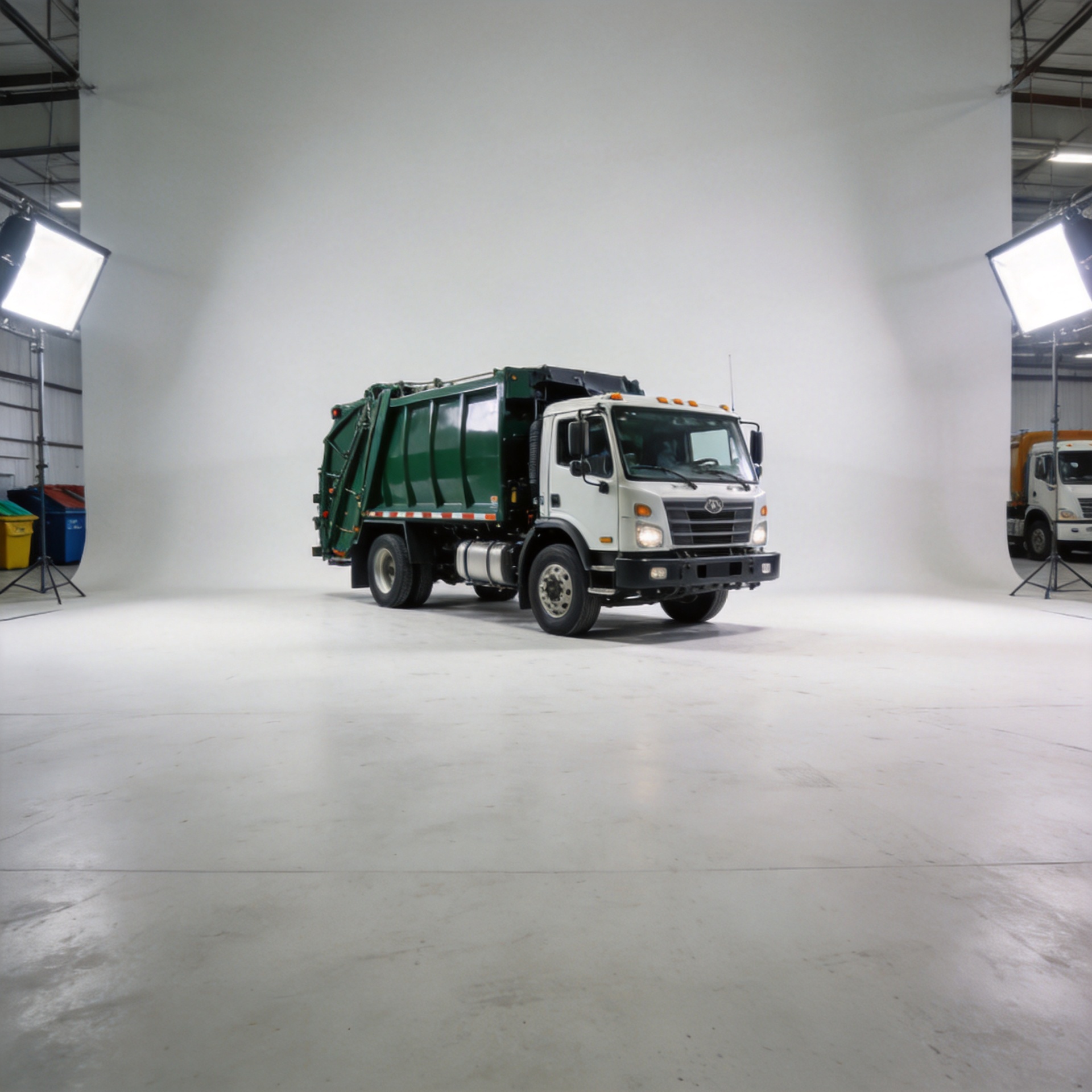
A garbage compactor truck is a specialized waste collection vehicle equipped with a hydraulic compression system that compacts solid waste inside the body, significantly reducing volume before transport to a disposal or transfer facility. Unlike open-dump trucks, a compactor trash bin truck achieves compaction ratios of 3:1 to 5:1, meaning a single vehicle carries three to five times more waste per trip compared to uncompressed transport. This cuts fuel cost, driver hours, and transfer station tipping fees per route.
How Does the Hydraulic Compression System Work?
Think of the hydraulic system in a waste management truck as an oversized industrial press built directly into the vehicle body. That analogy helps explain why the capacity numbers on a spec sheet can be misleading if you don't understand the compression cycle behind them — a point that holds for any garbage trash truck configuration you evaluate.
The compression cycle runs in four sequential stages:
- Engine → Hydraulic Pump: A PTO (Power Take-Off) mechanism connects the hydraulic pump to the chassis engine, drawing mechanical power to pressurize hydraulic fluid.
- Pressurized Fluid → Control Valves: The pump sends high-pressure fluid through a valve assembly that directs force to the correct cylinders based on the operating phase.
- Hydraulic Cylinder → Packer Blade: The pressurized fluid extends a heavy steel packer blade that sweeps waste from the hopper forward into the sealed body chamber, compacting it against the front wall.
- Retract and Repeat: The blade retracts, the hopper clears, and the cycle begins again at the next stop.
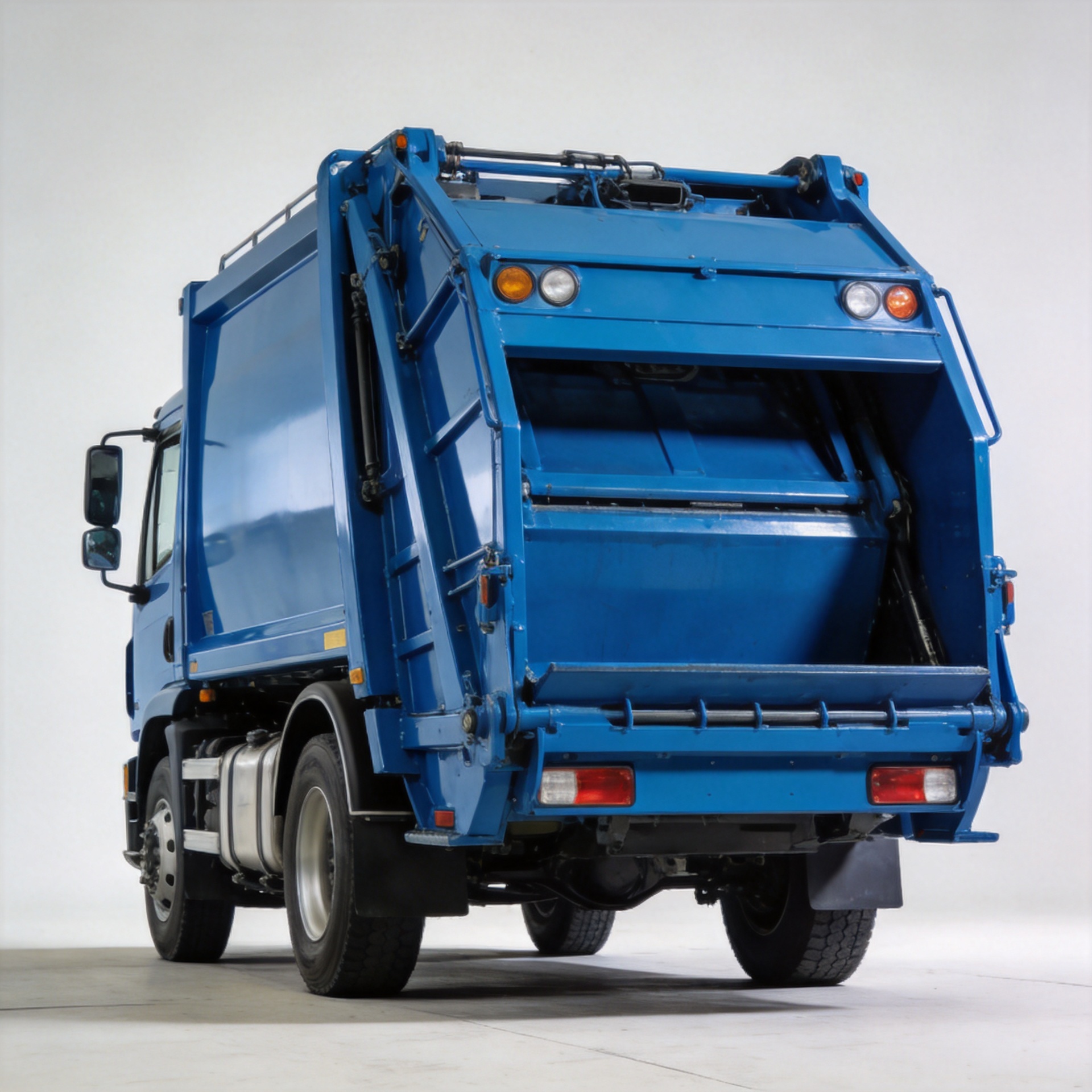
Advanced trash bin truck models include PLC (Programmable Logic Controller) systems that handle pressure monitoring, cycle counting, and fault detection automatically. This reduces operator error on high-volume routes and extends hydraulic component service intervals. The core components are: the hopper (waste entry opening), the packer blade (compaction element), the sealed body chamber (accumulation space), and the hydraulic control panel accessible from the cab or rear.
Main Types of Garbage Compactor Trucks
The four primary garbage trash truck configurations differ in where waste enters the vehicle, which determines route type and container format compatibility. Selecting the wrong body type for the collection environment is a more common procurement error than sizing the body capacity incorrectly for a trash bin truck.
Rear-Load Compactor Trucks
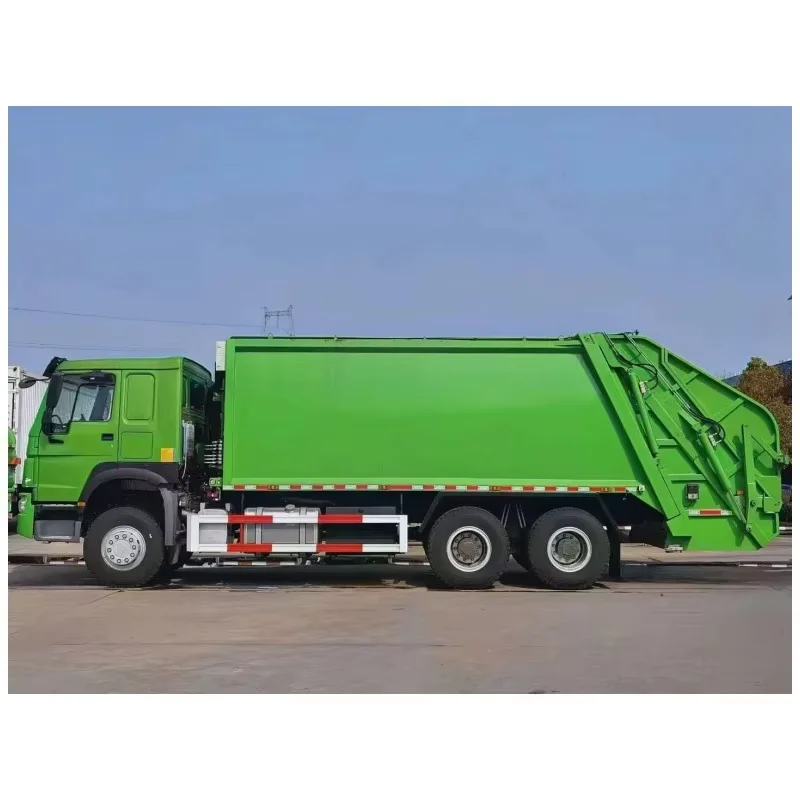
The rear-load trash bin truck collects waste through the rear hopper — either manually by a collection crew, or automatically via a hydraulic bin-tipper for standardized wheeled bins (120–360 liters). Rear loaders handle the widest range of waste types, container sizes, and access conditions, making them the most versatile waste management truck type for mixed municipal and residential routes. Typical body capacity: 6–19 m³, compaction ratio: 3:1 to 5:1.
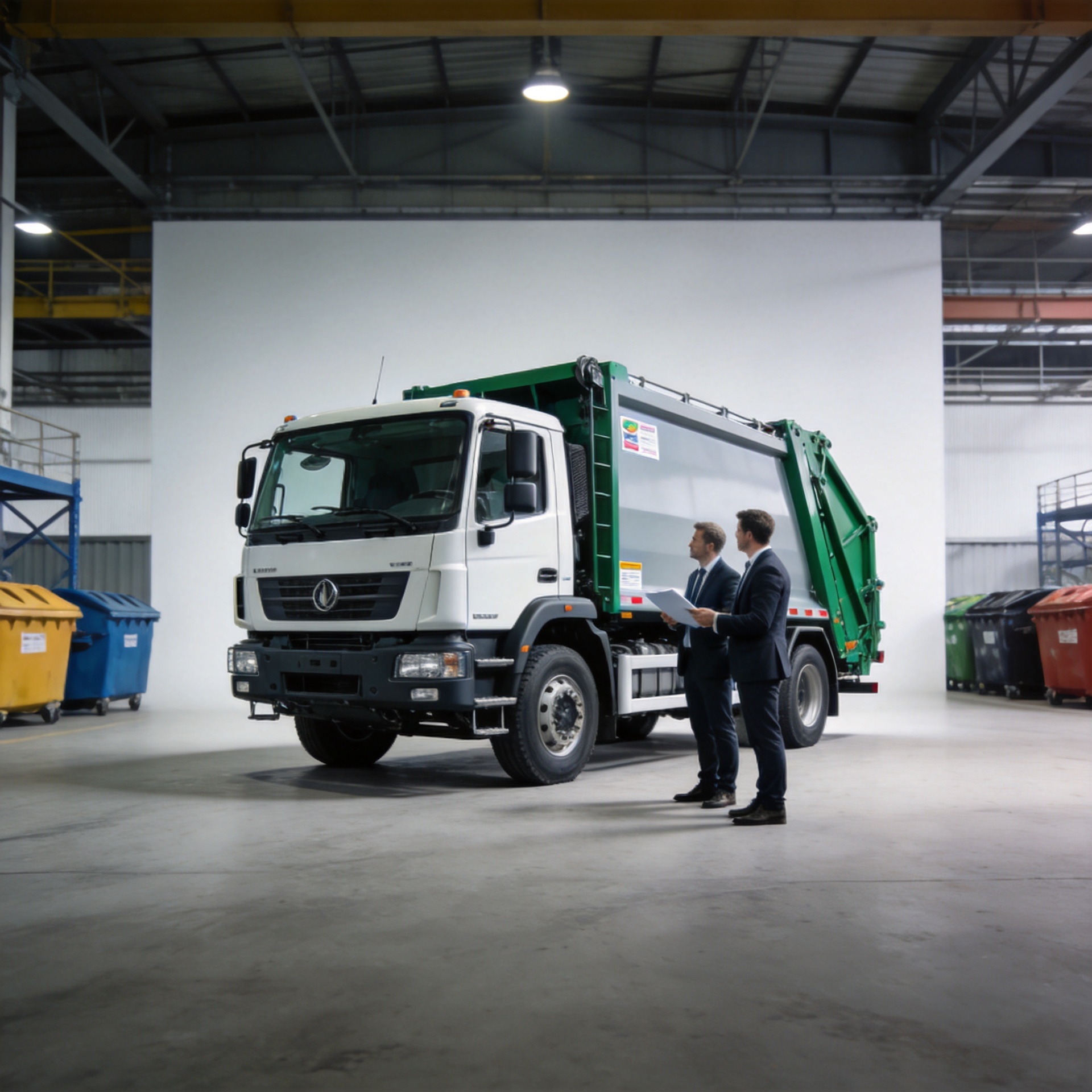
CLW's HOWO 6×4 20cbm Compactor Garbage Truck with PLC Hydraulic System Rear Loading Rubbish Waste Management Vehicle is a heavy-duty rear-load trash bin truck designed for high-volume municipal and industrial routes, with a 20 m³ body and automated PLC-controlled compression.
Front-Load Compactor Trucks
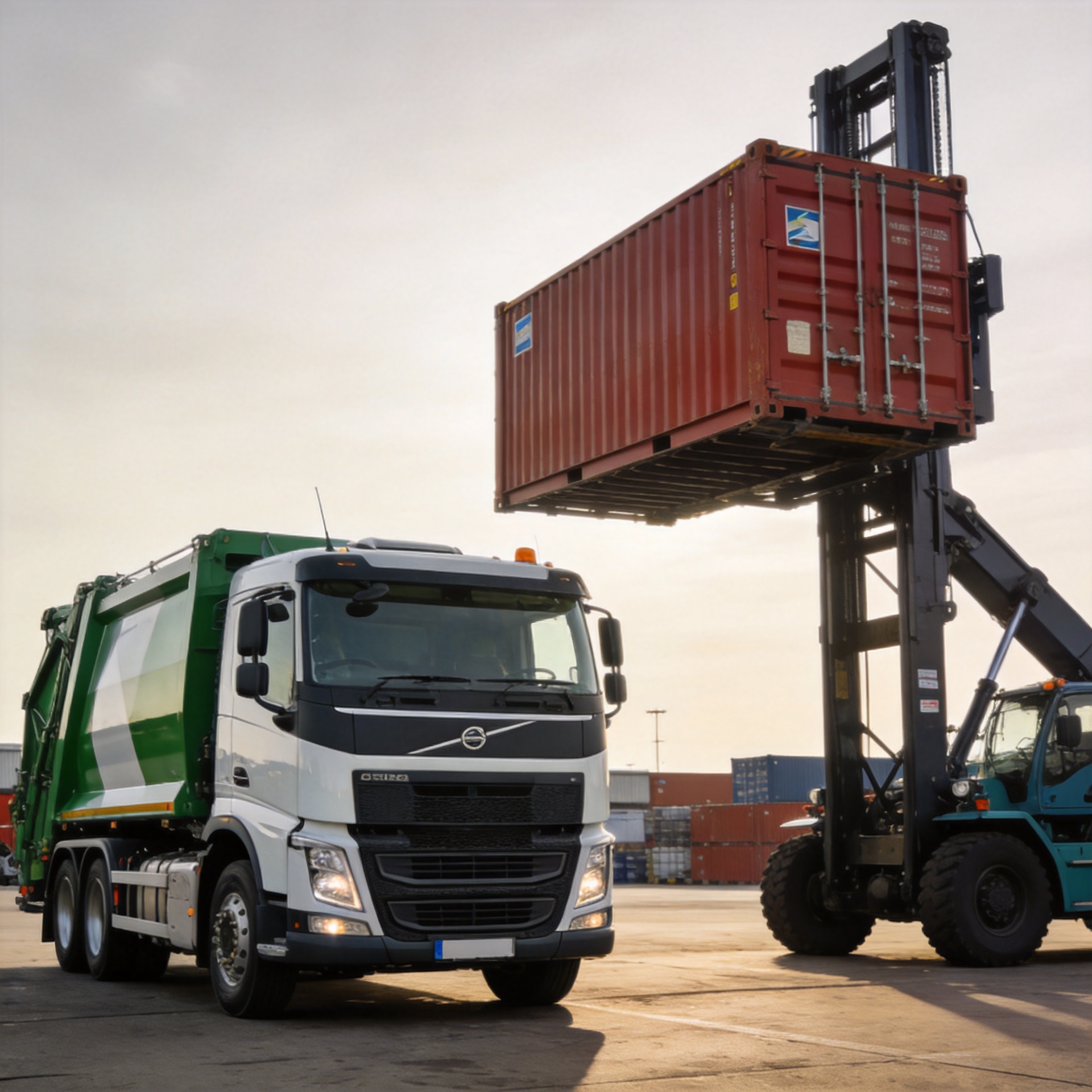
The front-load garbage trash truck uses hydraulic forks at the front to lift commercial dumpsters (2–8 cubic yards) overhead and empty them into the rear-mounted hopper. Front loaders are fully single-driver and achieve compaction ratios up to 5:1, with body capacities of 14–24 m³. This trash bin truck type is optimized for commercial and industrial collection — shopping malls, warehouses, office parks, and industrial estates — where high container volume per stop is the norm. Front loaders are not suited for residential routes or locations without standardized front-load dumpster infrastructure.
Side-Load Compactor Trucks
The side-load waste management truck collects waste from the side of the vehicle. Manual side loaders use a crew to handle loose waste or non-standard bins — providing flexibility for narrow lanes and irregular waste types. Automated side loaders (ASL) use a hydraulic arm to lift standardized wheeled carts (120–360L) with single-driver efficiency, which is the standard garbage trash truck format for residential routes with uniform container fleets. Body capacity: 7–19 m³, compaction ratio: 3:1 to 4:1.
Hook-Lift (Pull-Arm) Trucks
Unlike the three compactor types above, the hook-lift trash bin truck does not compress waste inside the vehicle body. A hydraulic arm loads and transports interchangeable open containers (10–30 m³) between collection sites and disposal facilities. Hook-lift configurations serve construction debris, large-volume industrial waste, and multi-container yard operations where on-route compaction is not required.
Use Cases: Matching Trash Bin Truck Type to Deployment Scenario
Specifications alone rarely settle the choice. Focusing only on compaction ratio or body volume misses half the picture when evaluating a garbage trash truck for procurement. The operating environment, container format, and crew structure matter as much as any single parameter in a trash bin truck selection.
Municipal Sanitation Departments
Mixed residential and commercial routes with varying container types require the operational flexibility of a rear-load waste management truck. Where routes involve predominantly standardized wheeled carts, automated side loaders reduce per-stop labour cost significantly. Most mid-to-large municipal fleets operate a mix of both garbage trash truck types, assigned by route profile.
Industrial Parks and Commercial Properties
Front-load trash bin truck configurations dominate commercial collection: single-driver, high compaction, and fast cycle times (2–4 minutes per dumpster stop). For industrial parks in markets where front-load dumpster infrastructure is not standardized, heavy-duty rear-load waste management truck models serve as a practical alternative without the container compatibility constraint.
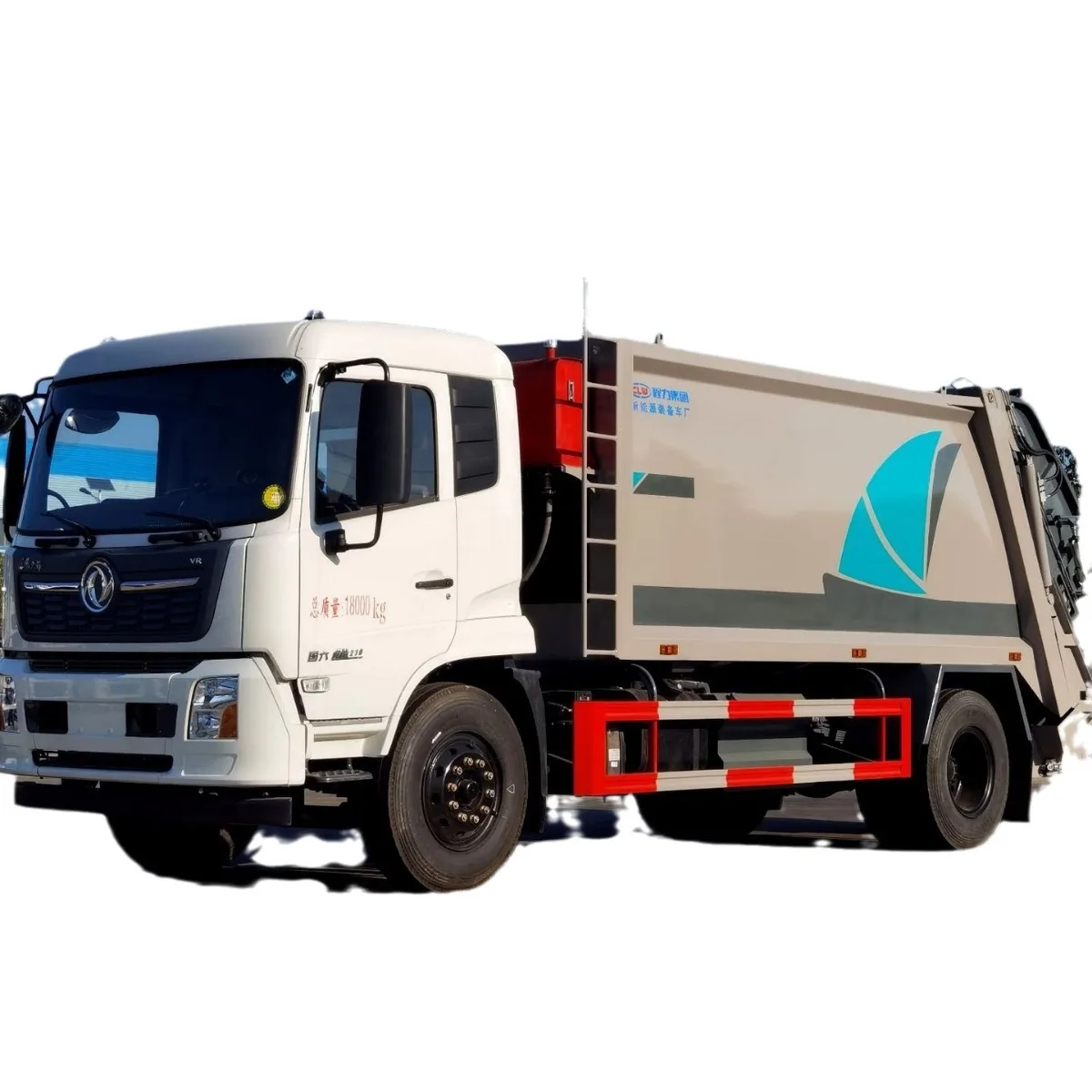
For mid-capacity urban sanitation and peri-urban collection, CLW's Dongfeng 4×2 Drive Sanitation Garbage Truck (10m³–12m³) provides full compression capability on a lighter 4×2 chassis — balancing payload capacity with access flexibility in narrower urban routes.
Commercial Property Management
Mid-density commercial properties — hotels, mixed-use developments, retail complexes — typically benefit from a rear-load garbage trash truck with hydraulic bin-lift attachments. This trash bin truck setup handles wheeled bins efficiently without a dedicated collection crew. Where properties generate consistently high volumes with standardized large containers, a front-loader configuration is worth evaluating for total route efficiency.
Key Factors to Evaluate Before Selecting a Garbage Compactor Truck
For routes that handle mixed waste types, a rear-load trash bin truck is usually the practical starting point, provided the route doesn't consist primarily of large uniform commercial containers. For front-load waste management truck territory the calculation shifts: one driver, higher throughput, but rigid container compatibility requirements.
- Chassis and axle configuration: Match to local road load limits and access conditions — 4×2 for lighter urban routes; 6×4 for heavy-duty high-volume garbage trash truck operations.
- Body capacity and compaction ratio: Estimate daily route volume and required trips to size the body correctly for your trash bin truck fleet.
- Bin-lift or arm compatibility: Confirm the truck's hydraulic attachment matches your existing container fleet dimensions.
- Hydraulic system service requirements: PLC-equipped and ASL waste management truck models require trained technicians for maintenance.
- Export and compliance documentation: For imported vehicles, verify that the manufacturer supports chassis certification and customs documentation for your target market.
Understanding what a trash bin truck is — and how the hydraulic compression system, body configuration, and route type interact — gives procurement teams a clearer framework than any spec sheet comparison alone. Each of the four main types (rear-load, front-load, side-load, hook-lift) has a distinct operating envelope. Matching your deployment scenario to the right garbage trash truck configuration is what reduces total route cost over the vehicle's service life.