EN
EN


What Is a Fire Engine Truck? Types, Functions and Applications Explained
When a fire breaks out or an emergency call comes in, a fire engine truck is typically the first specialized vehicle on the scene. Yet for government procurement officials and emergency response agencies evaluating their fleet needs, the term "fire engine" can mean very different things — a pumper, a water tanker, an aerial ladder platform, or a rescue unit. Understanding those differences isn't just useful knowledge; it directly shapes which firefighting truck you need, what technical specifications to prioritize, and how to match equipment to the actual demands of your operational environment.
The global fire truck market reached approximately USD 8.7 billion in 2025 and is projected to grow to USD 16.9 billion by 2035 , reflecting how seriously governments and institutions around the world are investing in professional firefighting capability. That investment starts with understanding what you're buying.
What Is a Fire Engine Truck?
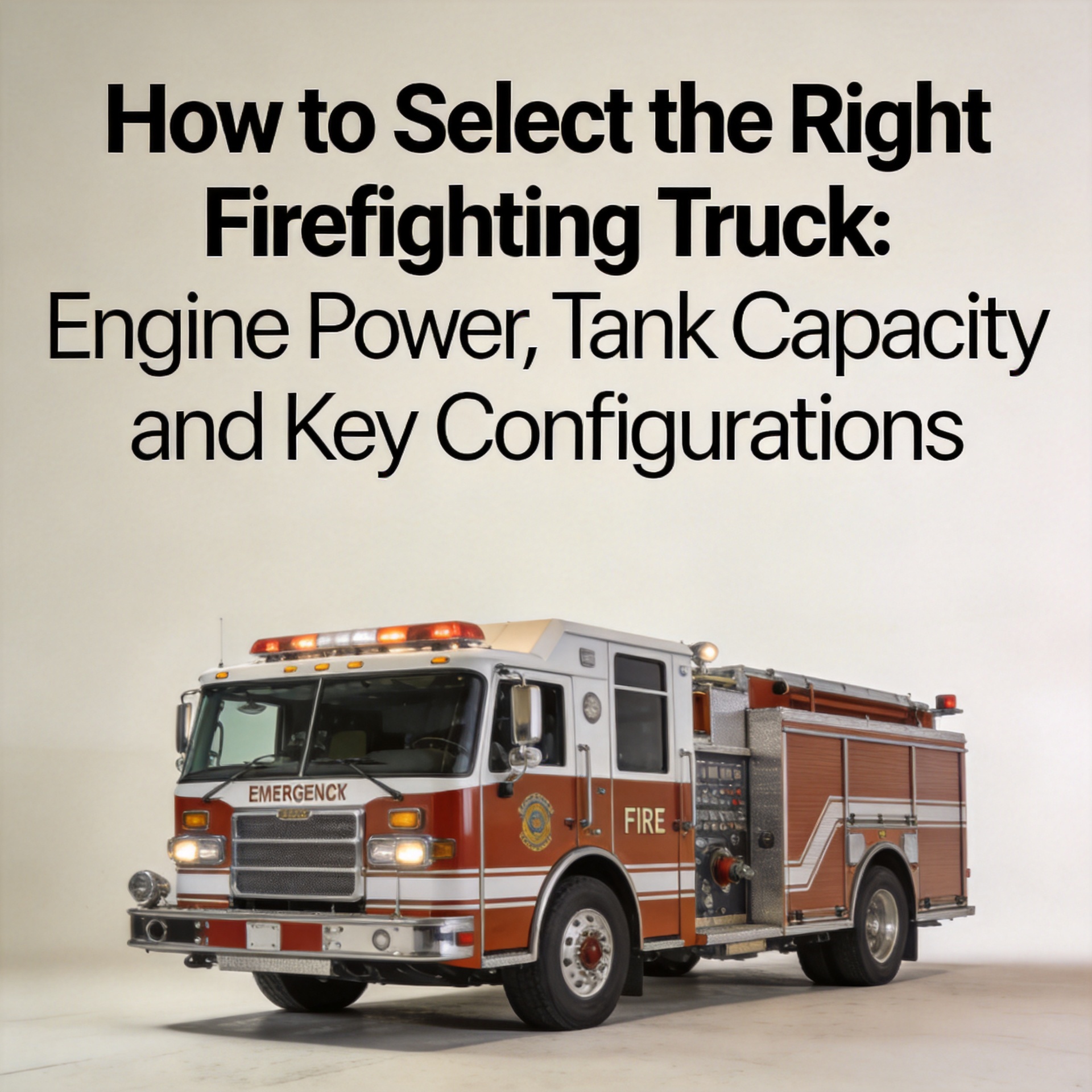
A fire engine truck (also called a fire apparatus or firefighting truck) is a purpose-built vehicle designed to support firefighting operations and emergency response. While the terms "fire engine" and "fire truck" are often used interchangeably in everyday language, there is a technical distinction worth noting: a fire engine typically refers to a vehicle with an onboard water pump that actively delivers water to suppress fires, while a fire truck more broadly describes any vehicle in a fire department's fleet, including ladder trucks, rescue units, and tankers.
Most modern fire engines share three fundamental components: a water pump, a water storage tank, and firefighting equipment (hoses, nozzles, and ladders). Beyond that shared foundation, each type of firefighting truck is engineered for a specific mission profile . Selecting the right type depends on the scenarios your team is most likely to face.
The 4 Main Types of Fire Engine Trucks
As a procurement adviser focused on fire apparatus, one of the most common questions I encounter is: "What type of fire engine do we actually need?" The answer typically comes back to the operating environment and the primary threat profile. Here's how the four main categories break down.
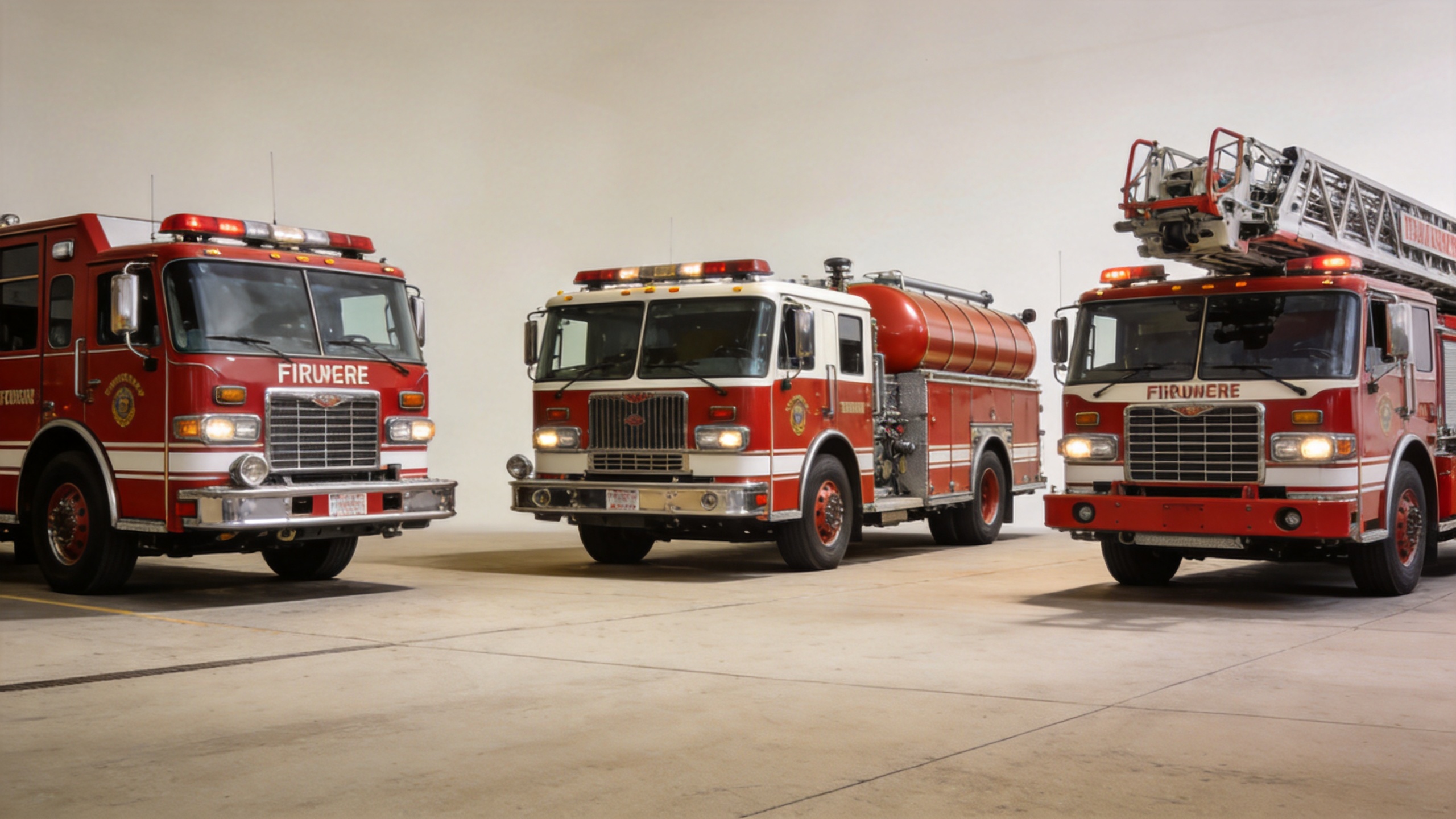
1. Pumper Fire Engine (Pump Fire Truck)
The pumper is the most widely deployed fire engine type worldwide. Its defining feature is a high-capacity centrifugal pump that draws water from hydrants, rivers, or onboard tanks and delivers it through pressurized hoses. According to NFPA standards (National Fire Protection Association), a Type 1 pumper must provide a minimum pump output of 1,000 gallons per minute (GPM) — with modern units routinely achieving 1,500 GPM or more. Onboard water tanks typically range from 300 to 500 gallons, serving as the initial water supply until a sustained source is established.
Pumpers are the primary choice for urban structural firefighting, residential area deployment, and any scenario where fire hydrant access is reliable. If your operational footprint is primarily municipal — city fire stations, community emergency response — the pumper should anchor your fleet.
2. Water Tanker Truck (Water Tender)
Where hydrant infrastructure is absent or unreliable, the water tanker truck becomes indispensable. Also called a water tender, this firefighting truck prioritizes carrying capacity over pump performance: NFPA-classified water tenders must hold at minimum 1,000 gallons, with operational vehicles commonly carrying 2,000 to 8,000 liters or more. A 1,000-gallon water load alone weighs over 8,000 pounds, which is why tanker specification needs to account for road weight limits and terrain conditions.
Tankers don't necessarily need large onboard pumps — in most deployments, they supply water to pumper trucks or portable ponds that pumpers draw from. For rural communities, industrial parks, construction sites, and areas undergoing infrastructure development, a water tanker is often the most critical procurement decision. The Dongfeng 4x2 Dorica Diesel Pumper Fire Truck with 4,000L Water Tanker is an example of a combined pump-tanker design that addresses both pumping capability and water supply in a single unit — useful for agencies that need operational flexibility.
3. Aerial Ladder Truck (Aerial Platform)
Aerial trucks carry hydraulically operated extendable ladders — or enclosed aerial platforms — that allow firefighters to reach elevated positions for rescue operations and high-rise firefighting. Ladder heights typically range from 18 meters (60 ft) to 55 meters (180 ft), with the platform providing stable footing for personnel or a mounted water cannon for elevated stream delivery.
The aerial truck is not a front-line water delivery vehicle in the same way a pumper is. Its value is in vertical access: rescuing occupants from upper floors of buildings, ventilating rooftops, and delivering water above ground level when angle and elevation matter. High-rise urban environments, commercial buildings, and industrial facilities with tall structures are the primary deployment settings.
4. Rescue Fire Truck (Emergency Rescue Apparatus)
Rescue trucks focus on personnel recovery and specialized emergency response rather than water delivery. They carry equipment for vehicle extrication (hydraulic spreaders and cutters), confined space rescue, rope rescue, hazardous materials response, and medical first aid. Some configurations also include compressed air systems and communications equipment for command and control at complex incidents.
Emergency agencies handling traffic accidents, industrial incidents, building collapses, or natural disasters need a dedicated rescue vehicle. This is a capability that pumpers and tankers cannot replicate.
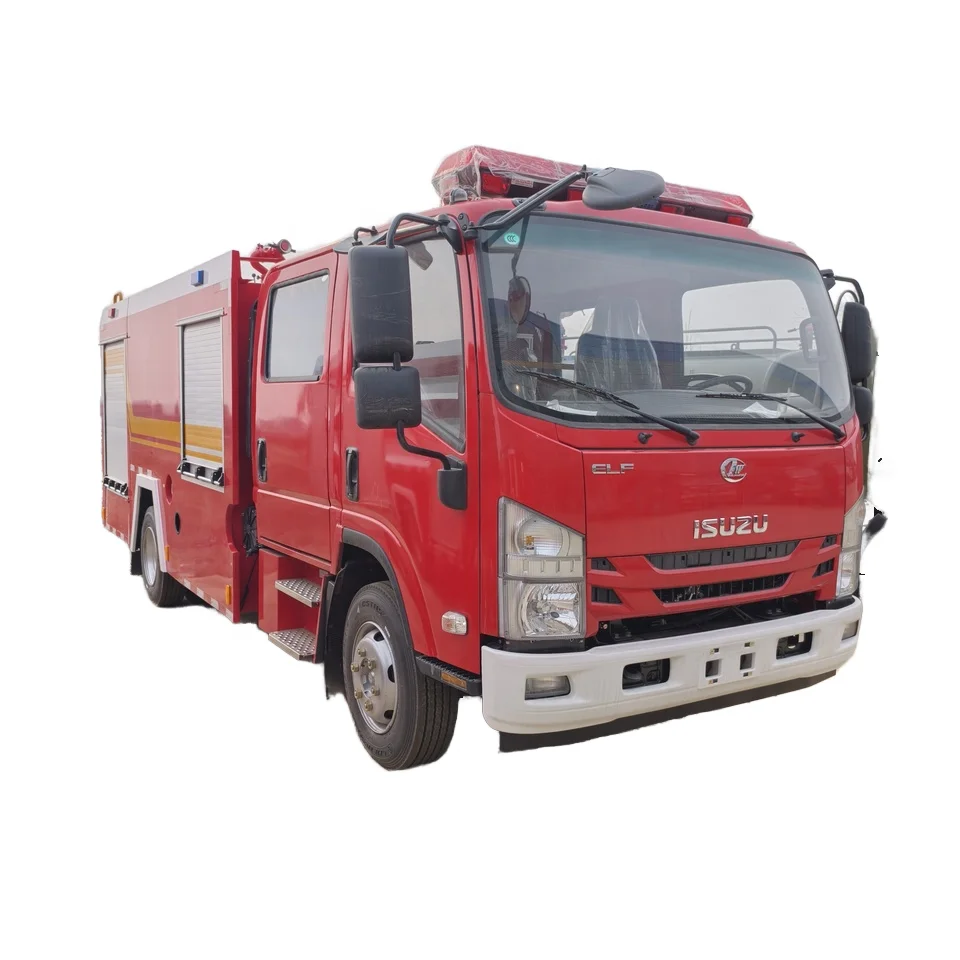
The 4x2 Emergency Fire Rescue Truck with Water Sprinkler combines rescue capability with water sprinkler function, giving mixed-role agencies a compact, multi-purpose option.
Core Functions of a Fire Engine Truck
Regardless of type, all firefighting trucks perform some combination of the following functions:
- Water pumping and delivery: Drawing water from external sources or onboard tanks and delivering it through hoses at the required flow rate and pressure.
- Crew and equipment transport: Safely transporting firefighters and the specialized tools, hoses, and protective gear needed at the scene.
- Access and rescue: Enabling entry into structures, reaching elevated positions, or extracting trapped personnel.
- Hazard containment: Deploying foam, dry powder, or other suppression agents for chemical or fuel fires beyond the reach of plain water.
In actual incident response, a single fire engine rarely operates in isolation. Real-world effectiveness depends on coordination between unit types — the pumper establishing a water supply, the tanker replenishing it, the aerial covering elevated access, and the rescue unit managing casualties. Single-vehicle performance matters, but so does how your fleet units work together.
Typical Application Scenarios by Fire Engine Type
| Fire Engine Type | Primary Application | Typical Deployment Environment |
|---|---|---|
| Pumper | Structural firefighting, water delivery | Urban, suburban, municipal fire stations |
| Water Tanker | Water supply at remote or rural scenes | Rural areas, industrial zones, construction sites |
| Aerial Ladder | High-rise rescue, elevated firefighting | Commercial districts, high-rise residential, factories |
| Rescue Truck | Extrication, technical rescue, hazmat | Highways, industrial sites, disaster response |
If your deployment environment is primarily rural with limited water infrastructure, a tanker-heavy fleet makes more operational sense than a pumper-only lineup. Conversely, if you're equipping a city fire station covering commercial high-rise zones, aerial capability moves to the top of the procurement checklist. The scenario drives the specification — not the other way around.
Key Parameters to Evaluate When Procuring Fire Engines
Understanding fire engine types is only the starting point for government procurement committees and emergency response institutions. The next step is translating operational requirements into concrete technical specifications:
- Pump flow rate: Measured in GPM or L/min; must match the water demand of your typical incident type.
- Water tank capacity: Determines initial supply duration before external water is needed.
- Chassis configuration: 4x2 for standard road use; 4x4 or 6x4 for off-road, rough terrain, or heavy-load applications.
- Aerial reach: For ladder trucks, match to the building heights in your coverage area.
- Crew capacity: Minimum 3-4 personnel for structural engines per NFPA Type 1 standards.
- Fuel and engine compatibility: Critical for international deployments — fuel quality and service network availability at the destination matter as much as factory specifications.
For agencies procuring fire engines for export markets or regions where infrastructure varies significantly, working with a manufacturer that has experience in international compliance documentation — certificate of origin, CCC certification, and export technical files — reduces procurement risk considerably. CLW Special Truck Sales Co., Ltd. specializes in firefighting truck export for markets across Asia, Africa, South America, and Oceania, offering flexible chassis configurations and full export support documentation.