EN

Small Truck Mounted Cranes for Compact Work Sites
A compact job site does not automatically call for the smallest crane. It calls for a lifting solution whose vehicle footprint, setup envelope, working radius, and load path all fit the job. For contractors, fleet buyers, and project planners, small truck mounted cranes can be a practical answer where a larger mobile crane would struggle to enter, deploy, or work efficiently.
The key is to define “compact” correctly. A narrow access road may still lead to a generous setup area. Conversely, an open yard can be restrictive if the truck must work close to an excavation, under overhead services, or beside active traffic. The right small truck mounted cranes are selected from the lift plan—not from vehicle size alone.
What Counts as a Compact Work Site?
Compact sites usually have one or more constraints: limited approach width, short turning space, a confined outrigger zone, low overhead clearance, nearby structures, or a restricted place to set down the load. Common examples include urban utility corridors, residential developments, small industrial yards, depot maintenance areas, roadside service locations, port-side logistics spaces, and construction sites that remain partially open to traffic.
For these jobs, small truck mounted cranes combine road mobility with on-board lifting. The truck brings the crane and load-handling capability to the same point, which can reduce the number of machines that need access to the site. That advantage only holds when the vehicle can safely enter, stabilize, slew, and exit without disrupting the rest of the operation.
Urban Streets, Alleys, and Roadside Utility Work
Urban work is often compact because access and public movement compete for the same space. Small truck mounted cranes can suit street-light maintenance, utility material handling, municipal repairs, landscaping supply placement, and short-duration construction support where a full-size crane would occupy too much road space.
Before choosing a configuration, map the approach route and the actual work position. Check lane width, corner radius, parking restrictions, pedestrian separation, overhead wires, trees, balconies, and the space needed to deploy outriggers. A crane that can drive into an alley is not automatically able to lift there. The support area and the intended working radius must both be assessed.
For public-facing work, the operating plan should also identify a controlled exclusion zone and a predictable load path. Keeping the lift close to the truck can improve practicality, and capacity should be verified against the manufacturer’s load chart for the exact boom length, radius, and stabilizer setup.
Small Construction Lots and Infill Projects
Infill construction and small commercial upgrades often have tight boundaries, limited laydown space, and trades working in parallel. In these conditions, small truck mounted cranes are useful for moving bundled materials, structural components, equipment, or site supplies from the delivery point to a planned set-down area.
The main benefit is operational flexibility: the truck can arrive with the lifting equipment already installed, perform a scheduled lift, and clear the site when the task is complete. That can be more workable than staging a separate crane where access is limited. Still, planners should avoid treating a compact crane as a shortcut around lifting discipline. Confirm ground support, obstacle clearance, rigging method, communication roles, and a clear travel route for the load.
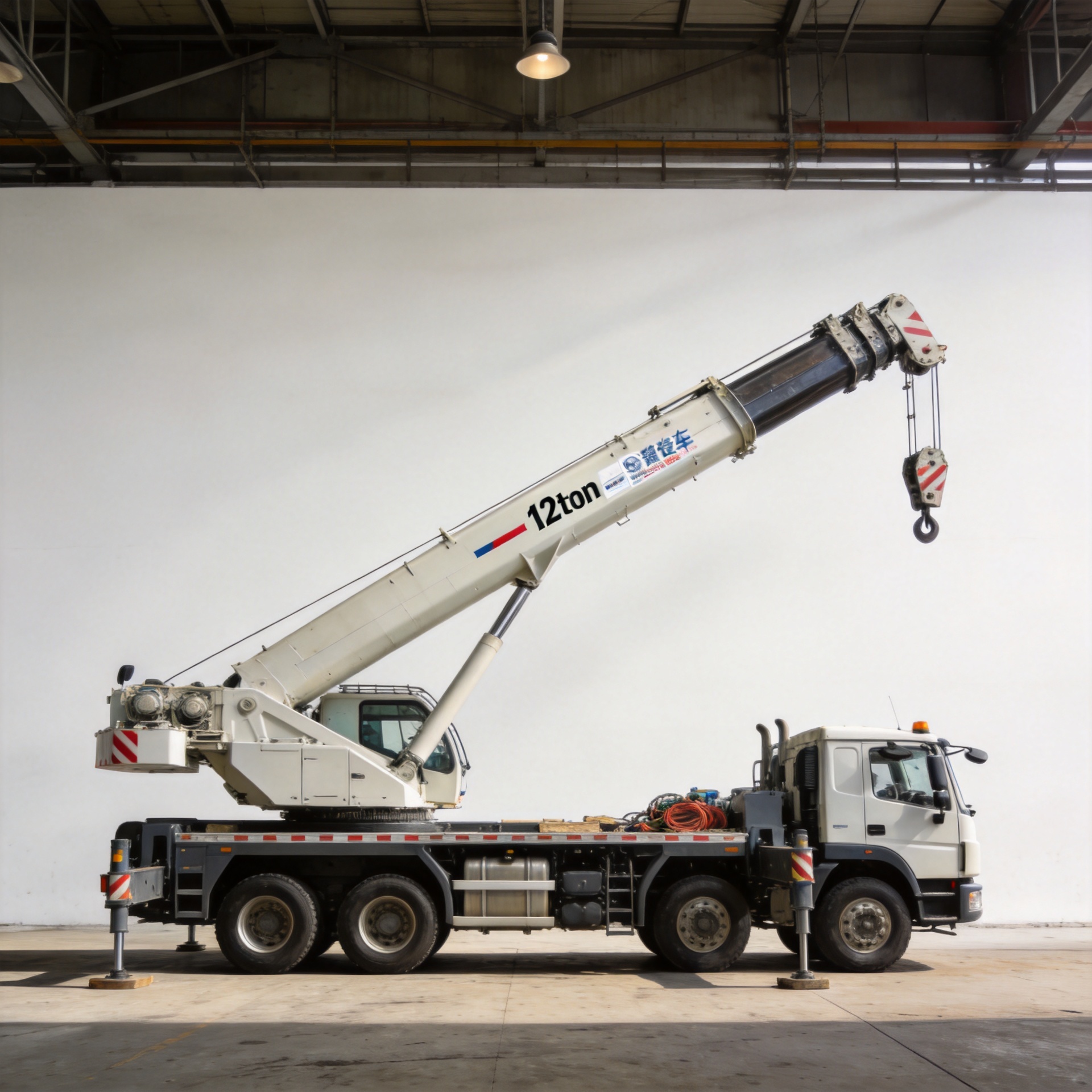
For buyers evaluating a truck-based lifting platform, the Dongfeng 12 Ton Hydraulic Telescopic Boom Mounted Crane Special Transportation Truck Crane is an example of a truck-mounted crane product category to review against the planned lift, site access, and local operating requirements. Its suitability should be confirmed from its approved specifications and the actual project conditions.
Industrial Yards, Warehouses, and Plant Maintenance Areas
Not every compact site is an urban site. Many factories, warehouses, recycling yards, and service depots have usable road access but little spare operating room between buildings, racking, stored materials, and moving vehicles. Small truck mounted cranes can support maintenance work, equipment replacement, and material transfer when the task requires mobility rather than a permanently installed overhead lifting system.
In these settings, look beyond width. The critical questions are whether the truck can turn into position, whether the boom can work around fixed obstructions, and whether the load can travel without passing above people or active production areas. Indoor or partially covered areas add another question: is there sufficient headroom for the boom angle and the suspended load? A small chassis does not eliminate the need for a complete clearance check.
Remote Service Locations and Linear Infrastructure
Roadside signs, drainage systems, telecom installations, energy assets, and rural maintenance points can be compact for a different reason: there may be little prepared space outside the travel lane or shoulder. Small truck mounted cranes are often considered because they can carry tools or materials and provide lifting capability in one mobile unit.
Here, ground evaluation matters as much as access. Soft shoulders, sloped terrain, trench edges, or recently disturbed soil may not provide a suitable setup area. Outrigger placement and bearing support need to be reviewed before the lift begins. If the ground cannot support the planned configuration, the correct decision may be to change the work position, improve the support condition, use appropriate mats as specified by the lift plan, or select another lifting method.
How to Match a Crane to a Restricted Site
A disciplined selection process helps distinguish a good compact-site application from a poor one. Use these questions early:
- Can the truck reach the work position? Review approach width, turning points, grade, overhead restrictions, and delivery timing.
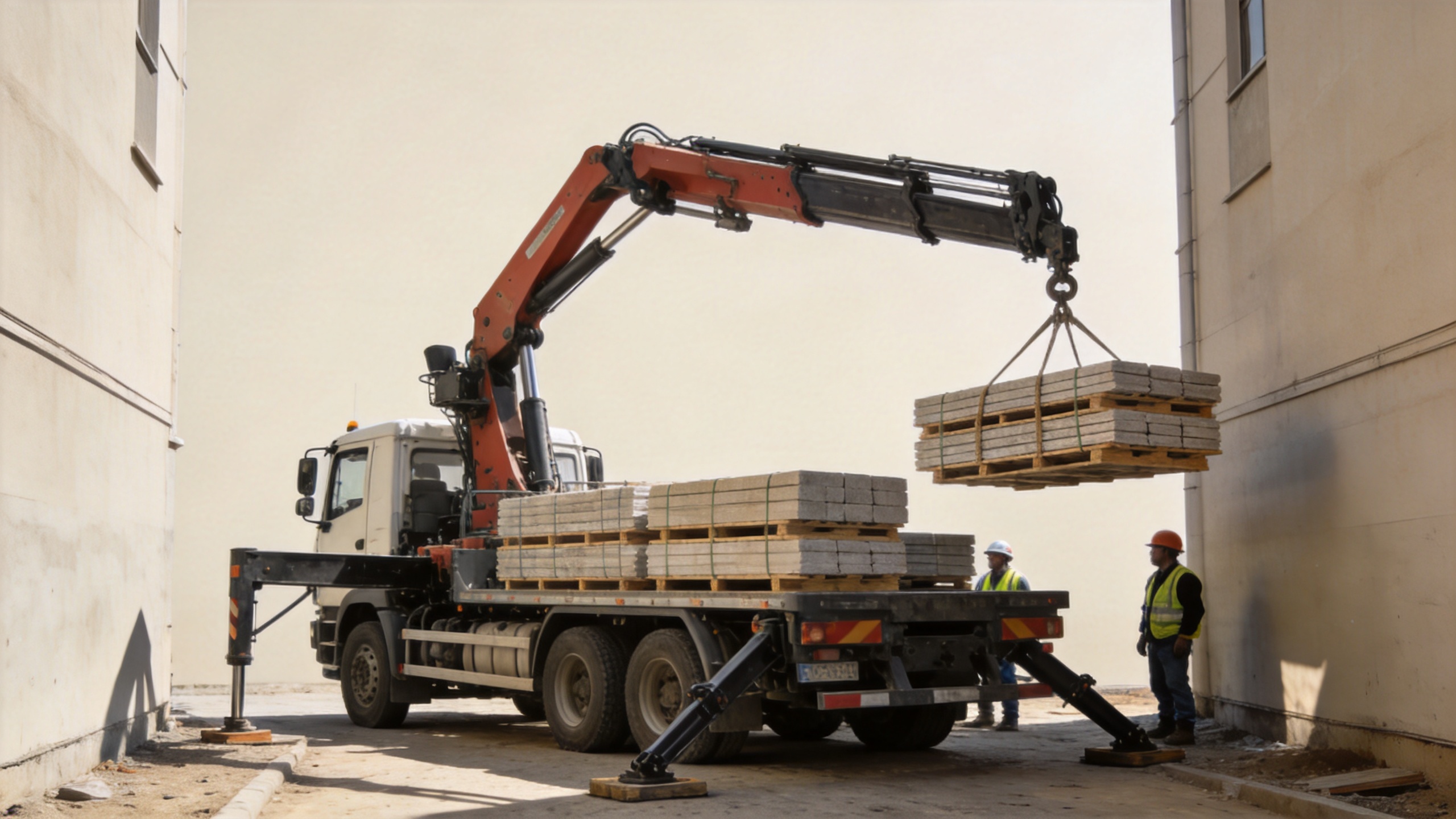
- Can it stabilize safely? Reserve space for outriggers and confirm the ground is firm, level, and suitable for the planned support arrangement.
- What is the real lifting radius? Measure from the crane’s working position to the pick and set-down points, rather than estimating from a drawing.
- What configuration is required? Check the manufacturer’s load chart for the actual boom length, radius, and stabilizer condition.
- Is the load path controlled? Plan clearance from structures, vehicles, people, and overhead hazards; assign communication roles before lifting.
- Can the truck leave safely afterward? A workable lifting position also needs a safe exit route and restoration plan for the site.
This checklist reflects a broader point: compact-site capability is a system match. The vehicle, crane, support surface, lift geometry, crew procedure, and surrounding environment must all work together.
When a Small Truck Mounted Crane Is Not the Right Choice
Small truck mounted cranes are not a universal solution. A different approach may be required when the expected load and radius exceed the approved chart, the site cannot accommodate safe stabilizer deployment, ground conditions are uncertain, overhead hazards cannot be managed, or the load path crosses occupied areas. Long repetitive lifting cycles, exceptionally precise placement, and highly constrained indoor work may also favor other equipment or a revised work sequence.
That conclusion is not a limitation of the truck-mounted format; it is sound lift planning. Selecting the right machine includes recognizing when the site conditions do not support the planned configuration.
Final Takeaway
Small truck mounted cranes are well suited to compact work sites when access, setup space, load radius, and ground conditions have been evaluated together. They can be especially useful for urban service work, small construction lots, industrial maintenance areas, and remote infrastructure tasks where a combined transport-and-lift vehicle improves site logistics.
Start with the site and the lift—not the crane size. When the approach route, outrigger zone, clearance envelope, load chart, and crew plan align, small truck mounted cranes can deliver a practical and controlled way to handle lifting work in restricted spaces.