EN
EN


Rear Loader vs Front Loader Garbage Truck: Pros, Cons and Selection Guide
When procuring a waste disposal truck fleet or evaluating a single waste disposal truck for municipal operations, most buyers face the same question early: rear loader or front loader? As someone who has worked through municipal equipment tenders across multiple jurisdictions, I find the answer depends far more on operational context than on specs alone. Choose the wrong type, and you will spend the next several years managing route inefficiencies, maintenance delays, or clearance conflicts. The right selection depends on loading efficiency, the road network you operate in, your maintenance capacity, and your total procurement budget.
This guide compares rear loaders and front loaders across four decision dimensions—loading efficiency, road accessibility, procurement cost, and maintenance frequency—and closes with a practical selection framework based on city density and operation model.
What Distinguishes Rear Loaders from Front Loaders
Both are compactor-based waste management garbage trucks designed to collect, compact, and transport municipal solid waste. The core difference is the loading mechanism and the operational model it demands.
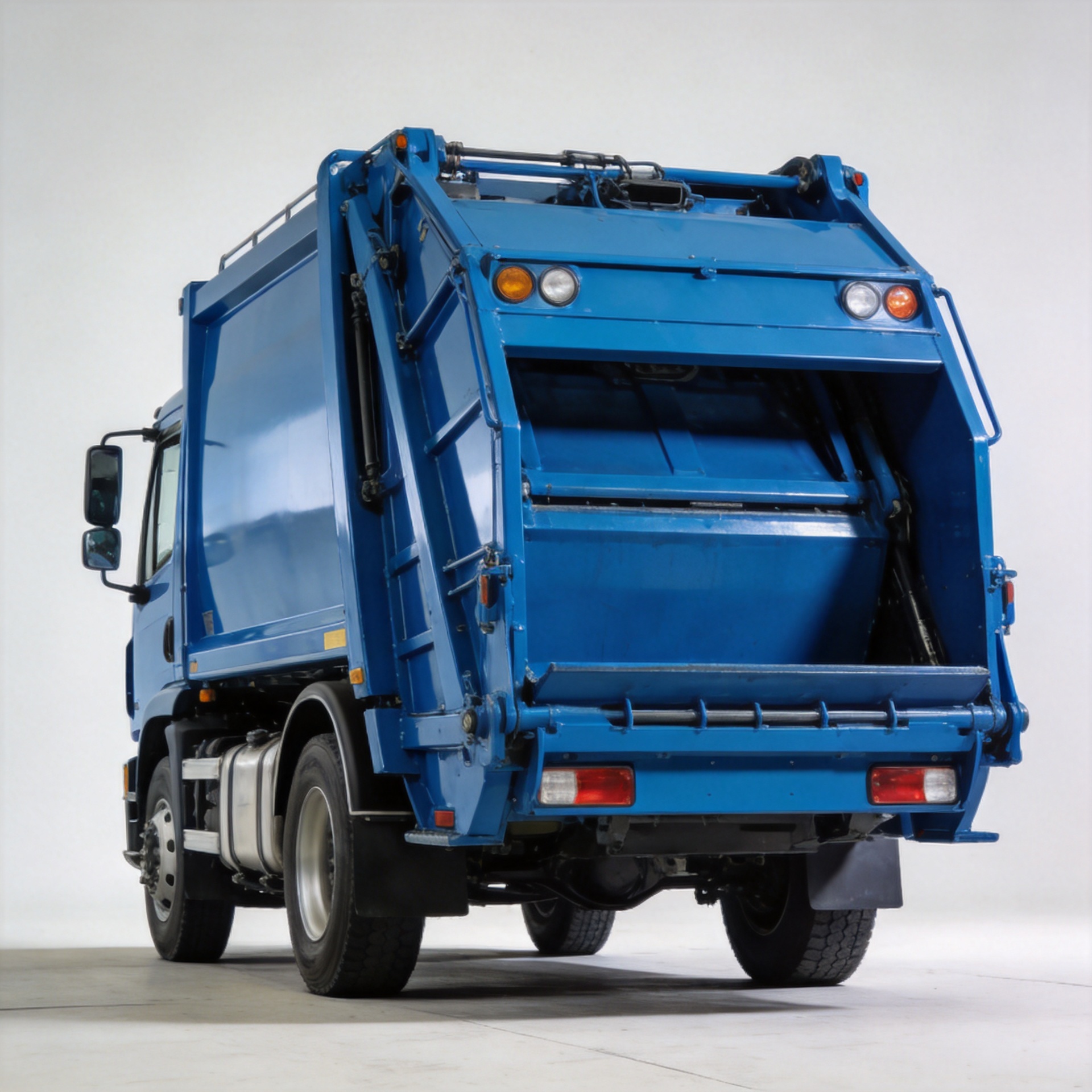
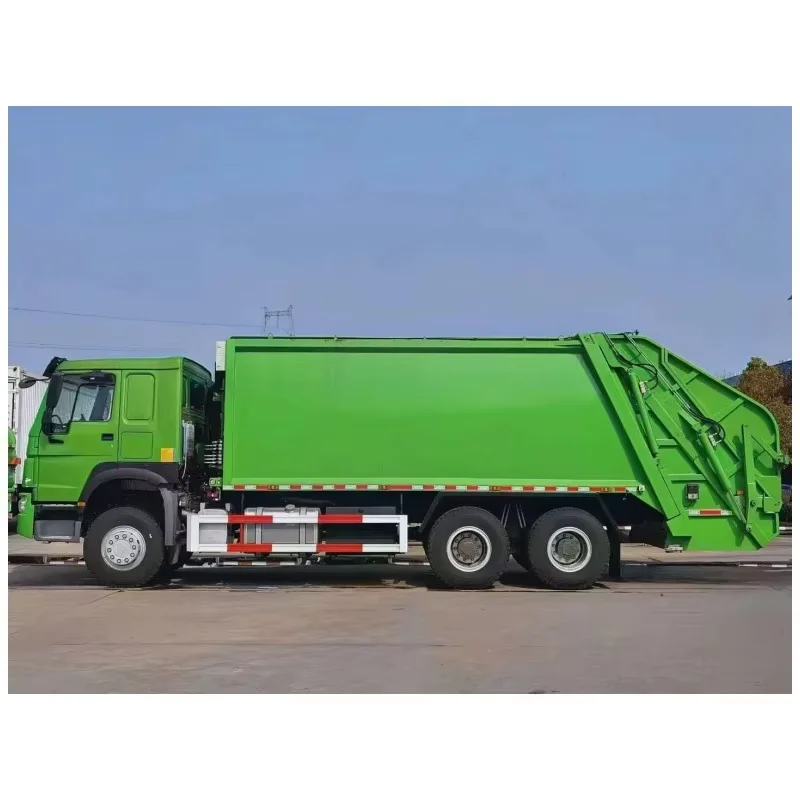
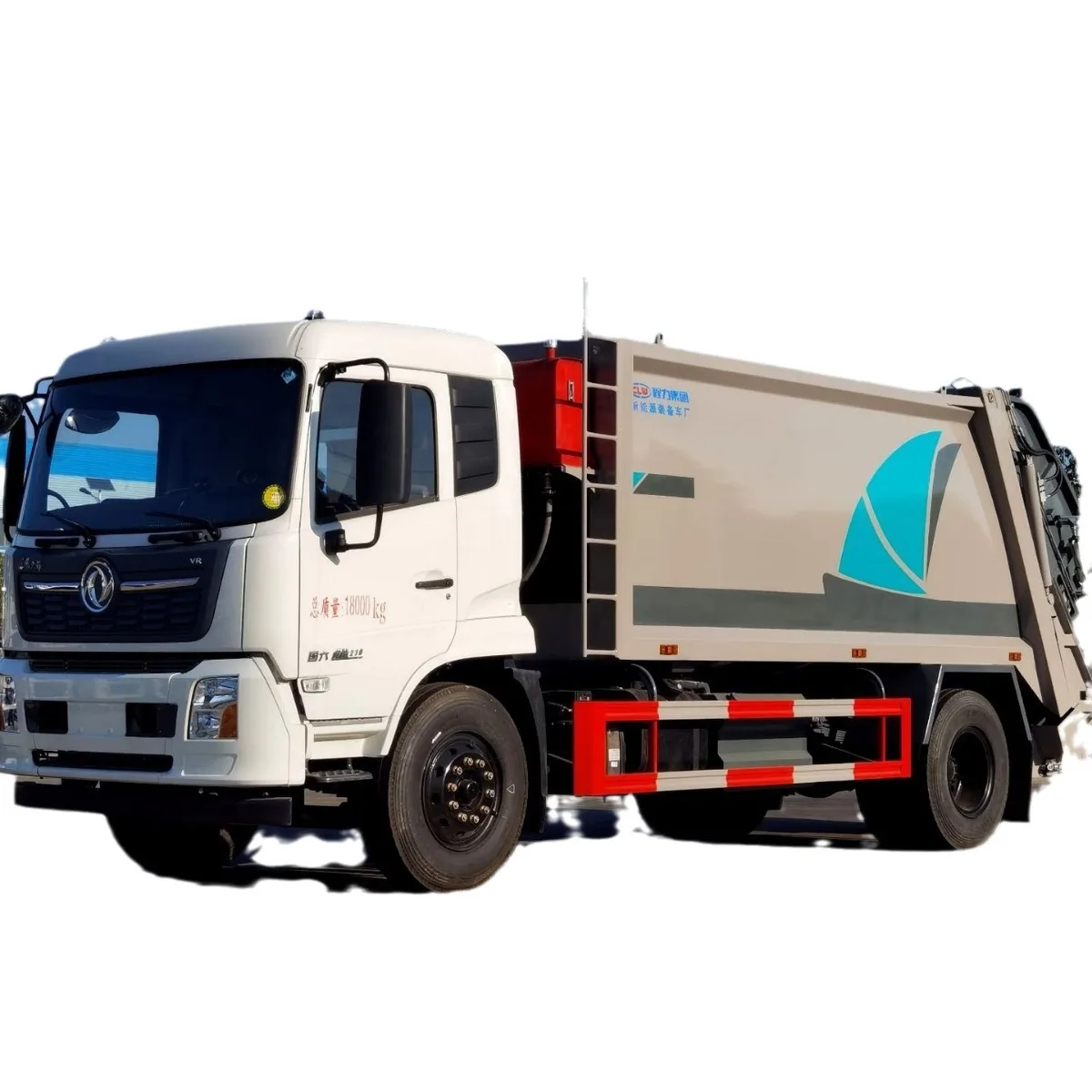
Rear loaders receive waste through a hopper at the rear of the body. A collection crew loads bins, loose waste, or bulky items into the hopper, and a hydraulic compaction blade pushes the load toward the front of the body. This design handles irregular waste streams and mixed domestic refuse with high adaptability.
Front loaders use hydraulic forks mounted at the front of the truck to lift standardized dumpsters or commercial containers overhead and empty them into the body. The entire cycle—lift, tip, compact—is controlled by a single driver, eliminating the need for a ground crew on standard commercial routes.
Loading Efficiency: Capacity and Compaction Performance
When evaluating a waste disposal truck for commercial route performance, front loaders carry 16–32 yd³ (approximately 14–24 m³) of compacted waste per load, with compaction ratios reaching up to 5:1. On commercial collection routes with standardized dumpsters, a single-driver front-loader operation can service 600–800 stops per shift—a productivity figure that rear loaders rarely match on the same route type.
Rear loaders offer body capacities from 8–25 yd³ (6–19 m³), with compaction ratios between 3:1 and 6:1 depending on body design and waste composition. Premium rear-load bodies handling domestic organic waste consistently reach the upper end of that range. The flexibility to handle diverse waste types—including oversized items that would jam a front-loader mechanism—is a practical advantage on mixed residential routes.
If your waste disposal truck routes involve high-density commercial areas with consistent dumpster sizes, front loaders deliver the higher efficiency per shift. If the route includes residential zones with irregular bins, mixed waste, or variable stop types, the rear loader's adaptability is the stronger operational asset.
Road Accessibility: Matching the Loader to Your Urban Infrastructure
For any waste management garbage truck operating in a dense urban environment, clearance and access are non-negotiable constraints. Front loaders require consistent overhead clearance—typically 14 feet or more—to complete the lift cycle safely. They also need enough turning radius at each collection point. In dense urban cores, older city districts with narrow alleyways, or developing-market environments where road infrastructure varies widely, front loaders frequently cannot complete their planned routes without detours or manual intervention.
Rear loaders are substantially more adaptable. With the loading mechanism at the back and collectors working on foot, they navigate narrow streets, irregular collection points, and constrained access environments. For municipalities managing mixed urban-suburban routes, or for operators in markets where road conditions are less predictable, rear loaders carry significantly lower route-completion risk.
If you are selecting a waste bin truck or waste management garbage truck for a high-density residential area, an older urban center, or any route with overhead clearance constraints, road accessibility will likely override raw capacity as the primary selection criterion.
Procurement Cost and Maintenance Frequency
A waste disposal truck purchase decision typically involves evaluating total acquisition cost. Front loaders carry a higher unit acquisition cost due to the precision hydraulic lifting system. European rear compaction units are priced around £185,000 (~€215,000) per vehicle. China-manufactured equivalents on major chassis platforms—Dongfeng, HOWO, and similar—are available at substantially lower price points while meeting Euro V or equivalent emission compliance requirements.
On maintenance:
- Rear loaders rely on simpler hydraulic mechanics. The compaction blade and cylinder are well-understood components with established service track records across Asian, African, and South American markets. Predictable maintenance intervals and broad spare parts availability reduce fleet downtime risk.
- Front loaders depend on precision fork alignment and lift arm tolerances. Repeated heavy lifts on rough road surfaces increase wear rates on alignment-critical components. In regions where specialized service capacity is limited, repair downtime tends to be longer when issues occur.
From a lifecycle cost perspective, the higher per-shift productivity of front loaders can offset the premium if route conditions are consistently favorable. In markets where total fleet acquisition budget is the primary constraint and in-country maintenance capability is limited, rear loaders typically deliver better total cost of ownership.
Specification Comparison
| Specification | Front Loader | Rear Loader |
|---|---|---|
| Body Capacity | 16–32 yd³ (14–24 m³) | 8–25 yd³ (6–19 m³) |
| Compaction Ratio | Up to 5:1 | 3:1 to 6:1 |
| Crew Required | 1 driver (single-operator) | 1 driver + 1–2 collectors |
| Waste Type Fit | Standardized commercial dumpsters | Mixed domestic, bulky, food waste |
| Road Clearance Needed | ≥14 ft overhead clearance required | Handles narrow streets and irregular access |
| Stops Per Shift | 600–800 (commercial route) | Route-dependent; lower on comparable routes |
| Maintenance Complexity | Higher (lift mechanism alignment) | Lower (simpler hydraulic compaction) |
| Typical Application | Commercial districts, industrial zones | Residential, mixed urban, narrow routes |
Selection Guide: Matching Truck Type to Your Operation
If your waste disposal truck or waste management garbage truck fleet primarily serves commercial districts with standardized dumpster containers and consistent road infrastructure, a front loader is the stronger operational choice—provided the route supports the clearance and access requirements.
If you manage residential collection, mixed waste streams, or routes with variable infrastructure, a rear loader's adaptability and lower maintenance complexity make it the lower-risk selection.
For municipal buyers operating across multiple city zones, a mixed fleet approach is often the most practical answer: front loaders for commercial blocks with predictable dumpster schedules, rear loaders for residential neighborhoods and older urban areas where route flexibility matters.
CLW offers rear-load compactor options matched to different fleet scales. The Dongfeng 4×2 10–12 m³ compressed garbage collection truck suits smaller municipality routes and transfer operations, while the HOWO 6×4 20 cbm rear-loading compactor with PLC hydraulic system covers higher-volume waste disposal truck requirements for larger municipal and commercial fleets.
Whether you are selecting a rear-load waste bin truck for residential neighborhoods or a front-loader for commercial zones, the consistent rule applies: match the loader type to your route constraints and waste stream composition first, then optimize for capacity and procurement cost within those constraints. A high-capacity front loader that cannot complete its assigned route delivers less operational value than a well-matched rear loader that runs reliably every shift.