EN
EN


How to Choose a Garbage Compactor Truck for Municipal Sanitation Fleets
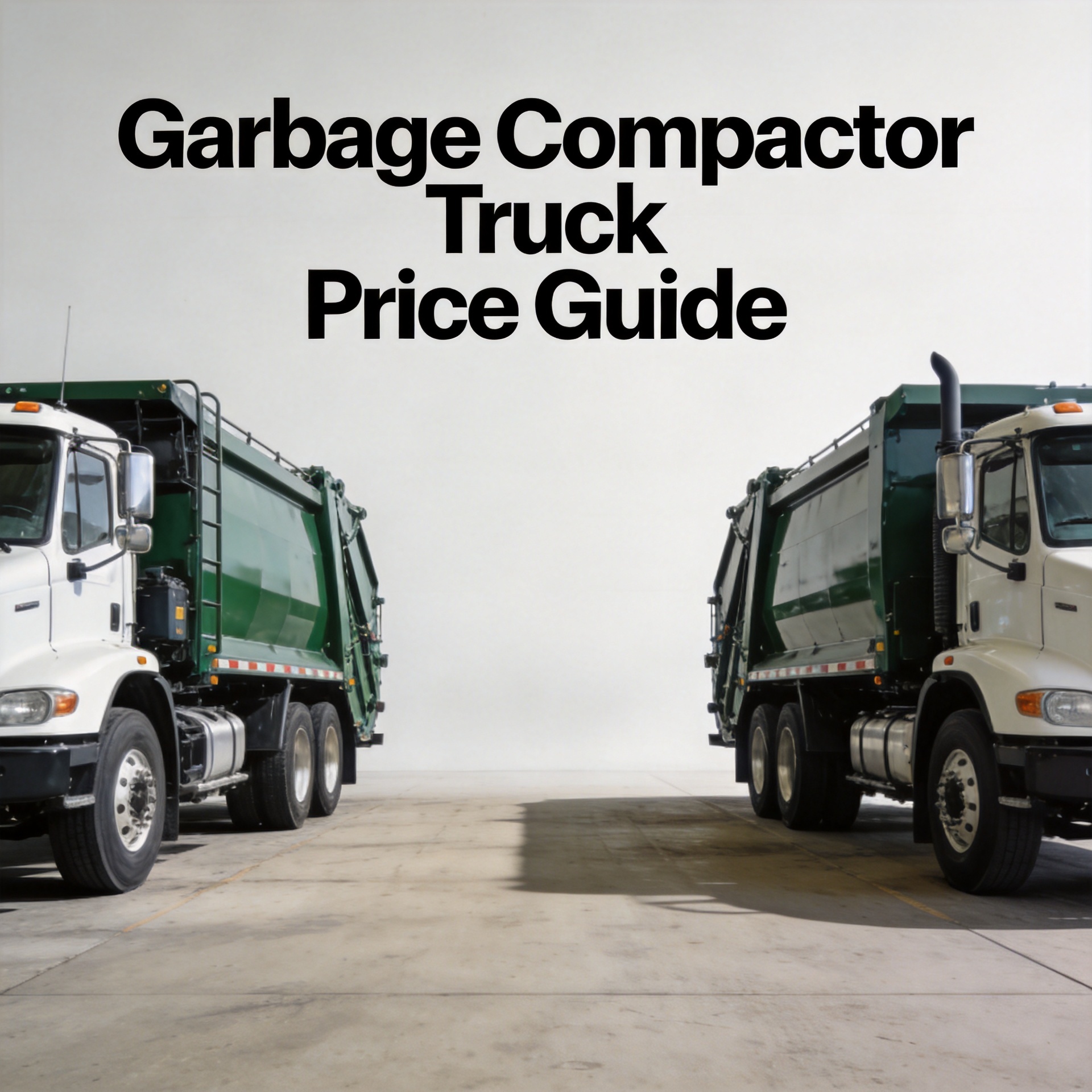
Procurement decisions for municipal sanitation fleets do not usually go wrong because someone picked the wrong brand. They go wrong because capacity was sized for the wrong routes, or the compression system did not hold up in continuous daily operation, or the supplier's after-sales network turned out to be thinner than the contract suggested. Choosing the right waste management trucks takes more than a spec sheet comparison.
This guide walks through five dimensions that experienced procurement teams evaluate when building or refreshing a compressor garbage fleet — from capacity sizing and compression ratio to chassis brand selection, hydraulic system reliability, and after-sales support. Whether you are outfitting a district-level fleet or procuring for an entire city's sanitation department, these factors apply across scales.
1. Match Capacity to Your City Scale and Collection Routes
Body capacity is the most visible spec on any waste management trash truck. Matching it to actual operational patterns rather than assuming larger is always better is where procurement planning usually starts.
- Small capacity (3–8 m³): Well suited for narrow residential lanes, old town districts, and high-frequency collection routes in dense neighborhoods. These waste management trucks can access streets that larger vehicles cannot, allowing more collection cycles per shift.
- Medium capacity (10–16 m³): The most widely deployed range for standard municipal routes. A 10–12 m³ compactor handles mixed residential and commercial routes efficiently without straining smaller bridge and road load limits.
- Large capacity (18–25 m³): Appropriate for trunk collection routes, transfer station operations, and industrial-zone sanitation. The 20 m³ segment has grown among medium-to-large cities as a way to reduce total vehicle count while maintaining collection frequency.
At some point, most fleet planning discussions come back to the same question: fewer large waste management trucks or more small ones. A single 20 m³ compactor truck can cover routes that would otherwise require two to three 8 m³ units. But that math only holds if road widths, weight limits, and depot space can accommodate the larger vehicle. Build both scenarios into your route simulation before committing to a configuration.
2. Evaluate Compression Ratio for Operational Efficiency
The compression ratio shows how much raw waste volume is reduced by the compaction mechanism — and it directly impacts how many trips to the transfer station your fleet needs per day.
Industry data shows that compression in most markets runs around 1:3 for smaller trucks (6–7 m³ body) and reaches 1:6 for medium and large configurations (10–22 m³). Some waste management rear loader garbage truck models claim volume compression ratios up to 1:6 under optimized conditions, though real-world performance on mixed municipal waste typically settles between 1:4 and 1:5 depending on waste density and moisture content.
What procurement teams sometimes underestimate is the difference between volume compression and weight-based compaction efficiency. A truck's compression ratio spec is measured against loose, dry waste. Wet food waste and mixed recyclables produce different results. When comparing specifications across suppliers, ask for test data on waste types consistent with your city's waste composition profile — not just generic lab figures.
Higher compression ratio means fewer trips per day, reducing fuel cost and driver hours. For a medium-sized city running 15–20 waste management trucks, this translates into meaningful operational savings over a five-year service life.
3. Compare Chassis Options: Dongfeng, HOWO, and Other Configurations
For municipal procurement in China and export markets across Asia and Africa, the chassis choice typically comes down to three major platforms: Dongfeng, HOWO (Sinotruk), and alternatives such as FAW or CAMC. Each has a distinct profile across load capacity, parts availability, and market familiarity.
- Dongfeng 4x2 chassis: A widely used configuration for medium-capacity waste management trucks in the 10–14 m³ range. Dongfeng's parts network is extensive across second and third-tier cities in China and in Southeast Asian markets. The Dongfeng 4x2 10m³–12m³ compressed garbage collection truck combines diesel efficiency with a compressed collection body suited for standard municipal routes.
- HOWO 6x4 chassis: The preferred platform for heavy-duty configurations above 16 m³. The HOWO frame offers higher GVW tolerance and is commonly specified with PLC hydraulic controls on the upper body. The HOWO 6×4 20 m³ compactor garbage truck with PLC hydraulic system is a representative model, with rear-loading and automated compaction controls suitable for large-scale municipal operations.
- FAW and CAMC: Alternative choices for procurement tenders requiring multi-brand diversity. FAW offers competitive pricing in the 10–16 m³ segment, while CAMC is increasingly specified in African infrastructure projects due to localized after-sales support agreements.
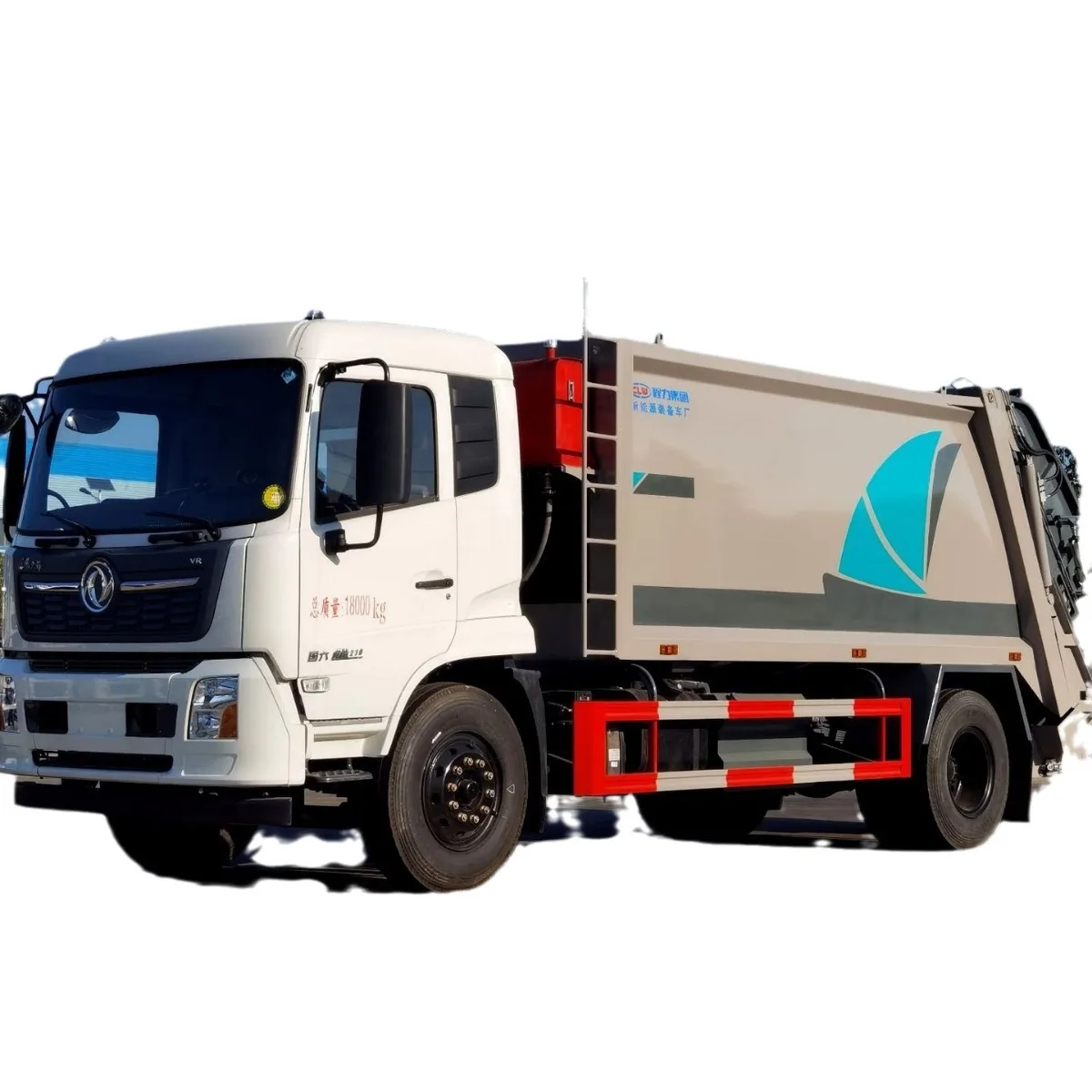
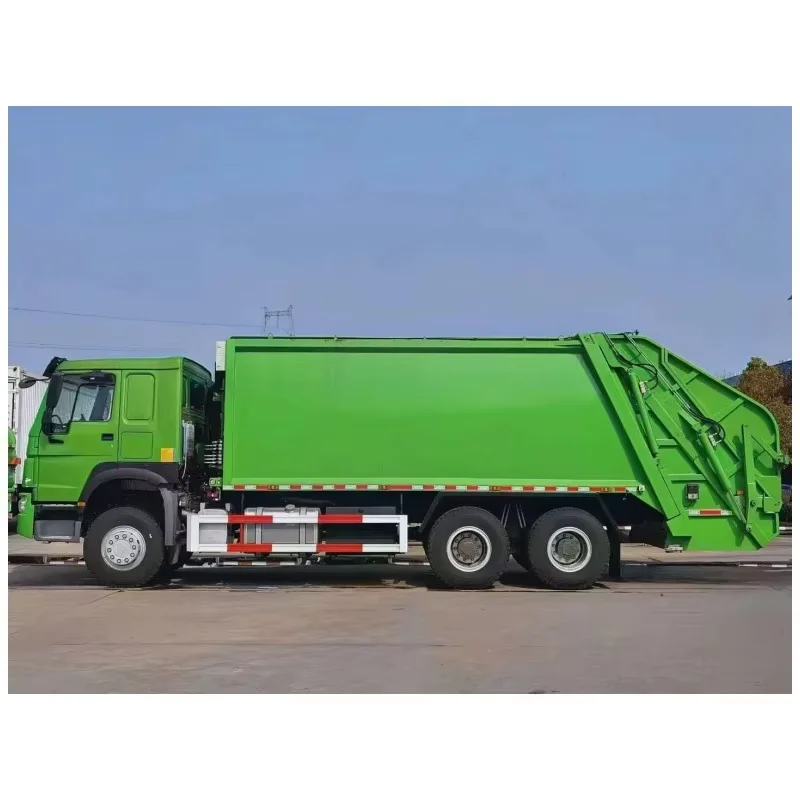
The supplier's ability to source and maintain multiple chassis brands matters as much as the brand itself. A manufacturer with stable supply relationships across Dongfeng, HOWO, and other major platforms gives procurement departments greater flexibility within a single contract.
4. Assess Hydraulic System Reliability and PLC Controls
The hydraulic system is the most operationally critical component on any compactor garbage truck — and the one most likely to cause unplanned downtime if it is underdimensioned or poorly maintained. There are two primary configurations:
- Manual hydraulic systems: Lower initial cost, simpler repair logic, and easier field maintenance. Suitable for fleets where drivers have variable skill levels or where local service infrastructure is limited.
- PLC-controlled hydraulic systems: Automated compaction sequencing reduces operator variability and protects the mechanism from overload cycles. PLC systems can log fault codes, which simplifies diagnostic work for maintenance teams. For fleets running 8–10 hour shifts, the reduced physical load on drivers is a practical productivity factor.
When evaluating hydraulic specifications, look beyond the pump pressure rating. Ask for cylinder seal standards, working fluid specifications, and recommended service intervals under continuous operation. A hydraulic system that looks adequate on paper can fail prematurely if operating temperatures or duty cycles exceed design parameters.
Response time commitments from suppliers deserve scrutiny. Promising 24-hour service for waste management trucks looks standard on paper, but without local technicians and parts inventory in your operating region, that promise has limited practical value.
5. Verify After-Sales Support Before Signing
After-sales support is also the dimension that is hardest to evaluate from a standard product quotation. Before finalizing any waste management truck procurement, these verification steps are worth including in your tender process:
- Parts inventory audit: Ask the supplier to specify which parts are held in regional stock versus centrally warehoused. Hydraulic seals, compaction blade wearparts, and ejector panel components should be available within 48–72 hours for a fleet in active operation.
- Technical documentation quality: Request actual maintenance manuals, electrical schematics, and hydraulic diagrams for the specific model being quoted.
- Reference verification: Contact two or three municipalities that have been running the same model for at least two years. Direct feedback on failure rates and response times provides more reliable input than factory test data.
- Training provision: Confirm whether the supplier includes driver and maintenance training as part of the delivery agreement. For departments introducing PLC-controlled systems for the first time, structured training reduces early-stage operational errors significantly.
The most cost-effective fleet of waste management trucks is not necessarily the one with the lowest per-unit purchase price. A compactor fleet that averages 15% less uptime due to hydraulic failures or delayed parts deliveries will cost far more over its service life than a slightly more expensive fleet with reliable support infrastructure.
Procurement Checklist Summary
A structured checklist helps procurement teams compare waste management trash truck offers on a consistent basis:
- Body capacity range and route compatibility
- Compression ratio with waste type test conditions
- Chassis brand, GVW rating, and axle configuration
- Hydraulic system type (manual/PLC), pump pressure, service intervals
- Regional service network coverage and parts lead times
- Training scope and technical documentation completeness
- Reference list from comparable municipal deployments
CLW Trucks offers compactor configurations from 10 m³ to 25 m³ across Dongfeng, HOWO, and other major chassis platforms. For procurement teams evaluating waste management rear loader garbage truck options across multiple capacity ranges, a manufacturer that demonstrates multi-chassis sourcing flexibility and regional support coverage is a practical starting point for building a reliable municipal fleet.