EN
EN


4 Main Types of Waste Management Trucks Every Municipal Fleet Should Know
As a procurement advisor who has helped municipal authorities evaluate sanitation fleets across multiple regions, I've seen one decision consistently create long-term operational friction: choosing the wrong waste management truck type for the job. A vehicle that's excellent on commercial collection routes can become a maintenance burden on narrow residential streets — and vice versa. Understanding the four main types before your next procurement cycle is one of the most practical steps a fleet manager can take.
The global rear-loader garbage compactor market alone was valued at USD 3.48 billion in 2025, projected to reach USD 5 billion by 2035, reflecting how central these vehicles are to municipal infrastructure investment. Yet market size tells you nothing about which waste management truck belongs on which route.
This guide breaks down the four primary waste management truck types — rear-loading compactor, front-loading compactor, side-loading compactor, and hook-lift — every municipal fleet should have mapped to its operational context before committing to a purchase. Capacity specifications range from 6 m³ for compact urban models to 25 m³ for high-volume configurations, and each type has distinct maintenance requirements that affect total cost of ownership.
Type 1: Rear-Loading Compactor Truck
The rear-loading compactor is the most widely deployed waste management truck globally. Waste is loaded into the rear hopper either manually by a collection crew or via mechanical bin lifters compatible with 120–360 L wheeled bins. A hydraulic compaction blade then reduces waste volume at a ratio of 5:1 to 6:1, meaning a single vehicle can carry significantly more than its body volume would suggest.
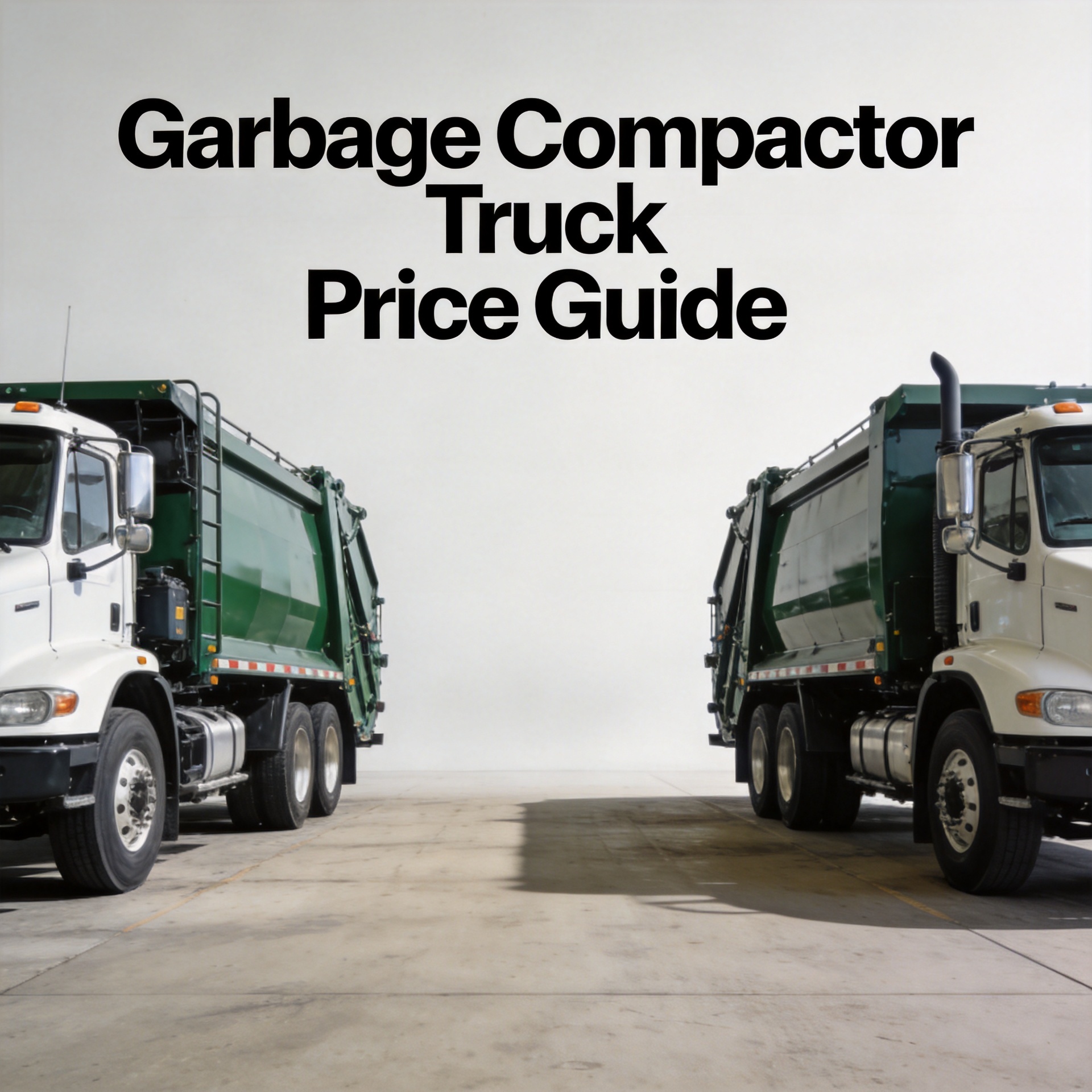
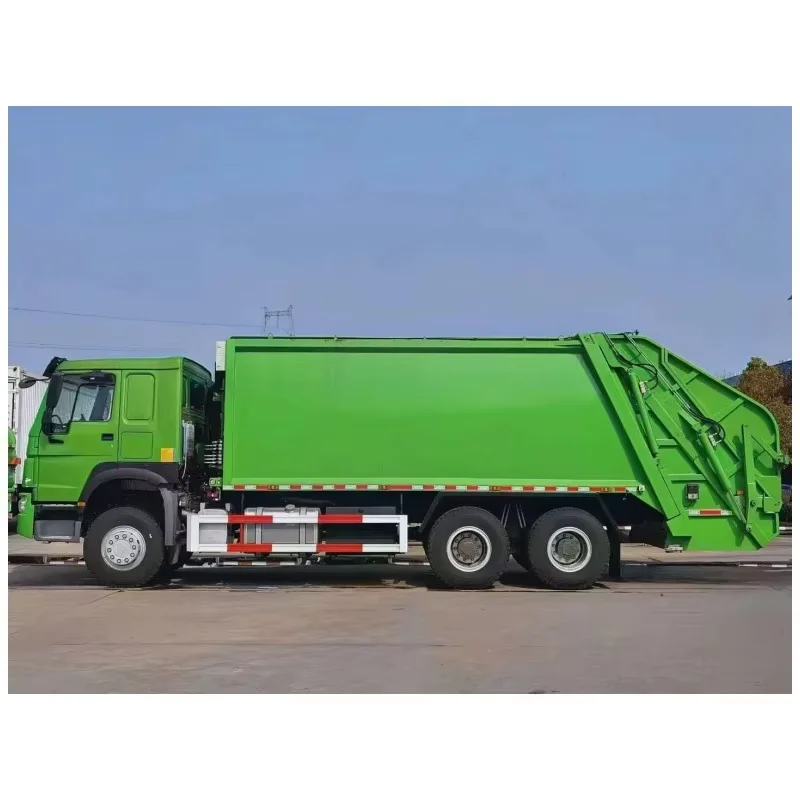
Capacity range: Typically 6–16 m³ for urban and residential configurations, extending to 20–25 m³ for larger chassis-mounted models. A Dongfeng 4×2 compressed garbage collection truck in the 10–12 m³ range offers a practical mid-size option for mixed residential and light commercial routes. For higher-volume municipal routes, HOWO 6×4 20 m³ rear-loading compactor trucks with PLC hydraulic systems provide automated operational control across the full collection cycle.
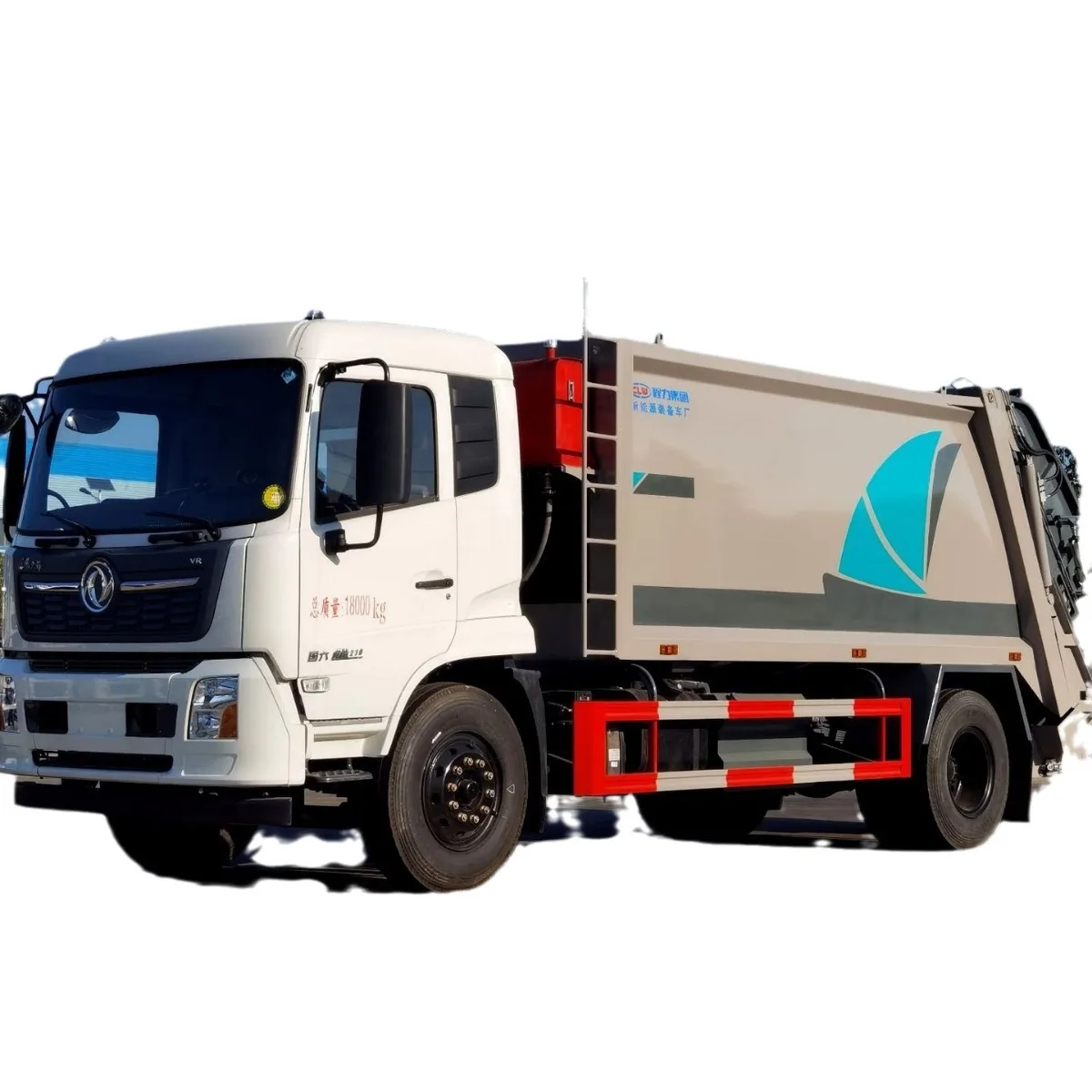
Recommended conditions: Rear-loading compactors perform well on mixed municipal routes — residential blocks, bulk collection, and brush waste. If your route involves non-standardized waste bin truck configurations or irregular stop patterns, this is typically the most flexible choice in the fleet.
Maintenance notes: The rear compaction mechanism — packer blade, hopper seals, and hydraulic cylinders — requires regular inspection. These components are straightforward to service, but consistent attention to compaction blade alignment prevents premature wear. Maintenance intervals are predictable once a servicing schedule is established.
Type 2: Front-Loading Compactor Truck
Front-loading compactor trucks are purpose-built for commercial and industrial collection. Hydraulic forks mounted at the front of the vehicle engage standardized front-load dumpsters, lift the container over the cab, and empty it into the rear-mounted body. Each lift cycle handles up to approximately 3,600 kg, and the integrated compaction system typically operates at a 5:1 ratio — making these vehicles highly efficient per collection stop when the container infrastructure is in place.
Capacity range: Generally 14–22 m³, suited to handling high-density commercial waste streams. These models are built for high-frequency commercial routes and require matching front-load container infrastructure at each collection point to operate at full efficiency.
Recommended conditions: Commercial properties, retail complexes, supermarkets, and industrial estates where front-load containers are already installed and standardized. The critical condition: if existing container infrastructure does not match front-load specifications, this waste management truck type loses most of its efficiency advantage.
Maintenance notes: The front-arm hydraulic assembly is mechanically more complex than a rear-loader hopper. High-cycle commercial routes place significant stress on fork mechanisms and arm alignment. Factor in higher initial vehicle investment and ongoing hydraulic system maintenance against the per-ton efficiency gains on qualifying routes.
Type 3: Side-Loading Compactor Truck
Side-loading trucks, particularly automated side loaders (ASL), have become the preferred choice for high-volume residential routes in cities that have standardized curbside collection to uniform wheeled bins. A single-operator configuration eliminates the side crew requirement, cutting route labor costs substantially over the vehicle's service life. Choosing this truck type is partly a decision about labor efficiency, not just vehicle capability.
Capacity range: Typically 6–18 m³, with three-axle automated models reaching larger configurations in markets with extended route requirements. Split-body side loaders that simultaneously collect two waste streams on a single pass add operational flexibility for recycling-integrated collection programs.
Recommended conditions: Standardized residential cart service with consistent bin placement is the core operating requirement. The automated arm is calibrated for specific bin sizes and placement positions. If your route involves irregular stop conditions, mixed container types, or significant bulk waste collection alongside standard carts, productivity drops sharply — the ASL design assumes standardized inputs to deliver its efficiency advantage.
Maintenance notes: Side-arm mechanisms and sensor systems on ASL models require periodic calibration in addition to standard hydraulic servicing. Plan for arm calibration checks as a routine maintenance line item, separate from engine and chassis service schedules.
Type 4: Hook-Lift Truck (Swing-Arm Garbage Truck)
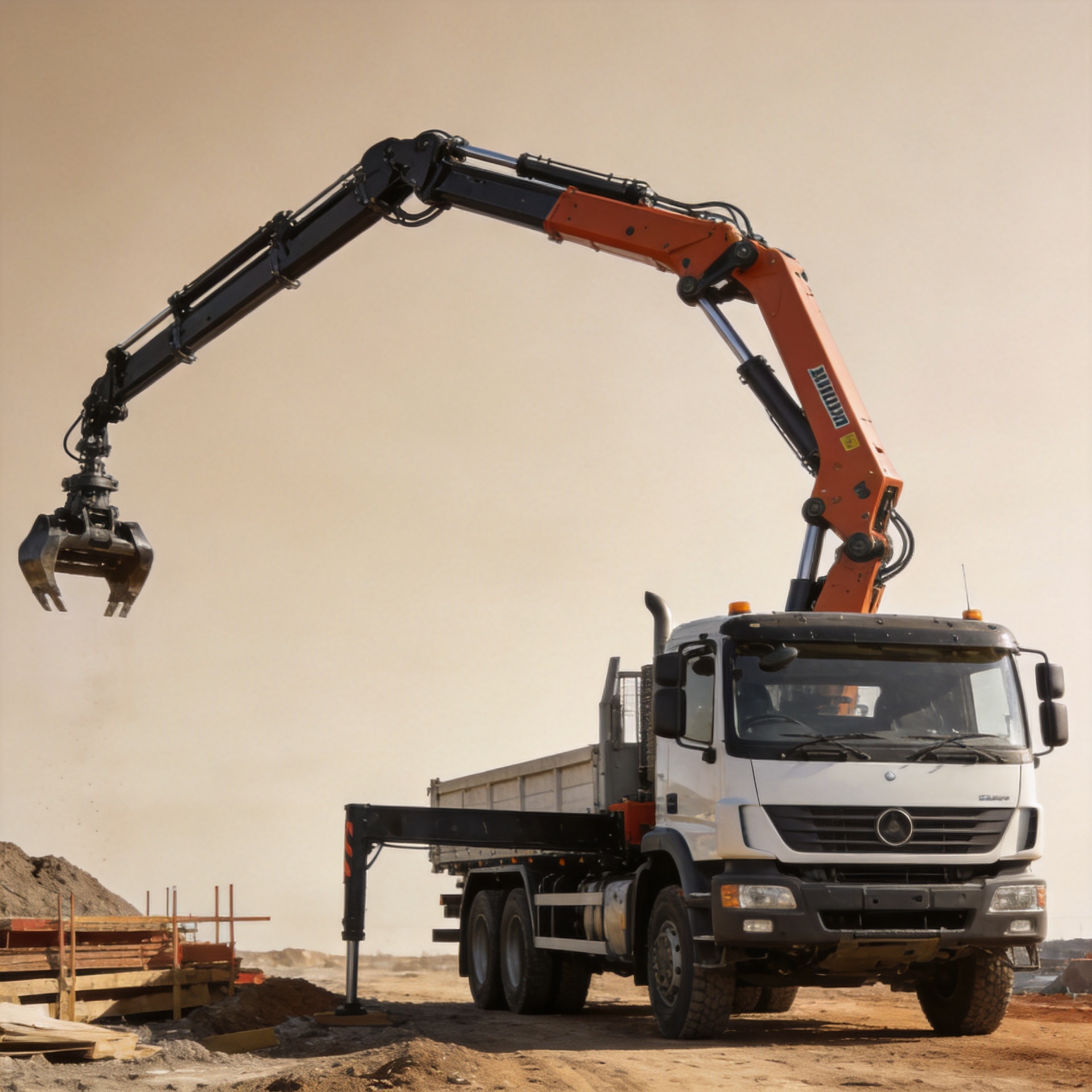
Hook-lift trucks follow a different operational logic from the three compactor types above. Instead of a fixed compaction body, the chassis uses a hydraulic hook-lift system to load, transport, and exchange detachable waste containers. This container-interchangeable design gives fleet operators flexibility that fixed-body waste management trucks cannot match, particularly useful when route requirements vary by season or when specialized waste streams require segregated collection.
Capacity range: Effective capacity varies with the container deployed — typically 8–20 m³ per container. A single hook-lift chassis can serve multiple container sizes across different route requirements by swapping containers at the depot, avoiding the need for multiple specialized chassis.
Recommended conditions: Construction and demolition debris, bulky item removal, specialized waste streams requiring segregation, or any scenario where container exchange at a fixed site — a transfer station, large commercial complex, or event venue — is operationally more practical than a full compactor route cycle. Hook-lift trucks also serve as strategic fleet flexibility assets when one container is being serviced while the chassis remains operational with another.
Maintenance notes: The hook-lift mechanism has fewer moving parts in direct contact with waste compared to a compactor body, which simplifies chassis-level maintenance. The containers themselves require separate inspection schedules. Hook arm pivot points, cable assemblies, and hydraulic locking systems need regular lubrication and load-bearing checks — track container and chassis maintenance records independently.
Planning Your Fleet Mix: Matching Truck Types to Operational Reality
If you've been selecting waste management trucks primarily on acquisition cost, a more sustainable approach is to evaluate operational fit first: what route types dominate your collection network, what container infrastructure is already deployed, and what your maintenance team can realistically service. Committing a significant share of your fleet budget to front-loaders before front-load containers are standardized across your commercial zones is a reliable way to undermine the procurement investment.
Most municipal fleets achieve the most reliable long-term cost and service balance through a mixed configuration:
- Rear-loading compactors as the backbone for mixed residential and bulk routes — the most operationally versatile waste management truck type across varying route and container conditions
- Front-loading compactors assigned specifically to commercial zones where container density and stop frequency justify the higher vehicle investment
- Side-loading compactors on high-volume standardized residential routes where single-operator efficiency has been identified as a documented budget priority
- Hook-lift trucks for variable, specialized, or construction waste needs where container flexibility outweighs compaction throughput as the primary operational requirement
If you're evaluating waste bin truck options for a fleet expansion or replacement cycle, the 6–25 m³ capacity range covered across these four types only becomes meaningful when matched to your actual route characteristics and container conditions. The right waste management truck for your fleet is determined by operational reality — not by the maximum rated specification in a brochure.
CLW Special Truck Sales Co., Ltd. manufactures compressed garbage collection and compactor vehicles across major chassis platforms, with configurations from 10–12 m³ for mixed municipal routes to 20+ m³ for high-capacity commercial collection. Contact our team for fleet composition guidance based on your specific route profile and operational requirements.