EN
EN


What Is a Flatbed Tow Truck? How It Works, Key Features and Common Uses
Flatbed towing is one of the most effective and damage-free methods for vehicle recovery and transport. When a large truck carries another vehicle on a fully horizontal platform — rather than dragging it on two wheels — that is flatbed towing in action. A flatbed tow truck, sometimes called a rollback or carrier tow truck, gives road rescue operators, auto repair shops, and fleet logistics companies a versatile tool that works across a wide range of recovery scenarios. This guide explains how flatbed towing works, what structural features to look for, and where it is most commonly applied.
How Does Flatbed Towing Work?
The core principle behind flatbed towing is that the entire recovered vehicle sits on a flat, elevated platform built into the rear of the truck. This full-platform approach is what separates flatbed towing from hook-and-chain or wheel-lift methods: every wheel of the towed vehicle is off the road surface during transport, protecting both the drivetrain and the chassis from additional stress or wear.
The flatbed towing process follows these steps:
- The bed tilts back. A hydraulic system angles the rear of the flatbed platform down toward the road, forming a loading ramp. This is the hallmark motion of flatbed towing — the sliding, tilting bed is what makes loading both operable and inoperable vehicles possible.
- The vehicle is loaded. For flatbed towing of a vehicle that can still move, the driver — or the operator — drives it up the ramp. For completely immobilized vehicles, the onboard winch (typically 3 to 8 tons pulling force) hauls the unit up onto the bed.
- The bed levels out. Hydraulics return the platform to a horizontal position, locking the recovered vehicle in a stable horizontal stance for the duration of the flatbed towing journey.
- The vehicle is secured. Heavy-duty straps and safety chains anchor all four wheels and the frame to the platform. Proper securement is a legal requirement in virtually every market where flatbed towing is operated commercially.
That combination of full-platform support is why flatbed towing is particularly well-suited for all-wheel-drive vehicles, luxury cars, and structurally damaged units, where even brief wheel-to-road contact during towing can cause secondary damage to transmissions, transfer cases, or suspension components.
Key Structural Features of a Flatbed Tow Truck
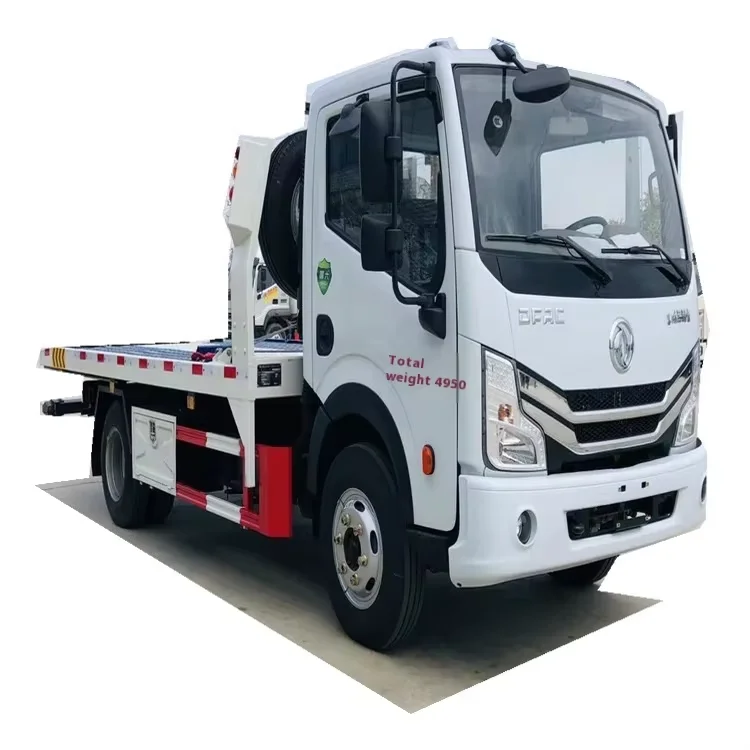
The efficiency and safety of any flatbed towing operation depends on the quality of the truck's structural components. Understanding these features helps buyers and fleet managers evaluate specific models for their recovery workload:
- Tilting and sliding platform (hinged bed): The high-strength steel bed slides rearward and tilts on a hydraulic pivot axis. This dual motion is the defining mechanism of flatbed towing, creating a smooth loading angle without requiring significant ground clearance at the recovery site.
- Hydraulic PTO system: The hydraulic pump draws power from the truck engine through a power take-off (PTO) unit, driving both the bed tilt and the winch. PTO capacity directly determines the maximum vehicle weight the unit can handle during flatbed towing.
- Winch and cable: A worm-gear or planetary winch rated from 3 to 8 tons of first-layer pulling force is standard on most light-to-medium flatbed models. Steel cable is typically 10 mm in diameter and 20 to 30 meters long — sufficient for most roadside flatbed towing and recovery scenarios.
- Stabilizer legs (outriggers): Rear support legs deploy outward and downward during loading to prevent the truck from tipping backward. These are critical for safe flatbed towing of heavier vehicles or operations on inclined surfaces.
- Tie-down anchors and safety chains: Recessed D-ring anchors along the bed length secure vehicles of different wheelbases and sizes. Reliable tie-down systems protect both the towed vehicle and other road users throughout the flatbed towing journey.
Platform length typically ranges from 5 to 8 meters, and payload capacity extends from 3 tons on a light-duty unit to over 15 tons on a heavy-duty truck chassis — giving flatbed towing operators a wide range of configuration options to match their service scope.

Common Uses of Flatbed Tow Trucks
Flatbed towing is applied across a broad range of industries and operational settings. The most frequent use cases include:
- Road rescue and emergency recovery: When a vehicle breaks down or is involved in a collision, flatbed towing retrieves it without requiring the vehicle to be drivable, minimizing secondary damage and clearing lanes faster.
- Accident towing: Vehicles with bent axles, blown tires, or compromised suspensions cannot be safely moved on two wheels. Flatbed towing keeps the entire vehicle horizontal, protecting the remaining drivetrain and reducing liability exposure for the towing operator.
- Cross-region vehicle transport: Dealers, fleet managers, and specialty manufacturers use flatbed towing to move vehicles between cities or across borders — especially new units where adding odometer mileage is unacceptable.
- Heavy equipment and specialty vehicle movement: Construction equipment, motorcycles, and low-clearance cars are ideal candidates for flatbed towing, which provides full-contact platform support and protects sensitive undercarriage components.
- Auto repair shop dispatching: Many repair workshops operate flatbed towing units for customer vehicle pickup, combining professional presentation with the low-damage assurance that owners of higher-value vehicles expect.
Flatbed Towing vs. Other Tow Truck Types
Not every recovery situation calls for flatbed towing. For operators choosing between towing methods, understanding how flatbed towing compares to alternatives helps operators make smarter dispatch and purchasing decisions:
| Type | How It Works | Ideal Use Cases | Key Limitation |
|---|---|---|---|
| Flatbed towing (rollback) | Full platform transport; all four wheels off the ground | Damaged vehicles, AWD, luxury, and long-distance flatbed towing transport | Larger footprint; slower per-vehicle setup |
| Wheel-lift | Lifts by the axle; two wheels remain on the road | Quick local tows of standard vehicles | Unsafe for AWD, damaged transmissions, or low-clearance vehicles |
| Hook-and-chain | Chains wrap the frame or axle; two wheels on the road | Older scrap vehicles, off-road recovery | Can damage the frame; not suited for modern vehicles |
For road rescue companies handling diverse recovery calls — from compact cars to SUVs and light commercial vehicles — flatbed towing in a 3–5 ton configuration on a 4×2 chassis consistently delivers the broadest operational coverage from a single unit.
Selecting the Right Flatbed Towing Configuration for Your Operation
Matching the unit to real-world demand matters more than maximizing rated specification. A 3-ton light-duty flatbed wrecker covers urban road rescue and auto repair dispatching. A 5-ton medium unit handles SUVs, vans, and light commercial vehicles. For heavy duty tow work — buses, trucks, or construction machinery — a reinforced chassis with higher winch rating and outrigger capacity is required.
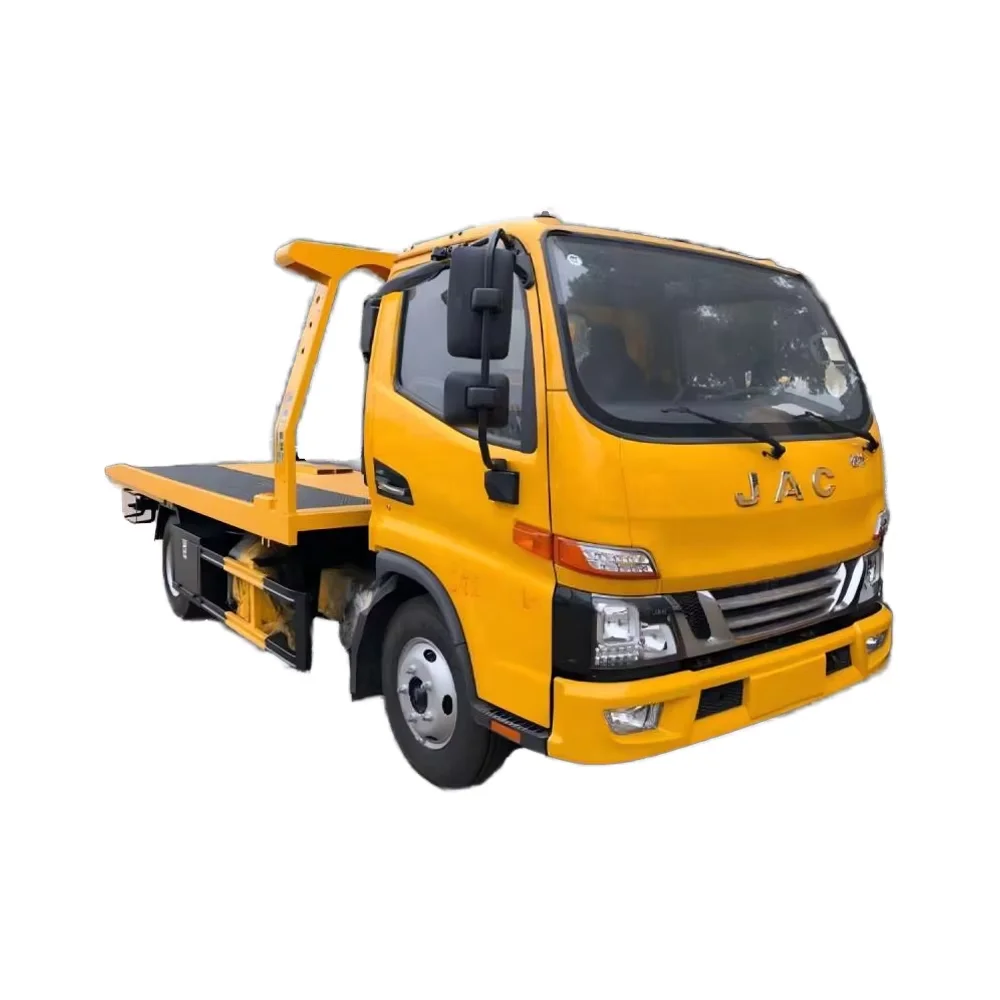
CLW Trucks manufactures a range of flatbed wrecker units suited to the demands of road rescue companies, fleet logistics operators, and auto repair businesses in global markets. The Dongfeng 4×2 Flatbed Wrecker Tow Truck (3–5 Ton) and the 2025 JAC Chassis 3-Ton Flatbed Tow Truck with Crane are built to support flatbed towing and wrecker operations across Asia, Africa, South America, and beyond.
Begin your evaluation with the recovery scenarios you handle most frequently — vehicle type, terrain, and load weight — then select the chassis, winch rating, and bed length to match those operational realities rather than paper-maximum specifications.