EN
EN


How to Choose a Truck Mounted Crane: Lifting Capacity, Boom Reach and Chassis Options
Selecting the right truck with mounted crane starts with a question most buyers get backward: not "how much can this crane lift?" but "which system configuration actually matches my job conditions?" In procurement advisory work, the most common mistake is comparing rated lifting capacities on spec sheets, only to discover the crane delivers a fraction of that capacity at the working radius the project actually requires. This guide provides a step-by-step decision framework for engineering procurement teams evaluating mounted crane trucks across the 5–25 ton working range.
Step 1: Define Your Lifting Capacity Requirement
Truck-mounted cranes in the construction, logistics and infrastructure maintenance sectors fall into three practical working tiers:
- 5–8 ton: Light-duty utility work — pipe laying, small steel structure placement, on-site equipment servicing. Compatible with medium-duty 4×2 chassis at lower GVW requirements.
- 8–16 ton: The most common working range for general construction material handling and transport. A mounted crane truck in this range typically offers boom lengths from 12 m to 25 m and handles the majority of commercial site applications.
- 16–25 ton: Heavy lifting for precast concrete elements, large industrial machinery and port logistics. Requires a heavy-duty 6×4 or 8×4 chassis and matched hydraulic output.
One parameter that consistently trips up buyers: rated capacity is typically specified at the minimum working radius. At full boom extension, the effective lifting capacity of a truck with mounted crane drops significantly — in some configurations, a crane rated for 6 tons can only safely lift 2 tons at maximum horizontal reach. Request the full load-radius chart from your supplier, not just the headline capacity figure.
Step 2: Match Boom Reach to Your Worksite
Maximum boom length on a mounted crane truck ranges from under 10 m on compact utility models to more than 30 m on heavy-capacity configurations. Before specifying boom length, map two site-specific parameters:
- Required horizontal reach: How far from the truck's outrigger footprint must the crane place its load? Congested urban sites often demand longer reach to avoid repeated truck repositioning.
- Vertical clearance needed: For rooftop delivery or elevated structure installation, maximum tip height may matter more than horizontal reach alone.
Think of boom reach like a lever trade-off: every extra meter of horizontal extension reduces the maximum weight you can safely handle at that distance. Planning around your actual load weight and required working radius first is the only reliable method for sizing a truck with mounted crane correctly.
Step 3: Telescopic Boom vs. Knuckle Boom — Structural Decision
This configuration decision carries the most lasting procurement impact when selecting a mounted crane truck, and the right answer depends entirely on your application type.
| Criteria | Telescopic (Straight) Boom | Knuckle (Articulating) Boom |
|---|---|---|
| Maximum reach at rated load | Higher — simpler extension geometry | Lower — folding joints reduce maximum outreach |
| Folded transport profile | Longer when stowed | Folds compactly behind cab or over truck bed |
| Point-to-point load placement | Moderate — requires truck repositioning for tight placement | Excellent — articulating joints allow precise positioning |
| Maintenance complexity | Lower — fewer hydraulic joints and wear points | Higher — knuckle pins and cylinder seals require regular inspection |
| Typical applications | Utility pole installation, bridge construction, cargo loading | Urban delivery, forestry, recycling, tight-access sites |
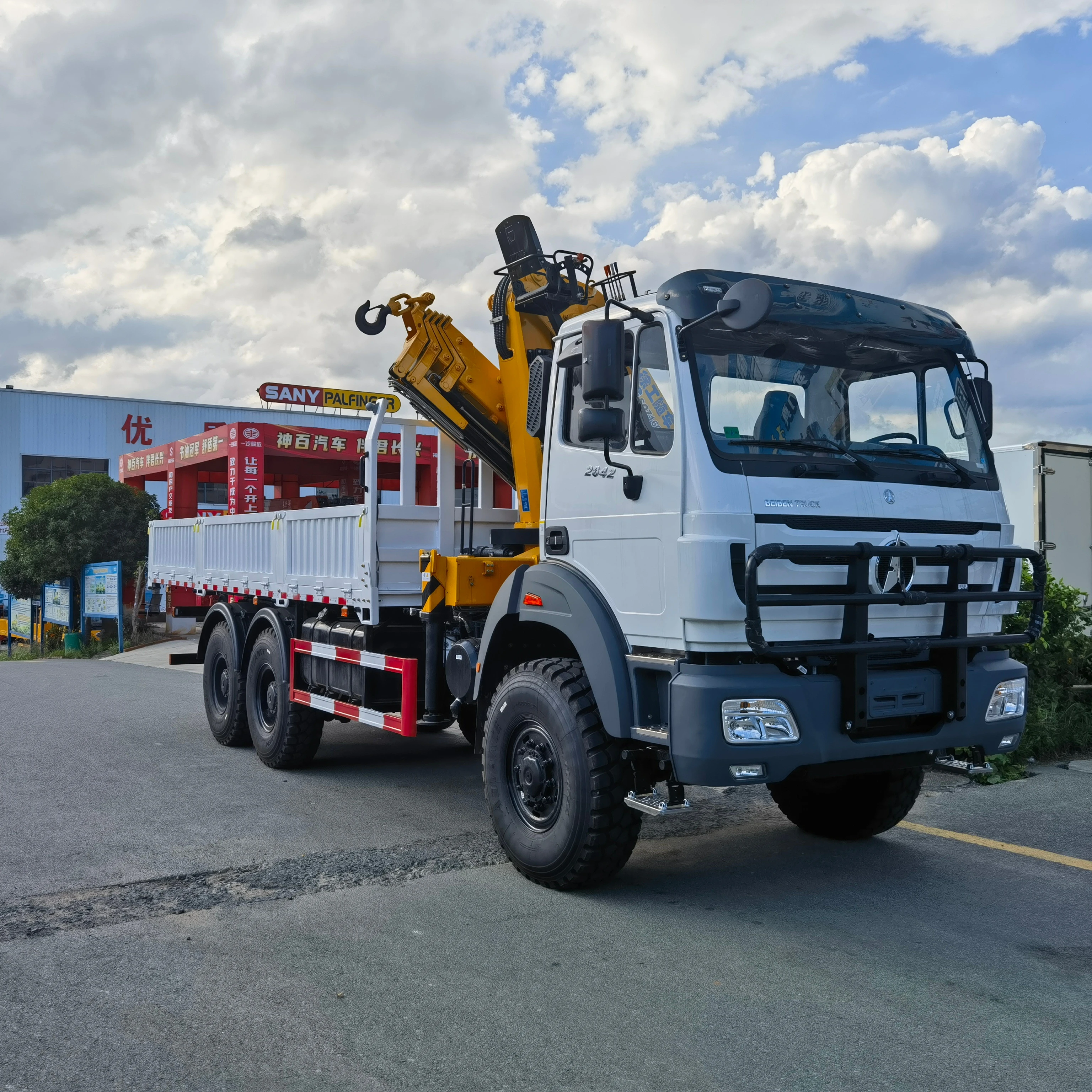
If your operations involve sustained lifting cycles at consistent reach distances — precast beam placement or heavy machinery positioning — a telescopic boom configuration is the more reliable long-term choice. If the work requires threading loads through restricted access or precise placement within a constrained footprint, a knuckle boom crane on your truck provides the operational flexibility that matters.
Step 4: Hydraulic System Configuration and Continuous Operation
The hydraulic system is where many buyers stop reading the spec sheet too early. Rated lifting capacity assumes optimal hydraulic pressure, but what happens after two hours of continuous operation in a 40°C environment?
Key hydraulic parameters to compare when evaluating any truck with mounted crane:
- Hydraulic pump output (L/min): Higher flow rates sustain lifting speed under continuous load, critical for high-cycle construction operations.
- System operating pressure (MPa): The typical range for mid-to-heavy cranes is 20–35 MPa. Higher pressure enables compact cylinder design but demands better seal quality.
- Oil cooling capability: In high-ambient-temperature markets, insufficient oil cooling leads to viscosity loss and degraded lifting control. Confirm whether the oil cooler is standard or optional equipment.
- PTO (Power Take-Off) rating: The PTO transfers chassis engine power to the hydraulic pump. A mismatched PTO-to-pump pairing limits effective working output regardless of what the crane's rated capacity says.
A procurement error I've seen repeated: selecting a crane rated for a given capacity while pairing it with a chassis PTO that cannot sustain the hydraulic demand over a full work shift. The result is slower cycle times, heat buildup and accelerated seal wear — none of which show up on the rated capacity line.
Step 5: Chassis Selection — GVW, Brand and Road Conditions
The chassis is the foundation of a mounted crane truck system, not just a carrier. Chassis cost typically accounts for 30–50% of the total vehicle price, making it the largest single variable in the procurement budget.
For export-market configurations in the 5–25 ton crane range, three chassis families are most commonly specified:
- Dongfeng: Widely available in 4×2 and 6×4 configurations for the 5–15 ton crane range. Established parts availability across Asia, Africa and South America makes it a practical choice for markets with limited dealer networks.
- Beiben (North Benz): Preferred for heavy-duty 6×4 applications in the 12–25 ton range. Robust drivetrain suited to construction site and off-road conditions.
- HOWO / Shacman: Cost-competitive options for markets with established Chinese brand service networks and price-sensitive procurement environments.
Road passability is a deployment constraint that is easy to overlook until the truck arrives on site. A heavy 6×4 crane truck may deliver strong lifting performance, but it can also exceed bridge load limits or access road width restrictions at the destination. Match chassis configuration to the actual operating environment before finalizing the GVW tier for your truck with mounted crane.
Example Models: Telescopic and Knuckle Boom Configurations
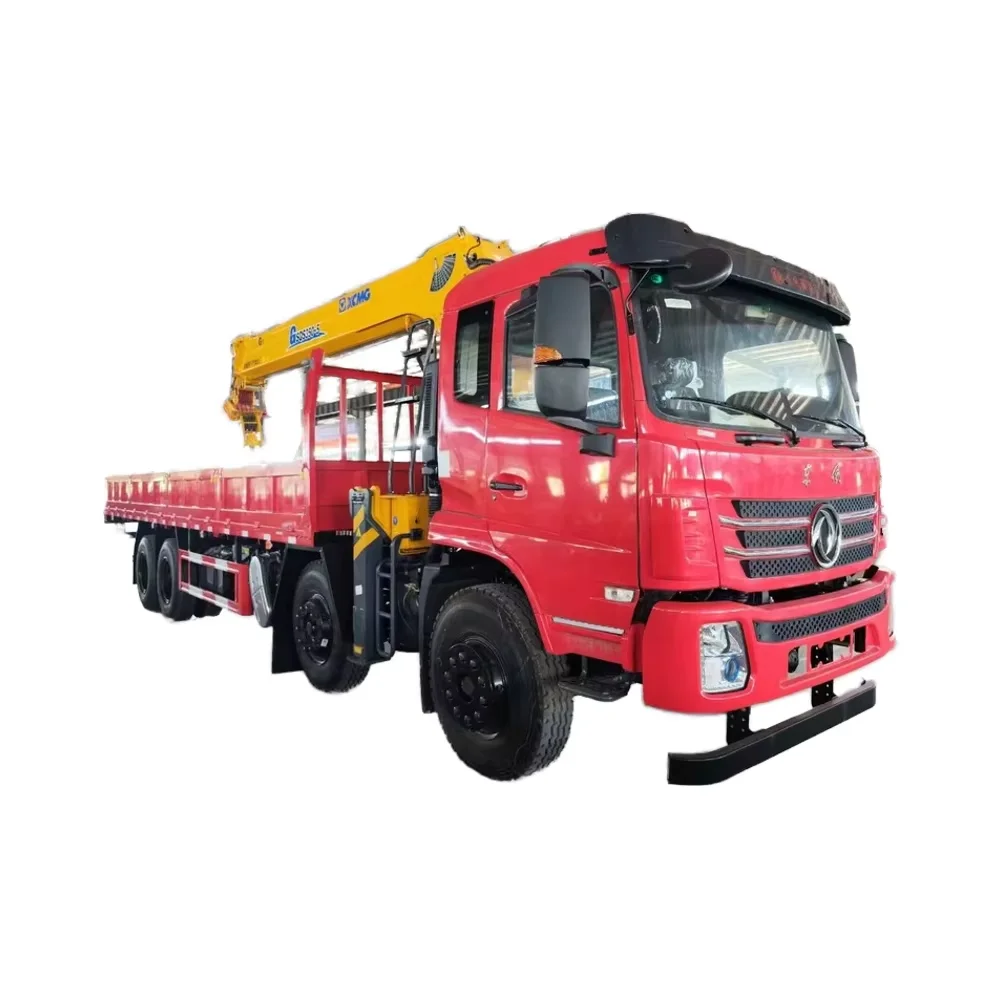
CLW produces mounted crane trucks across multiple chassis brands and boom structure types. Two configurations that illustrate the selection principles above:
- The Dongfeng 12 Ton Hydraulic Telescopic Boom Mounted Crane — a mid-range telescopic configuration on a Dongfeng chassis, suited for construction logistics and equipment transport where straight-line reach and lower maintenance burden are priorities.
- The Beiben 6×4 Stiff Knuckle Telescopic Boom Crane Truck — a heavier-duty articulating configuration on a Beiben 6×4 chassis, Euro 5 compliant, combining knuckle boom flexibility with extended telescopic reach for demanding site access conditions.
CLW supports multi-brand chassis configuration and matches crane upper structure to chassis specifications based on your GVW requirements, hydraulic system ratings and destination market service network.
Your Selection Checklist
Before contacting a supplier about a mounted crane truck, lock in these six parameters against your actual project requirements:
- Maximum load weight at your actual working radius — not just the rated capacity at minimum radius
- Required boom length at that working radius, plus vertical clearance if applicable
- Boom structure choice: telescopic or knuckle, based on access conditions and placement precision needs
- Hydraulic system: pump output, operating pressure and oil cooling for your ambient conditions
- Chassis GVW tier and road passability for your deployment environment
- Chassis brand and local parts availability at the destination market
Defining these parameters before you request a quote turns a supplier conversation from a generic catalog review into a specification-aligned procurement dialogue — which is the only path to a truck with mounted crane that performs as expected when it reaches your site.