EN
EN


Lorry Crane vs Mobile Crane: What's the Difference and Which Do You Need?
When a site manager or procurement lead needs to lift heavy materials at a job site, one of the first decisions on the list is which type of crane to use. A lorry mounted crane and a mobile crane both do heavy lifting, but they serve different project profiles. Picking the wrong type adds cost through transport logistics, operator sourcing, and daily operating expense. This breakdown covers the five angles that matter most: mobility, lifting capacity, operator licensing, operating costs, and site limitations.
What Is a Lorry Mounted Crane?
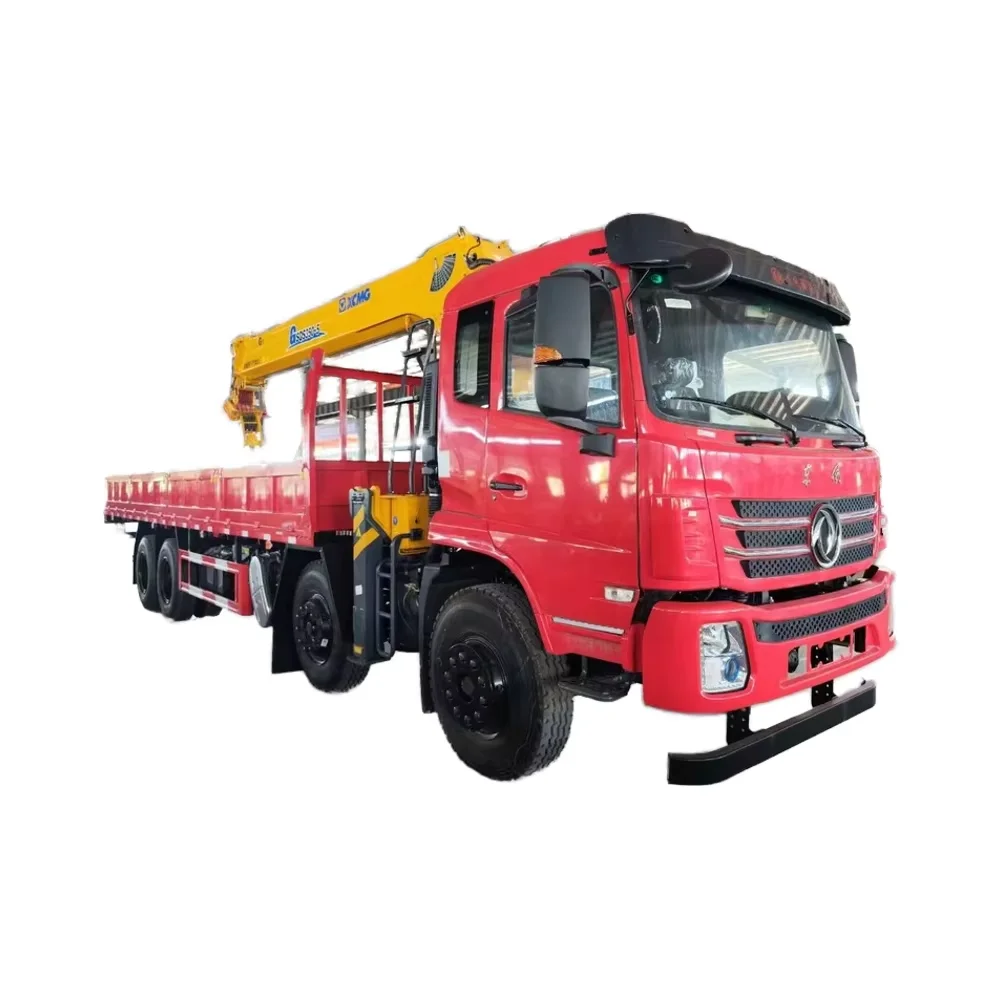
A lorry mounted crane — sometimes referred to as a crane lorry or truck-mounted crane — integrates a hydraulic lifting arm directly onto a commercial lorry chassis. The same vehicle that transports cargo also carries the crane. The unit is road-legal and can travel between sites under its own power without a separate escort or permit in most jurisdictions. Standard lorry mounted crane configurations carry lifting capacities from 8 to 50 tons, with hydraulic telescopic or knuckle booms depending on the application.
What Is a Mobile Crane?
A mobile crane is a purpose-built lifting machine on a wheeled or crawler undercarriage. Unlike a lorry mounted crane, it is not road-legal without special transport permits in most countries and must be moved to each job site on a flatbed trailer. That logistics overhead is the trade-off for its advantage: lifting capacity that a crane lorry cannot match, typically ranging from 50 tons to over 1,200 tons on large all-terrain models. Mobile cranes also require a prepared setup area — outriggers need flat ground and sufficient clearance before the machine can work.
Mobility and Site Accessibility
A lorry mounted crane is fully mobile on public roads. For businesses serving multiple scattered job sites — construction material supply, utility installations, freight delivery with loading requirements — this is a real operating advantage. No transport arrangement is needed, no oversize load permits, and the crane arrives with the cargo. In dense urban environments or locations with weight-restricted access roads, a lorry mounted crane can reach sites that a mobile crane physically cannot.
Mobile cranes need to be transported, and in tight environments that becomes a logistics problem. Narrow access roads, short job durations, or city-centre locations can make bringing in a mobile crane disproportionately expensive relative to the actual lift time on site. For large single-site projects where the machine stays in place for weeks, this matters less.
Lifting Capacity and Working Range
The lorry mounted crane operates effectively up to around 30–50 tons. Beyond that threshold, a mobile crane is the standard choice. High-rise building erection, heavy steel fabrication, or petrochemical plant construction routinely require mobile cranes rated at 100 tons or more.
Rated lifting capacity is always stated at minimum working radius, and this applies to both types. As the boom extends further from the pivot, the rated capacity drops. A lorry mounted crane rated for 12 tons at close range may only safely handle 4–5 tons at maximum boom extension. This relationship between reach and capacity is one reason experienced buyers review full load charts rather than relying on headline figures alone.
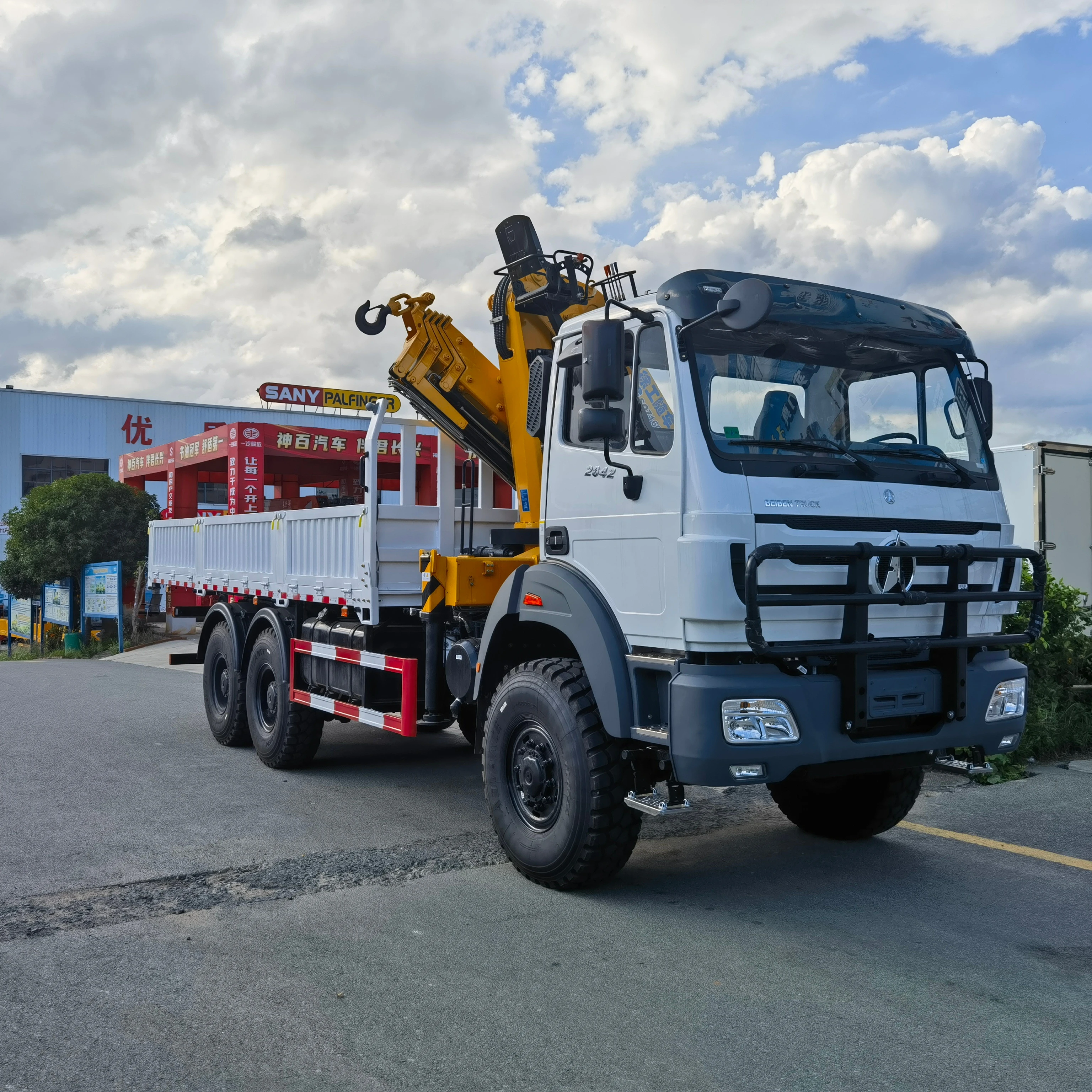
For construction companies and logistics operators sourcing a lorry mounted crane in the 8–12 ton range, CLW's Dongfeng 12-ton hydraulic telescopic boom truck crane is a commonly specified option for material handling and equipment delivery applications. For heavier requirements within the lorry-mounted category, the Beiben 6x4 stiff boom crane lorry is available on a Euro 5 chassis suited for export markets.
Operator Certification Requirements
Regulatory requirements for the two crane types differ and directly affect staffing costs. In the United States, OSHA mandates operator certification for any crane rated above 2,000 pounds (approximately 1 ton) capacity when used in construction — a threshold that covers virtually all commercial lorry mounted cranes and mobile cranes. Internationally, local frameworks vary, but the principle is consistent: operating a crane requires licensed personnel.
For a crane lorry, the operator needs both a commercial driving licence for the lorry chassis and a crane operator certificate for the lifting equipment. Mobile crane operation — especially for large all-terrain models — typically demands more specialized certification. Qualified mobile crane operators are fewer in supply and command higher day rates, which feeds into project cost calculations. For international deployments across Africa, Southeast Asia, or South America, verifying local certification requirements before procuring equipment is advisable if the machines will be operated by locally trained staff.
Operating Costs and Total Investment
Purchase price comparisons are a starting point. Total cost over the machine's operating life is the more useful measure. A lorry mounted crane has a lower acquisition cost than a comparable-capacity mobile crane. Its transport costs are minimal: the machine drives itself. Parts availability for commercial lorry chassis (Dongfeng, Beiben, and similar platforms) is generally strong in major export markets, keeping maintenance costs manageable.
Mobile cranes carry higher daily hire rates, more complex maintenance requirements, and meaningful transport overhead for any multi-site deployment. For a single large project where heavy lifts are concentrated in one place over an extended period, the cost profile can be justified. For companies running a varied job portfolio — multiple sites, diverse lift requirements, frequent mobilisation — the operating economics of a crane lorry are typically more favourable over time.
Which Type Is Right for Your Project?
The question is not which crane type is better, but which fits the specific work profile:
- Choose a lorry mounted crane if: lifting requirements fall below 50 tons, you operate across multiple sites, you need a road-legal unit without special permits, or your job sites are in urban or access-constrained locations.
- Choose a mobile crane if: you need to lift more than 50 tons, the project is a single large-scale site, you are working on high-rise or heavy industrial structures, or precision heavy lifts at maximum reach are routine requirements.
For construction companies, logistics operators, and energy infrastructure developers who primarily handle loads in the 8–50 ton range across multiple sites, a lorry mounted crane is usually the more practical and cost-effective solution. CLW offers a range of lorry mounted crane configurations on proven commercial chassis, designed for the export market with support for customers across Asia, Africa, and South America. Contact the CLW team to discuss load specifications and chassis configurations suited to your application.