EN
EN


Garbage Compactor Truck Price Guide: Key Cost Factors for Waste Collection Fleet Buyers
As a procurement advisor working with waste management fleet operators, the first thing I tell buyers: the sticker price of a recycling truck is only the starting point. What determines whether that price delivers value is the combination of capacity, brand tier, drive configuration, and hydraulic system relative to your actual route requirements. Start with the spec, not the budget ceiling—and the right budget ceiling will follow.
This guide breaks down the key pricing variables for garbage compactor trucks sourced from Chinese manufacturers, with reference price ranges to help fleet buyers evaluate quotes from suppliers.
1. Capacity Range: How 6 CBM to 20 CBM Sets Your Price Floor
Capacity is the primary driver of price in a garbage compactor truck. Matching unit size to route volume—rather than defaulting to the largest available—is usually the most cost-effective approach for fleet procurement.
- 6 CBM: Entry-level compact models, suited for residential neighborhoods, narrow urban corridors, or smaller municipalities. Chinese manufacturers typically price these recycling trucks starting from approximately $18,500–$25,000 FOB.
- 10–12 CBM: The most common range for city sanitation fleets and mid-scale waste management garbage truck operations. Pricing generally falls between $22,000 and $32,000, depending on brand and configuration.
- 20 CBM: Heavy-duty class for large-scale municipal or industrial routes. Units in this range typically start from $35,000 and can exceed $45,000 for high-spec configurations.
If capacity requirements are unpredictable across your fleet, sizing some units at mid-range rather than uniformly upgrading to 20 CBM is often more budget-efficient than it appears on paper.
2. Brand Differences: SHACMAN, Dongfeng, and HOWO on Value and Cost
The three brands most commonly exported as waste management garbage trucks from China are SHACMAN, Dongfeng, and HOWO (Sinotruk). Each sits at a different price-performance tier, and the differences matter when you're thinking about total cost of ownership.
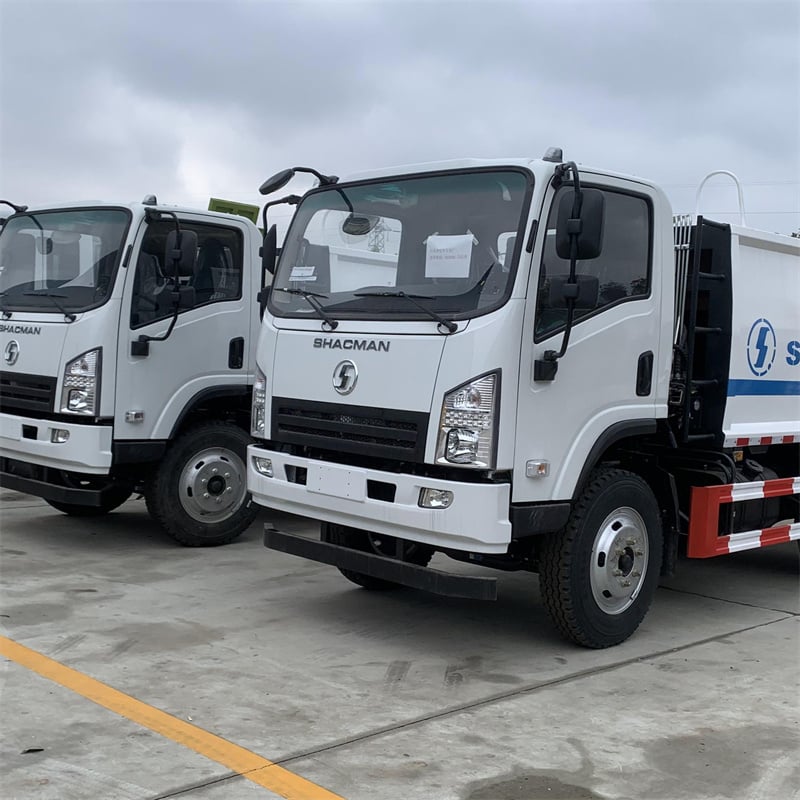
SHACMAN offers competitive pricing on smaller to mid-range compactors. The 6 CBM SHACMAN compact model is a strong value choice for buyers prioritizing manageable route sizes and lower initial outlay. Parts availability is generally strong in Southeast Asia, Africa, and parts of Latin America. For fleets looking at an entry-level recycling truck, SHACMAN is often the most cost-effective starting point.
Explore the SHACMAN 6 CBM Compact Garbage Truck for a well-specified entry-level option.
Dongfeng is well-regarded for reliable 4×2 diesel configurations in the 10–12 CBM range. These waste management garbage trucks perform consistently on paved urban roads and standard municipal sanitation routes—a practical middle ground between acquisition cost and payload capacity.
The Dongfeng 4×2 Compressed Garbage Collection Truck (10–12 CBM) is a good benchmark for this category.
HOWO commands a modest price premium, supported by its 6×4 heavy-duty capability and—on higher-end models—PLC-controlled hydraulic systems. For fleets operating in challenging terrain or requiring high compaction efficiency at scale, the HOWO 20 CBM class deserves a closer look at total cost, not just the purchase price.
The HOWO 6×4 20 CBM Compactor with PLC Hydraulic System represents this category in the CLW product line.
A higher brand tier doesn't automatically mean better value for every use case. If your route profile doesn't justify the 6×4 payload, paying the HOWO premium on a standard route is a cost that may not return.
3. Drive Configuration: 4×2 vs. 6×4 — What You're Actually Paying For
Drive configuration directly affects both purchase price and long-term operating economics.
A 4×2 recycling truck is lighter, more fuel-efficient, and typically $5,000–$10,000 cheaper than a comparable 6×4 unit. For paved urban routes with predictable load volumes, 4×2 is the right default—lower fuel cost, easier maneuvering, and reduced tire wear over the vehicle's service life.
A 6×4 garbage compactor truck is designed for heavier payloads, industrial waste collection, or routes involving rough terrain. The additional axle adds structural load capacity but also adds operating weight, fuel consumption, and maintenance complexity. If your routes don't consistently push load limits or involve off-road conditions, the cost difference may not be recoverable over a standard operating cycle.
One practical note: buyers who specify 6×4 as a default "future-proofing" measure often find that the marginal routes that actually need the extra capacity could be better served by a dedicated heavy-duty unit, rather than over-specifying the entire fleet.
4. Hydraulic System: Standard vs. PLC-Controlled
The hydraulic system drives the compaction cycle and is a significant differentiator between entry-level and high-specification waste management garbage trucks.
Standard hydraulic systems use manual or semi-automatic controls. They are reliable for routine sanitation operations, easier to maintain in markets with limited specialized technicians, and adequate for the majority of recycling truck applications at a lower unit cost.
PLC (Programmable Logic Controller) hydraulic systems—as found on the HOWO 20 CBM rear loader—automate the compaction sequence, improve cycle consistency, and reduce operator dependency. The upgrade typically adds $2,000–$5,000 to the unit price and requires access to technicians familiar with electronic diagnostics and programming.
For large municipal fleets prioritizing operational consistency and reduced driver variability, PLC systems offer a clear benefit. For smaller fleets or markets where technical maintenance infrastructure is a concern, standard hydraulics deliver better practical value.

5. Reference Price Ranges When Inquiring with Chinese Suppliers
Having a realistic price anchor before requesting quotes helps buyers distinguish competitive offers from outliers. Below are indicative FOB China ranges based on current market data:
| Capacity | Drive | Price Range (FOB China) |
|---|---|---|
| 6 CBM | 4×2 | $18,500 – $25,000 |
| 10–12 CBM | 4×2 | $22,000 – $32,000 |
| 16–18 CBM | 6×4 | $28,000 – $38,000 |
| 20 CBM | 6×4 | $35,000 – $45,000+ |
These ranges are indicative and vary by brand, hydraulic specification, and market conditions at the time of inquiry. A quote significantly below the lower bound for a given capacity warrants careful review of chassis specs, warranty terms, and after-sales parts support—not just acceptance as a better deal.
When comparing quotes for a recycling truck or garbage compactor, ask specifically about: chassis brand and model year, hydraulic system type (standard or PLC), compaction force specification, delivery lead time, warranty coverage, and parts availability in your target market.
Making the Procurement Decision
Buying a recycling truck or waste management garbage truck based on price alone misses what actually determines whether the unit earns its keep over its service life. Capacity, brand tier, drive configuration, and hydraulic system each contribute to both upfront cost and long-term fleet economics.
The most defensible procurement decisions come from starting with actual route requirements—load volume, terrain, fleet size—and working backward to the right specification. Budget flows from specification—not the reverse.
For buyers sourcing garbage compactor trucks across multiple chassis brands, CLW Trucks offers factory-direct pricing on SHACMAN, Dongfeng, and HOWO models, with multi-brand availability to compare options within a single procurement engagement.