EN
EN


Flatbed Wrecker vs Integrated Wrecker Tow Truck: Which Type Should You Buy?
If you are building out a road rescue fleet or replacing aging equipment, the choice between a flatbed wrecker truck and an integrated wrecker tow truck comes up almost immediately — and it is rarely as straightforward as it looks on a spec sheet. Both types have earned their place in commercial towing operations, but they serve different primary purposes, and choosing the wrong one for your core use case can quietly erode both efficiency and margins over time.
This guide walks through the key decision dimensions: towing flexibility, vehicle compatibility range, operator learning curve, and total cost of ownership. The goal is not to push you toward one option, but to help road rescue operators, car dealers with in-house towing needs, and fleet managers identify which type fits their actual workload.
Understanding the Two Types
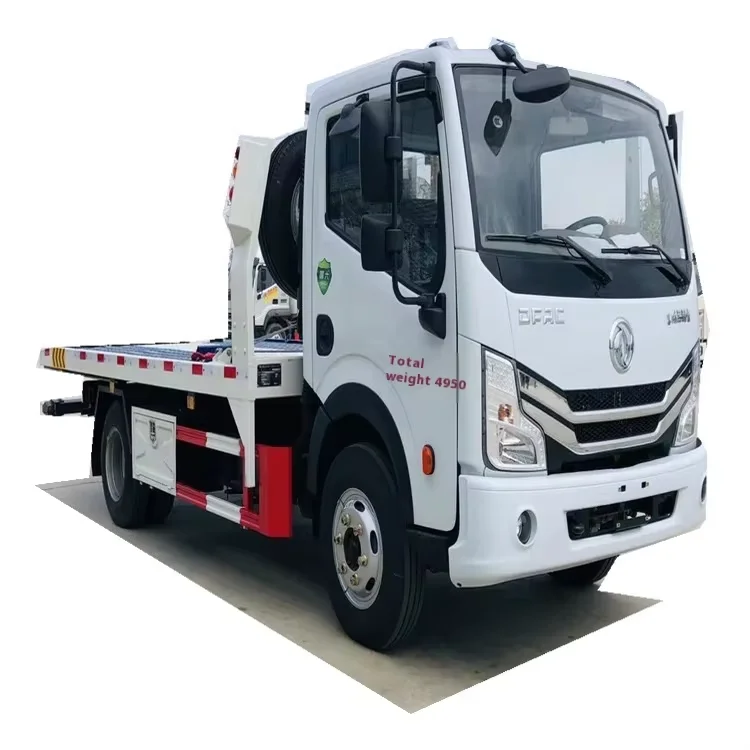
A flatbed wrecker truck — also called a rollback or carrier — features a hydraulically operated flat platform that tilts and lowers to ground level. The disabled vehicle is loaded onto the bed either by driving up the ramp or by winching, then transported fully off the ground. This configuration is also referred to as a flat bed tow truck in many commercial procurement contexts.
An integrated wrecker tow truck combines a heavy-duty boom with a wheel-lift or underlift system built into a single reinforced frame. The boom and axle configuration are structurally integrated into the truck chassis, rather than mounted on top of a standard cab-chassis. This design gives it significantly higher lifting and towing capacity, making it the standard choice for heavy recovery operations involving buses, large trucks, and construction equipment.
Towing Flexibility and Vehicle Compatibility
When you compare these two types on the dimension of vehicle compatibility, the results depend heavily on what types of vehicles dominate your call volume.
Flatbed wrecker trucks excel with:
- All-wheel-drive and four-wheel-drive vehicles: Full-bed transport keeps the drivetrain completely off the road, preventing damage to transfer cases and differentials.
- Low-clearance and luxury vehicles: Sedans, sports cars, and modified vehicles that would scrape against a wheel-lift cradle load cleanly onto a flat platform.
- Long-distance transport: With the vehicle secured flat, there is minimal movement during extended highway hauls.
- Motorcycles and non-standard vehicles: Flatbeds can secure almost any wheeled vehicle regardless of axle configuration.
Integrated wrecker tow trucks are better suited for:
- Heavy commercial vehicles: With towing capacities exceeding 50,000 lbs for 25-ton configurations, they handle buses, semi-trucks, and heavy construction equipment that flatbeds cannot safely carry.
- Quick extraction from tight spaces: The boom-and-wheel-lift setup can reach vehicles in parking garages, narrow alleyways, and accident scenes where a flatbed cannot maneuver or lower its platform.
- High-volume short-distance towing: In urban enforcement or parking management operations, the faster hookup time translates directly to more jobs per shift.
If your operation handles a wide mix — passenger cars, light trucks, and occasional commercial vehicles — a flatbed wrecker truck covers the majority of scenarios with fewer constraints on the receiving side. If heavy recovery is a regular part of your workload, an integrated unit removes the need for a second vehicle on those calls.
Operational Complexity and Training Requirements
Here is a dimension that frequently gets underweighted at the buying stage: how long does it take to get a new operator productive on each platform, and what is the error rate during that ramp-up period?
Flatbed wrecker trucks have a more intuitive loading sequence. The bed tilts, the vehicle is positioned, the bed rises, and straps are applied. Most operators reach baseline competency within a few days, and the loading process is visible and easy to supervise. Damage claims during loading are typically low when standard procedures are followed.
Integrated wreckers require more nuanced judgment during hookup — positioning the boom correctly under a heavily damaged or awkwardly parked vehicle involves reading the situation and adjusting accordingly. Training time is typically longer, and the consequences of incorrect hookup are more severe for both the disabled vehicle and the operator. For fleets with high staff turnover, this is worth building into the total cost calculation.
Purchase Cost vs. Total Cost of Ownership
Comparing purchase price alone rarely gives you the full picture. The acquisition cost of a light-duty flatbed wrecker truck is generally lower than a comparable-tonnage integrated unit, but several downstream factors shift the long-term balance:
- Maintenance complexity: Integrated units have more hydraulic circuits and structural load-bearing components that require regular inspection and specialist service. Parts availability varies by chassis brand and region.
- Fuel consumption: The additional weight of an integrated unit's reinforced frame and axle configuration increases fuel costs on high-mileage routes.
- Utilization rate: A flatbed wrecker truck that handles 90% of your call types runs more shifts per month. An integrated unit that sits idle between heavy recovery calls has a higher per-job cost over its service life.
- Resale value: Both types hold value reasonably well in commercial markets, though flatbeds have a larger secondary buyer pool across more markets.
If you primarily serve passenger and light-duty vehicle towing with occasional heavy calls, the TCO math usually favors starting with a well-specified flatbed wrecker truck and handling the heavy exceptions through subcontracting until volume justifies the investment. If your operation is built around heavy recovery contracts, the integrated unit earns its cost within the first year.
Which Type Should You Buy? A Scenario-Based Guide
| Your Operation Type | Recommended Starting Point | Key Reason |
|---|---|---|
| Urban roadside assistance, mixed passenger vehicle calls | Flatbed wrecker truck | Wide vehicle compatibility; minimal training time; lower per-job cost |
| Highway heavy recovery, bus and semi-truck fleet contracts | Integrated wrecker | 50,000+ lbs capacity; boom reach for difficult extraction positions |
| Car dealership delivery and transport | Flatbed wrecker truck | Zero-contact transport protects new vehicles; all-wheel-drive compatibility |
| Multi-service fleet (light + medium duty) | Flatbed first, add integrated unit as volume grows | Flatbed covers the majority of calls; integrated handles the outliers |
| Remote or international markets with limited chassis service | Flatbed wrecker truck on mainstream chassis | Simpler drivetrain and hydraulics reduce maintenance dependency on specialist service |
CLW Flatbed Wrecker Trucks: Options for Commercial Buyers
If your evaluation is pointing toward a flatbed wrecker truck for your next purchase, CLW Special Truck Sales offers several configurations built on mainstream domestic chassis with export compliance support for international buyers across Asia, Africa, South America, and Oceania.
The Dongfeng 4x2 Flatbed Wrecker Tow Truck in 3 to 5-ton capacity covers light-duty passenger and commercial vehicle recovery, with the flatbed platform suited for mixed urban towing workloads.
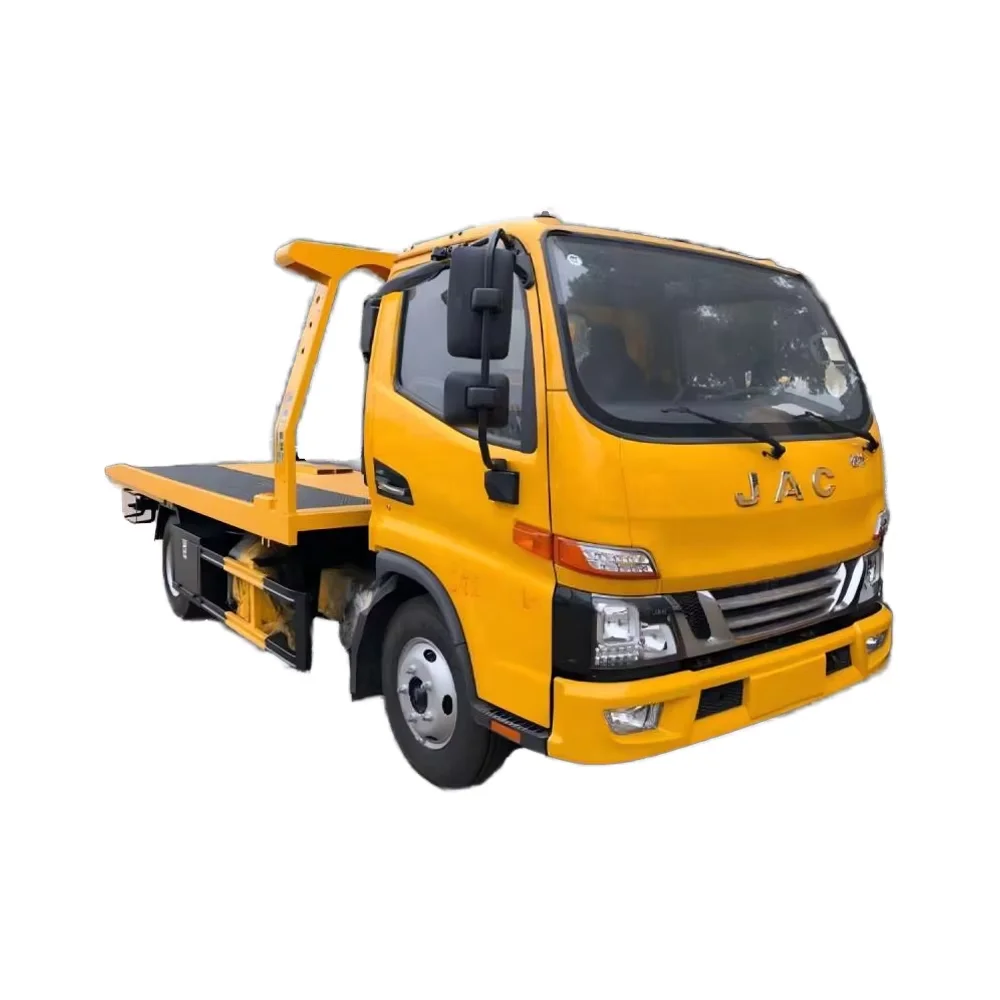
For buyers looking for a flatbed wrecker configuration with an additional crane function for roadside repair work, the 2025 JAC Chassis 3 Ton Flatbed Tow Truck with Crane combines towing capacity with light lifting capability on a single platform — useful for operations that need to move and recover vehicles in a single dispatch.
Before committing to a configuration, it is worth confirming the specific chassis availability in your target market and aligning the flatbed dimensions with the typical vehicle types in your call volume. A 3-ton unit works well for passenger car and light commercial towing; operations regularly handling larger cargo vehicles may need to step up to a 5-ton or higher specification.