EN
EN


Fire Pumper vs Water Tanker Fire Truck: Key Differences and How to Choose
When advising fire departments and industrial procurement teams on apparatus selection, the fire pumper versus water tanker fire truck question comes up in nearly every evaluation. Both are essential pieces of fire fighting apparatus, but they serve fundamentally different operational roles — and choosing the wrong configuration for your service area can leave a crew without adequate suppression capacity when it matters most. This comparison covers the four dimensions that drive procurement decisions: structural configuration, firefighting flow rate, water tank capacity, and deployment scenarios.
What Is a Fire Pumper?
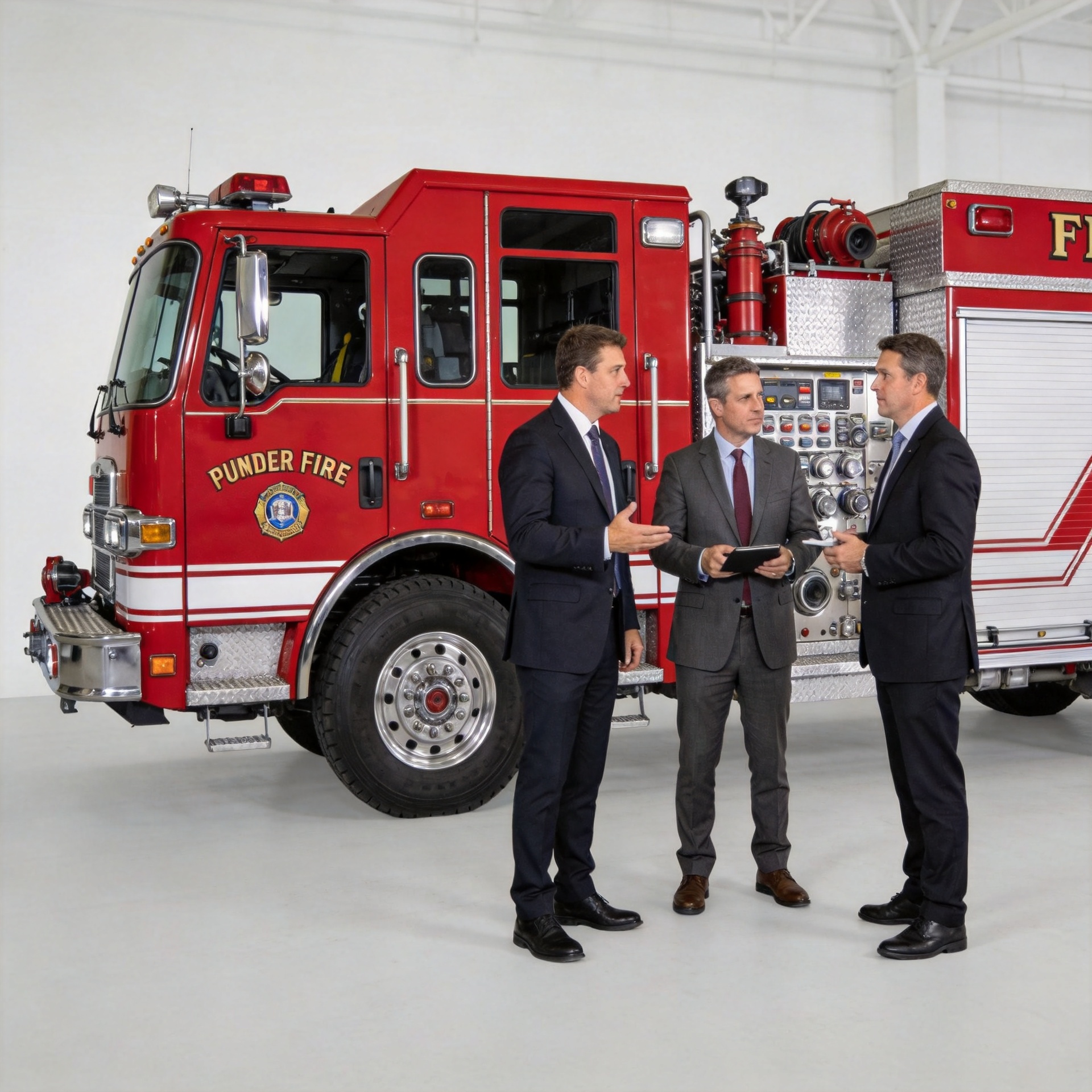
A fire pumper, also called a fire engine, is designed around one core capability: delivering pressurized water at high flow rates. Under NFPA standards, a pumper must carry a pump rated at a minimum 750 GPM (gallons per minute). Type 1 structural fire pumpers (the most common urban apparatus) require at least 1,000 GPM, and modern units routinely deliver up to 1,500 GPM under sustained operating conditions.
This high-flow capability makes the fire pumper the primary attack vehicle in most municipal fire departments. The trade-off is onboard water volume: NFPA requires a minimum 300-gallon tank, enough for initial attack but not extended operations without an external supply. The fire pumper's operational model depends on connecting to hydrants, ponds, rivers, or tanker relays to maintain output.
- Pump capacity: 750–1,500+ GPM (NFPA minimum: 750 GPM)
- Water tank: 300–1,000 gallons typically
- Primary function: Active firefighting, pressurized hose lines, foam application
- Water source: External supply required for sustained operations
What Is a Water Tanker Fire Truck?
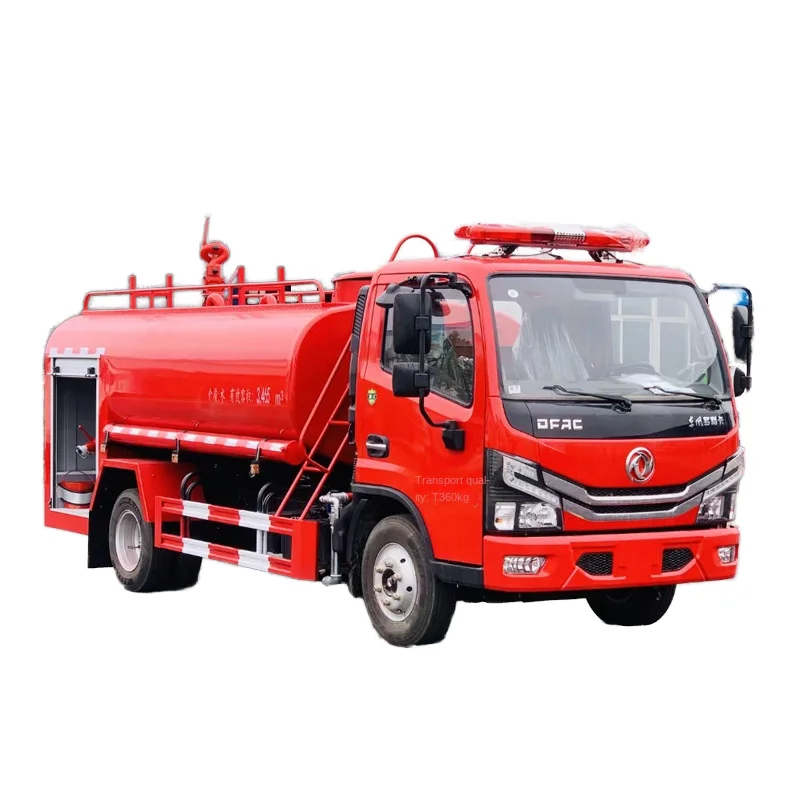
A water tanker fire truck, also called a water tender, is built for water transport rather than high-pressure attack. NFPA defines water tenders as apparatus with a minimum certified capacity of 1,000 gallons; working fleet vehicles typically carry 3,000 to 5,000 gallons or more. Most water tanker fire trucks carry basic transfer pumps rather than the high-capacity pump systems in a fire pumper.
One operational reality that affects procurement decisions: a fully loaded 1,000-gallon tanker carries more than 8,000 lbs of water. That weight shifts dynamically with every turn, which is why water tanker fire trucks require specialized driver training and speed restrictions. Procurement teams sourcing fleet for rural or developing-market regions should factor this training and operational overhead into total cost of ownership.
- Water tank: 1,000–5,000+ gallons (NFPA minimum: 1,000 gallons)
- Pump capacity: Transfer/fill pump only; not suited for sustained direct fire attack
- Primary function: Water supply relay for rural and industrial settings
- Water source: Self-contained but requires return to fill station when depleted
Structural Configuration: Built for Different Missions
The structural layout of a fire pumper and a water tanker fire truck reflects their distinct operational priorities. A fire pumper is built around the pump house — the housing containing the centrifugal pump, intake connections, discharge outlets, and pressure gauges. Side-access pump panels allow operators to manage flow independently while the vehicle is stationary. Hose storage, equipment compartments, and crew seating occupy the remaining chassis space.
A water tanker fire truck reverses this priority. The tank dominates the chassis, typically configured as a large elliptical or rectangular vessel with internal baffles to reduce water surge during transit. Fill and dump connections are oversized to enable rapid water exchange — well-configured tankers can empty and refill in under five minutes, which enables effective rural relay operations where multiple tankers cycle between a fill point and a portable pond near the fire scene.
Both fire truck types can be configured on 4×2 or 4×4 platforms. Tankers prioritize engine torque for hauling heavy water loads; fire pumpers balance driving performance with PTO (power take-off) capability for the pump system. Chassis selection should account for the road conditions and bridge weight limits common in your deployment area.
Flow Rate vs. Water Volume: The Core Trade-Off
This comparison is where most procurement decisions are actually made — and where the most common errors occur. Flow rate and water volume are not interchangeable metrics.
A fire pumper connected to a hydrant or natural water supply can sustain 1,000–1,500 GPM almost indefinitely. That sustained output is what suppresses large structural fires, protects adjacent exposures, and maintains foam blankets in petrochemical incidents. No water tanker fire truck can match that rate of active water delivery.
However, a fire pumper's superior flow rate is only relevant if there is an external water supply to draw from. In areas without fire hydrants — common in rural regions, remote industrial facilities, and many markets across Africa, Southeast Asia, and South America — a fire pumper deployed alone cannot sustain operations beyond its onboard tank. A 4,000-liter water tanker fire truck arriving at a remote scene provides immediate, independent suppression capability without waiting for infrastructure access.
The practical decision rule: where reliable hydrant access exists at your primary response zones, a fire pumper delivers superior firefighting performance. Where your service area includes locations without hydrant coverage, a water tanker fire truck is not optional. It becomes an operational necessity.
Deployment Scenarios: Which Fire Truck Fits Your Context
Three deployment profiles cover the majority of procurement decisions:
Urban and suburban departments with dense hydrant networks operate pumper-heavy fleets. Fire pumpers establish water supply from hydrants and deliver sustained high-flow attack. Water tanker fire trucks play a supplemental role, filling portable ponds when hydrant capacity is insufficient for large-scale incidents.
Rural departments and volunteer brigades in hydrant-deficient areas depend heavily on tankers. Typical rural response uses one or two fire pumpers for attack while a tanker relay keeps the portable pond supplied. In this model, the fire pumper and water tanker fire truck operate as a coordinated team — the pumper handles suppression, the tanker handles logistics.
Industrial and petrochemical facilities typically require both. Foam pumpers handle initial suppression of flammable liquid fires while water tanker fire trucks provide cooling water for adjacent equipment and structures. Airport crash rescue operations, mining sites, and large construction zones present similar combined apparatus requirements.
How to Choose the Right Fire Fighting Apparatus
Before writing a specification, answer these four questions:
- Is hydrant infrastructure reliable across your primary response zone? Consistent hydrant access favors the fire pumper. Inconsistent or absent coverage makes tanker capacity critical.
- What is your most demanding likely incident? Structural fires in built environments favor high-flow pumpers. Remote, wildland, or rural incidents favor tanker volume and relay capability.
- What are road conditions and weight restrictions in your area? Heavy tankers may be restricted on certain bridges or unpaved roads. 4×4 variants are available for off-road requirements.
- What is your driver training and maintenance capacity? Water tanker fire trucks require specialized handling training. For small brigades, this cost should factor into fleet planning.
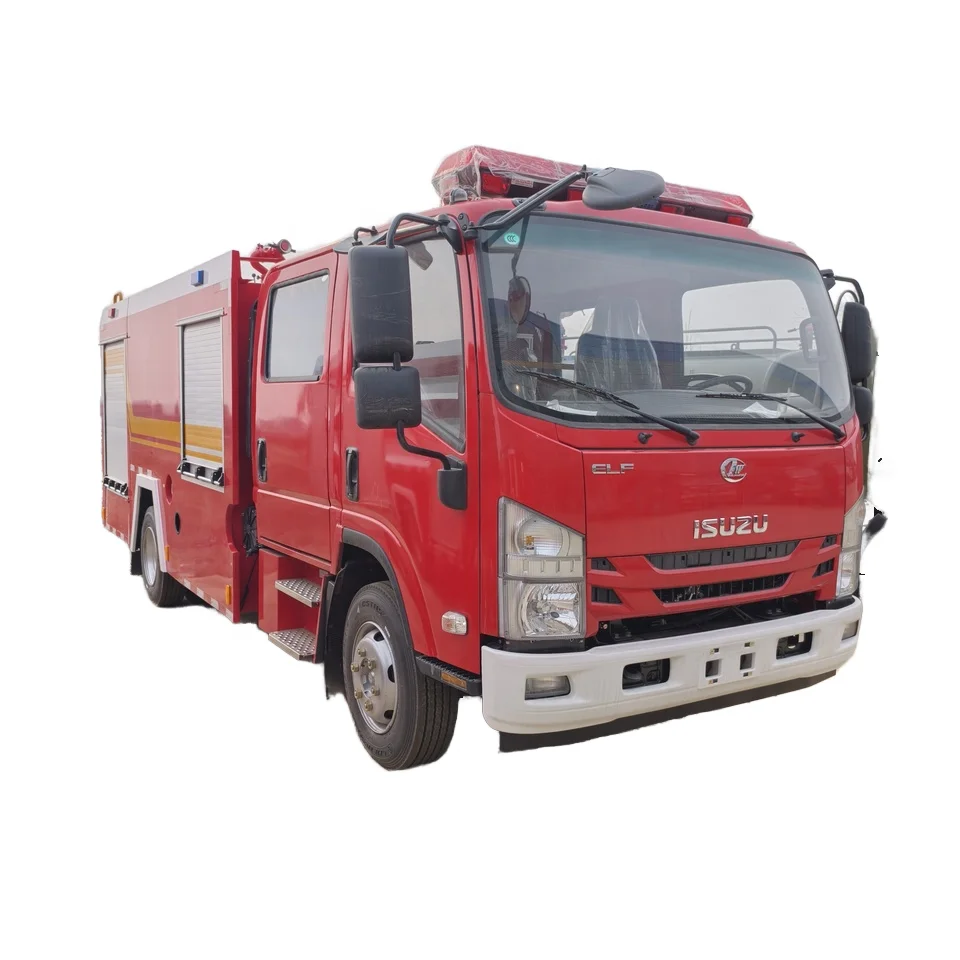
For procurement teams sourcing configurable fire fighting apparatus, CLW Special Truck Sales Co., Ltd. offers a range of options including the Dongfeng 4x2 Diesel Pumper Fire Truck with 4,000L Water Tanker — a combined pumper-tanker configuration suitable for departments that need both high-flow pump capability and onboard water volume in a single unit. The 4×2 Emergency Fire Rescue Truck with Water Sprinkler offers a compact multi-purpose platform for initial response and water delivery roles.
Summary: Fire Pumper vs Water Tanker Fire Truck
| Dimension | Fire Pumper | Water Tanker Fire Truck |
|---|---|---|
| Primary role | Active firefighting and suppression | Water transport and supply relay |
| Pump capacity | 750–1,500+ GPM | Transfer pump only |
| Water tank | 300–1,000 gallons | 1,000–5,000+ gallons |
| Water source | External supply needed | Self-contained (limited by tank) |
| Ideal deployment | Urban areas with hydrants | Rural areas without hydrants |
| Driver training | Standard | Specialized (load handling) |
The fire pumper and the water tanker fire truck serve distinct but complementary roles. For most fire departments and industrial operators, the correct fleet answer is a combination of both — calibrated to the hydrant coverage and incident profile of your service area. A fire pumper without tanker support fails in rural terrain; a tanker without pumper capability delays active suppression. Getting the ratio right is the actual procurement challenge.
CLW Special Truck Sales Co., Ltd. supports international fire truck procurement across Asia, Africa, the Americas, and Oceania. Contact our team for configuration guidance matched to your operational and regulatory requirements.