EN


Understanding Garbage Truck Small: A Guide for Commercial Vehicle Buyers
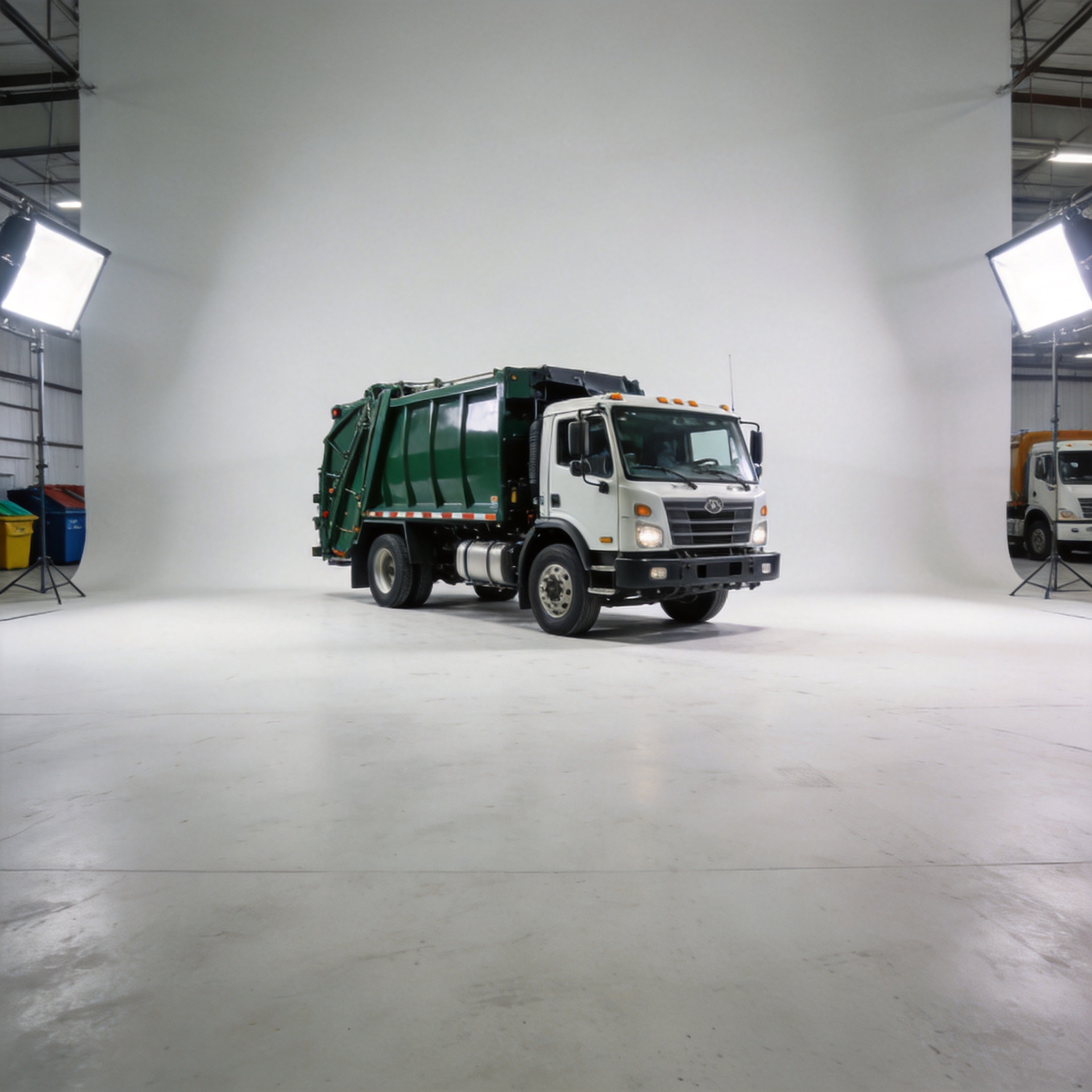
For a fleet manager, municipality, contractor, or dealer, the phrase garbage truck small should describe a commercial refuse-collection vehicle sized for a specific route—not a toy, a generic light truck, or simply the lowest-price option. The practical question is whether a compact vehicle can collect the expected waste stream, enter every service point safely, and remain supportable after delivery.
That distinction matters: searches for the term often mix genuine collection equipment with consumer products. Commercial buyers should start with the collection task and site constraints. A smaller body or chassis can improve access in dense neighborhoods, campuses, markets, resorts, and narrow service roads, but only if capacity, loading method, axle loading, and maintenance planning are verified together.
Start With the Route, Not the Brochure
A garbage truck small is usually selected because a full-size truck is too wide, too long, or too difficult to turn on part of the route. Before asking suppliers for a quotation, map the actual workday: collection points, container types, road width, grades, overhead obstructions, turnaround areas, transfer-station distance, and planned number of stops.
Local access guidance illustrates why this comes first. For example, municipal guidelines in Santa Clara, California cite 40-foot turning-radius planning for front-load and compactor collection vehicles and 38 feet for side-loaders. Wichita Falls guidance uses a 12-foot minimum clear access route in one local standard. These are not universal design rules; they are a reminder to measure the buyer’s own sites and confirm local requirements before specifying a vehicle.
Many procurement failures come from treating compactness as a label rather than an operating condition. A vehicle that fits the entrance may still need additional clearance when lifting bins, opening a rear hopper, or turning with mirrors extended. Ask the operating team to review a route drawing and identify every point where reversing, loading, or pedestrian interaction occurs.
Define What “Small” Means for Your Waste Stream
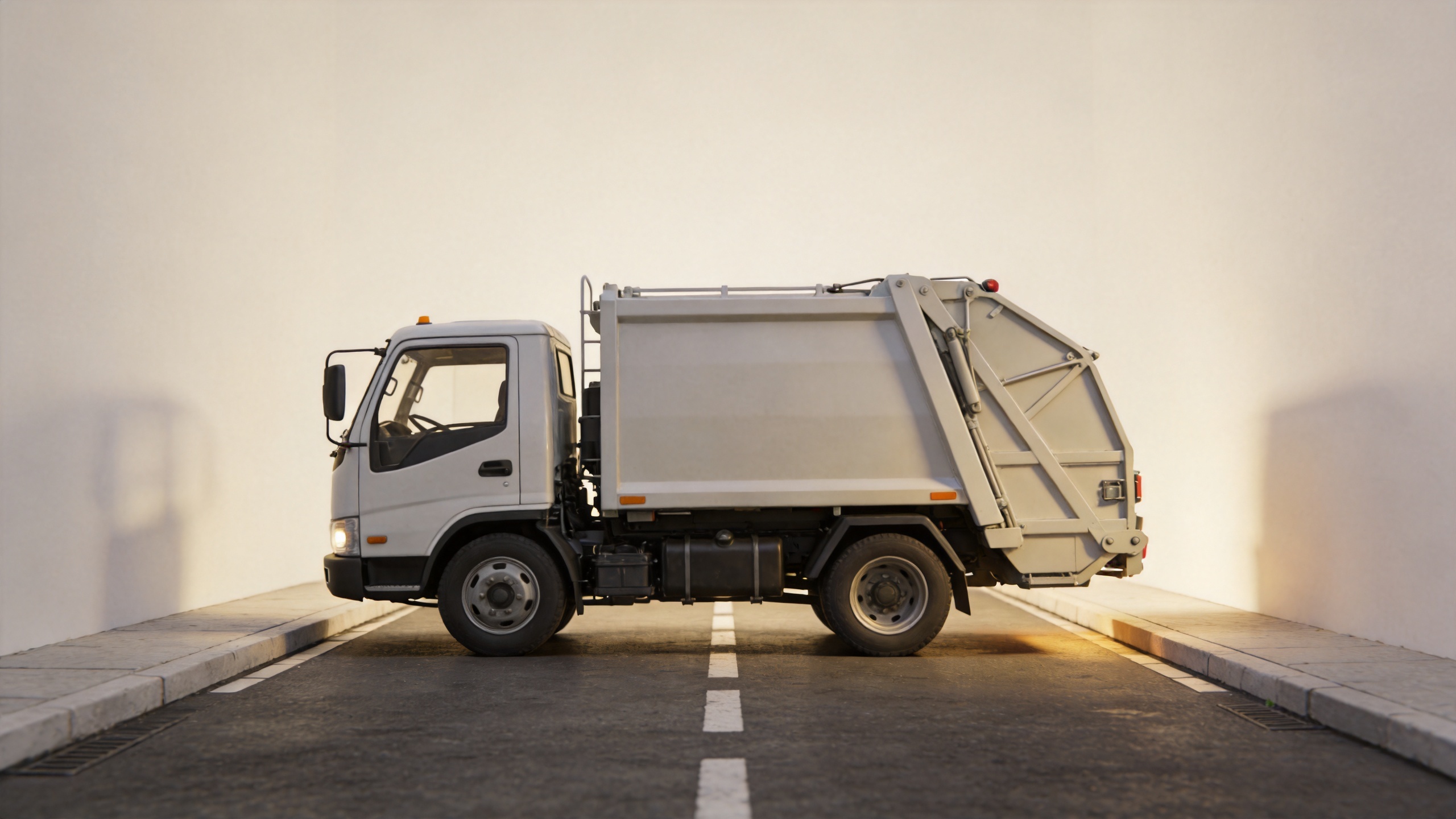
There is no single universal capacity for a garbage truck small. A compact rear loader may be appropriate for bagged municipal waste, while a small hook-lift, tipper, side loader, or skip carrier may be better for separate collection patterns. One commercial mini rear-loader listing, for instance, identifies 8 and 10 yd³ body configurations. That is a useful example of how compact-body sizes vary, not a specification to copy into a tender.
| Decision area | What to verify | Why it matters |
|---|---|---|
| Waste type | Bagged, loose, organic, recyclables, bulky or mixed waste | Material density and loading behavior affect the body and compaction system. |
| Daily volume | Expected stops, container volume, collection frequency and transfer distance | Helps avoid under-capacity trucks that require too many return trips. |
| Access envelope | Width, height, turning space, pavement condition, slopes and overhead clearance | Determines whether the truck can safely reach and leave each point. |
| Loading workflow | Manual loading, rear loading, bin lifting or side loading | Defines crew safety, cycle time and the required body equipment. |
| Legal limits | Local axle, gross-weight, registration and emissions rules | Prevents a body/chassis combination from becoming unusable after delivery. |
Use a Garbage Truck Small Comparison Matrix
When the short list is ready, score each garbage truck small against the same route and collection assumptions. Do not let a quoted body volume, a polished cab image, or a single headline price decide the award. A matrix makes trade-offs visible to finance, operations, and technical reviewers.
- Route fit: Can the garbage truck small enter, turn, load, and leave every representative site without unsafe maneuvering?
- Collection fit: Does the loading arrangement match the bins, crew method, waste stream, and expected number of stops?
- Legal payload fit: Is the stated payload realistic after the body, lifter, fluids, crew, and local axle limits are considered?
- Support fit: Are drawings, manuals, wear-part lists, diagnostic guidance, and responsibility boundaries available before the purchase order?
It also gives buyers a clear way to explain why one garbage truck small may suit the route better even when another bid starts at a lower price. The selected truck should reduce operating uncertainty, not merely meet a headline specification.
Compare the Chassis and Body as One System
For a garbage truck small, the chassis and upper body must be reviewed as a complete system. It is easy to focus on nominal body volume, but the usable payload also depends on chassis curb weight, axle distribution, local road limits, waste density, and the mass of lifting or compaction equipment. A larger-looking body is not automatically the more productive choice if it reduces legal payload or makes the route inaccessible.
Request a supplier comparison sheet with the same fields for every bid: chassis make and model, wheelbase, drive configuration, body type, body volume, rated payload, axle ratings, hydraulic configuration, bin-lift compatibility, safety devices, control layout, standard tools, spare-parts scope, warranty boundary, and required documentation. Standardizing this table makes technical and commercial review far easier than comparing marketing brochures.
For routes with frequent stops, also assess brake wear, cooling, cab visibility, step access, reversing controls, warning devices, and the daily inspection procedure. If local technicians or parts support are limited, a simpler configuration with clear service documentation may be a better operational fit than a more elaborate option.
Ask for Evidence Before You Commit
Before issuing an order for a garbage truck small, convert each important claim into an acceptance item. Request dimensional drawings, a weight and axle-load statement for the proposed configuration, hydraulic and electrical schematics where appropriate, and a clear list of supplied tools and safety equipment. If the buyer needs a bin lifter, ask the supplier to document the compatible bin standard rather than relying on a catalogue photograph.
For an export order, identify what documents must be available at shipment and at commissioning. The exact list depends on the destination, but buyers commonly need vehicle-identification details, packing information, operating documentation, and compliance records required by their own authorities. A garbage truck small should not be treated as approved for a country simply because a supplier says it is exportable; the buyer must validate destination-specific rules.
Check Safety and Site Compatibility Before Award
The key safety question is not only whether the garbage truck small can enter a site, but whether it can collect and exit in a controlled manner. Check forward exit paths, reversing distance, pedestrian separation, bin position, lighting, pavement condition, and overhead obstacles. Include the raised or operating position of the collection equipment in the clearance review, not just the parked vehicle dimensions.
Buyers should also document the interface between the vehicle and the containers already in service. Confirm the bin dimensions, lifting points, load limits, and any local rules for container placement. A technically sound truck can still lose productivity if the lifter does not match the existing bins or if crews must reposition containers manually at every stop.
Evaluate Suppliers Beyond the Initial Price
Commercial vehicle procurement should move from a price-only comparison to a total-delivery and lifecycle review. Ask for drawings, confirmed dimensions, a configuration list, production inspection records where available, operating and maintenance manuals, parts identification, warranty terms, and a defined response process for chassis-versus-body issues. The contract should make responsibility boundaries clear rather than leaving the buyer to coordinate separate chassis and body parties after delivery.
CLW Special Truck Sales Co., Ltd. manufactures special-purpose vehicles and serves overseas markets. For buyers considering a larger compactor configuration alongside compact-route options, the confirmed product record available on this site is the HOWO 6×4 20cbm Compactor Garbage Truck with PLC Hydraulic System Rear Loading Rubbish Waste Management Vehicle. Its listed title identifies it as a 20 cbm rear-loading compactor vehicle; buyers should request a formal specification sheet to determine whether it fits their route and regulatory requirements.
A Practical Pre-Order Checklist
- Survey representative collection routes and record the tightest access points.
- Define waste type, daily volume, collection frequency, and transfer distance.
- Select the loading method and verify compatibility with existing containers.
- Set a common technical comparison form for all suppliers.
- Verify dimensions, axle loads, payload assumptions, and local compliance requirements.
- Review safety equipment, operator visibility, reversing controls, and daily inspection needs.
- Confirm manuals, spare-parts support, training needs, warranty boundaries, and acceptance criteria in writing.
Make the Small-Truck Decision on Evidence
A suitable garbage truck small is not necessarily the shortest vehicle or the one with the largest advertised body. It is the configuration that can complete the planned collection route safely, legally, and predictably while matching the buyer’s waste volume and maintenance capacity. Begin with measured site conditions, compare suppliers on a common technical basis, and validate every stated specification before placing the order. It gives the operations team a procurement decision they can stand behind after the truck arrives.