EN
EN


How to Select the Right Firefighting Truck: Engine Power, Tank Capacity and Key Configurations
As a procurement consultant working with emergency agencies and government departments, I have seen the same pattern repeat itself: a department selects a firefighting truck based on a single headline number — usually horsepower — and realizes only after delivery that the vehicle is poorly matched to its actual deployment scenario. Engine output matters, but it is only one factor in a decision that also involves water tank capacity, drivetrain configuration, chassis load rating, and integrated firefighting equipment. Each of these dimensions is covered below so procurement officials can build a defensible, performance-matched specification before going to tender.
Engine Power: Choosing the Right Output for Your Operating Environment
The engine is the foundation of every firefighting truck, but the right power level depends less on raw output and more on the tasks the vehicle will perform. Modern fire apparatus engines for commercial deployment typically range from 250 to 500 HP, with heavy rescue and specialized units exceeding that threshold. For most institutional buyers, the practical window falls between 260 HP and 430 HP.
- 260–300 HP: Suitable for compact urban firefighting trucks operating in dense city grids, where narrow streets and frequent hydrant access reduce the demand on onboard systems. Good for first-attack pumpers in areas with reliable municipal water supply.
- 300–360 HP: The workhorse range for standard pumper configurations. This output level supports full-capacity pump operation while maintaining adequate road performance under full tank load. It is the most common specification for municipal fire departments.
- 380–430 HP: Recommended when the vehicle must operate at full load on grades, serve industrial zones where distances from hydrants are longer, or drive a high-output foam system simultaneously with the main pump. Airport rescue fire fighting (ARFF) and industrial site trucks frequently require this power band.
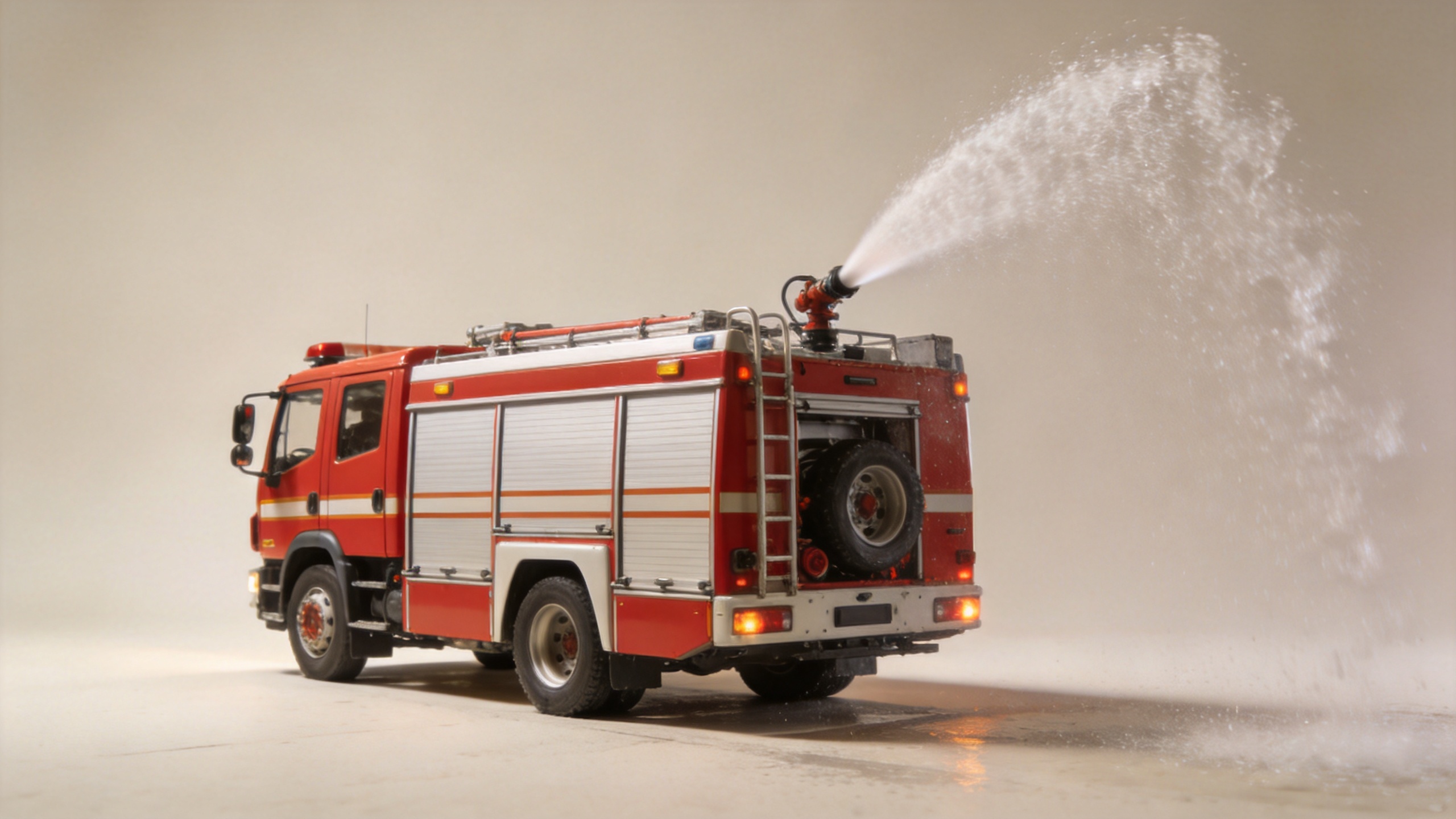
A common selection mistake is evaluating engine power in isolation. If the transmission, axle ratios, and pump load are not matched to the engine's torque curve, a higher-horsepower truck can actually underperform a properly tuned lower-output configuration in real scenarios. Before finalizing your engine specification, confirm that the drivetrain is calibrated for the specific pump and tank combination you are ordering.
Water Tank Capacity: Aligning Volume with Your Response Profile
Tank capacity determines how long a firefighting truck can operate independently before needing to resupply. The right capacity depends entirely on how your department responds to fires and whether reliable external water sources — hydrants, tanker relay, open water — are available at your typical incident sites.
| Deployment Scenario | Recommended Tank Capacity | Rationale |
|---|---|---|
| Dense urban (hydrant network available) | 1,000–3,000 L | Supplementary tank; primary supply from municipal hydrants |
| Standard municipal pumper | 3,000–5,000 L | Sufficient for initial attack and bridging gaps in supply |
| Industrial park or commercial estate | 5,000–8,000 L | Extended autonomous operation where hydrant density is low |
| Airport, port, or large-scale industrial facility | 8,000–10,000 L | Sustained suppression capability without immediate relay support |
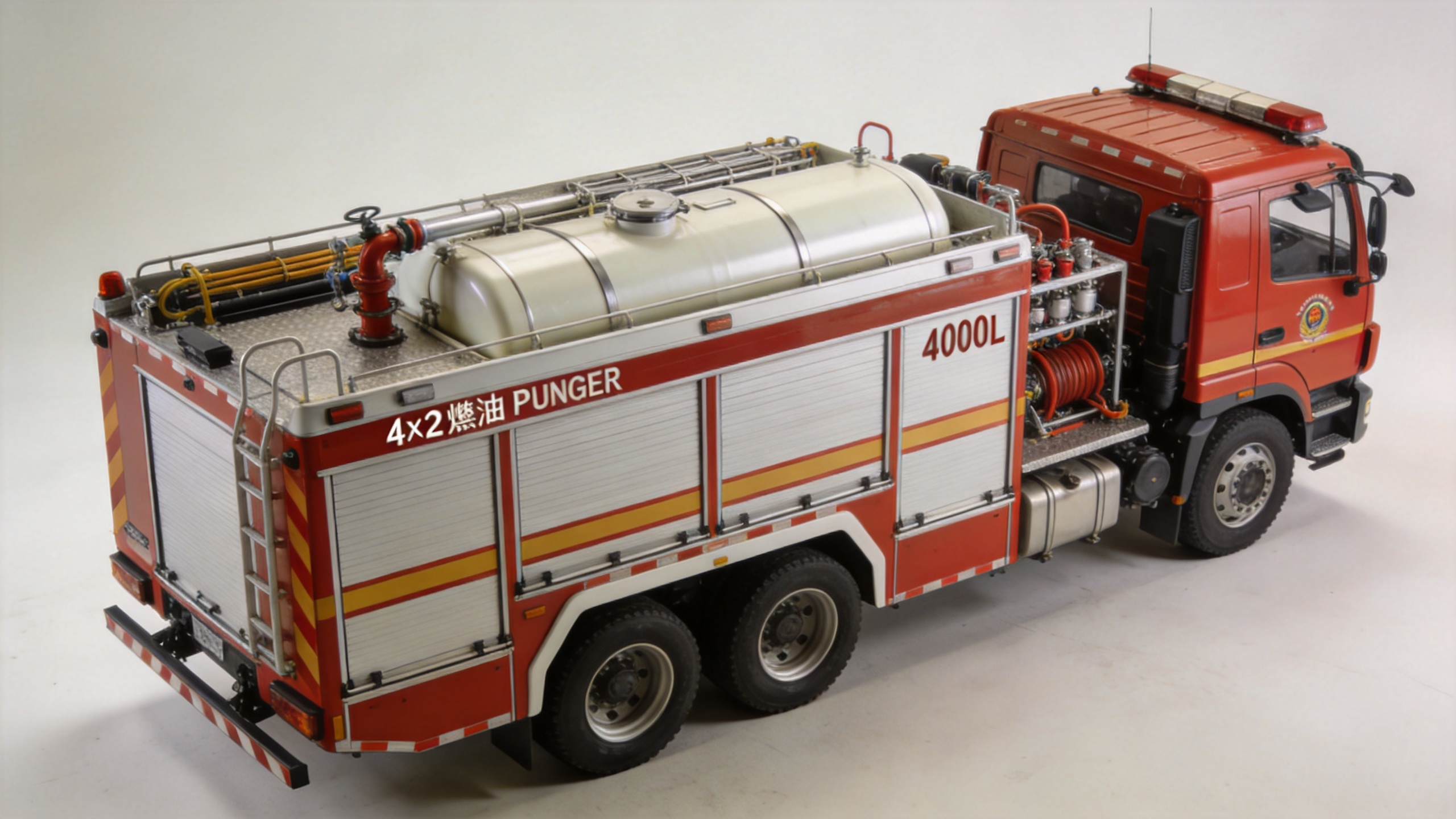
When evaluating tank capacity, look beyond the rated volume. A 4,000-liter firefighting truck running its pump at full output will exhaust its tank in under three minutes if it does not have a simultaneous refill line running. Understanding the relationship between pump flow rate (liters per minute) and tank capacity tells you how long you actually have before the vehicle needs to reposition or relay. The Dongfeng 4x2 Dorica Diesel Pumper is a purpose-built 4,000-liter platform designed for urban and semi-urban municipal response where initial-attack autonomy is the primary requirement.
Transmission and Drivetrain Configuration
Drivetrain configuration affects two separate performance dimensions: road mobility and pump stability. The 4x2 layout — two driven rear axles — is the standard for urban and peri-urban firefighting trucks operating on paved roads. It delivers lower tare weight, better fuel economy, and easier maintenance compared to all-wheel-drive variants.
A 4x4 configuration is warranted when vehicles must reach fires across rough terrain, logging roads, agricultural land, or areas with poor-quality road surfaces. For most government fire departments operating in cities or industrial estates, however, a 4x2 configuration with an appropriate GVW rating will cover the majority of response scenarios. If your fire truck firefighter crews will be operating in mixed urban and off-road environments, evaluate whether a single 4x4 heavy unit or a paired fleet of specialized vehicles better matches your budget and operational tempo.
On transmission type, automatic gearboxes now dominate modern firefighting truck specifications for crews who may need to operate pump controls while managing vehicle positioning. Manual gearboxes remain a lower-cost option and are preferred in markets where technician familiarity and parts availability favor simpler drivetrains.
Chassis Load Rating: Matching GVW to Your Full Configuration Weight
The gross vehicle weight (GVW) of a fully loaded firefighting truck determines which roads and bridges it can legally and safely use, what tire and axle specifications are required, and whether the chassis can sustain the combined weight of tank, pump, foam system, hose, ladder, and crew. An underspecified chassis will stress structural components, reducing service life and creating safety risk during emergency response.
As a rule of thumb: calculate the empty vehicle weight, add the maximum water tank volume (1 liter = 1 kg), add foam concentrate if applicable, and add crew and equipment weight. If this total approaches the rated GVW, you need to move to the next chassis class. For versatile light-to-medium response configurations, the 4x2 Emergency Fire Rescue Truck with Water Sprinkler offers a matched combination of chassis capacity, tank volume, and sprinkler system in a compact layout suitable for both urban streets and industrial facility access roads.
Integrated Equipment: Pump Output, Foam Systems, and Aerial Platforms
The pump system determines the fire truck firefighter crew's ability to deliver water or foam at the pressure and flow rate required by the fire scenario. For structural firefighting, a pump output in the range of 1,500–3,000 L/min at standard working pressure is the baseline. Industrial and chemical fire suppression may require higher-output pump configurations combined with a proportioning foam system.
Foam systems are essential for fuel fires, chemical storage incidents, and aviation rescue operations. When specifying a firefighting truck for an industrial park, airport, or petroleum facility, confirm that the foam tank capacity and proportioner type (fixed-ratio vs. around-the-pump) match the hazard class of materials on site. A mismatch between foam agent concentration and delivery rate can reduce suppression effectiveness significantly.
Aerial platforms — ladder trucks and articulated boom platforms — address height access limitations in multi-story structures. These require substantially higher chassis load ratings and longer wheelbases than standard pumpers. Unless your deployment environment regularly includes buildings above four stories, a standard pumper firefighting truck combined with portable ground ladders is often the more cost-effective and practically manageable choice.
Building a Defensible Specification
Selecting a firefighting truck for institutional procurement requires translating operational requirements into specific technical parameters before approaching manufacturers or distributors. The five dimensions covered above — engine power, tank capacity, drivetrain, chassis load, and integrated equipment — each contributes to whether a vehicle performs as expected on its first live response.
If your procurement team is evaluating configurations for urban municipal response, industrial site coverage, or export to emerging markets, CLW Special Truck Sales offers a range of firefighting truck models spanning standard 4x2 pumpers to custom configurations with foam systems and elevated water delivery. Matching the right configuration to your actual response profile reduces both procurement risk and long-term operating cost.