EN

Buying Small Trash Truck: A Guide for Commercial Vehicle Buyers
A small trash truck is not simply a reduced-size version of a municipal refuse vehicle. For a commercial buyer, it is a route-specific collection asset whose value depends on access, waste stream, crew workflow, disposal distance, and support after delivery. The right vehicle can improve service in dense neighborhoods, campuses, resorts, industrial parks, or smaller municipal zones; the wrong one can create missed collections, overload risk, or avoidable downtime.
Procurement teams should therefore start with the operating system, not the catalogue. A compact truck can be easier to place on narrow streets. That benefit is lost, however, when body volume, axle capacity, hopper design, or compaction cycle does not fit the actual route. This guide gives buyers a practical way to understand, compare, and purchase a small trash truck without treating search-result specifications as contract specifications.
1. Define What “Small” Must Accomplish on Your Route
There is no universal capacity threshold for a small trash truck. In market listings, compact rear-load bodies may be offered around 8 or 10 cubic yards, while other sources describe an 8–12 cubic-yard range. Those figures are useful starting points, not a substitute for the supplier’s data sheet and your own route study.
Build a route brief before requesting quotations. Record collection points per shift, estimated waste density, container or bin types, typical parking conditions, street width, turning constraints, grades, transfer-station distance, and planned trips per day. Also map overhead restrictions. A public-utility example lists 14 feet of clearance for rear- and side-load collection operations; your local route, body movement, and safety rules may require a different limit. Measure the real locations rather than relying on a generic number.
Many buyers focus on nominal body volume. That is understandable, but payload depends on waste density, compaction behavior, chassis rating, axle distribution, and local legal limits. In other words, buy the collection cycle you need—not the largest figure on a brochure.
2. Match the Loading Method to the Waste Stream and Crew Model
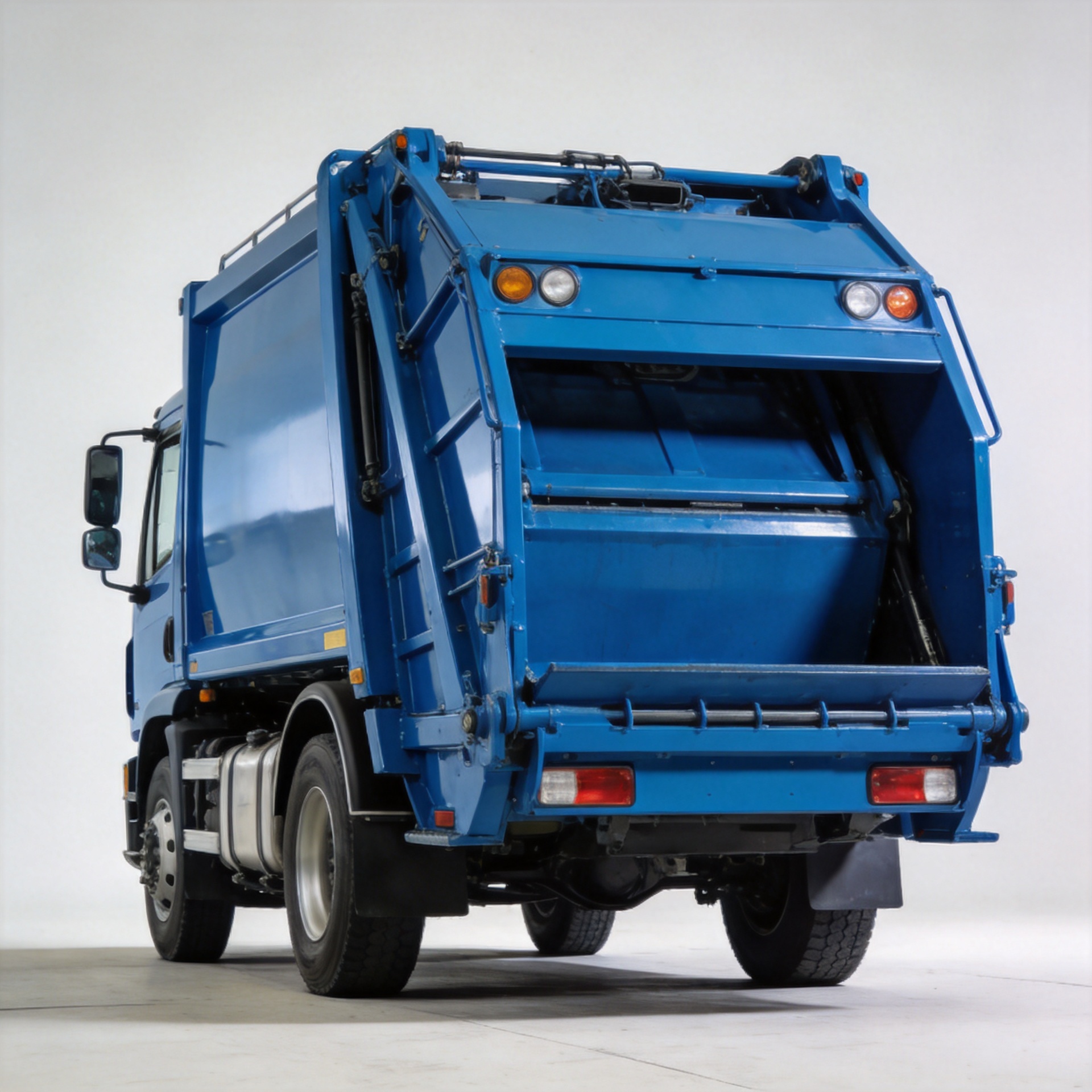
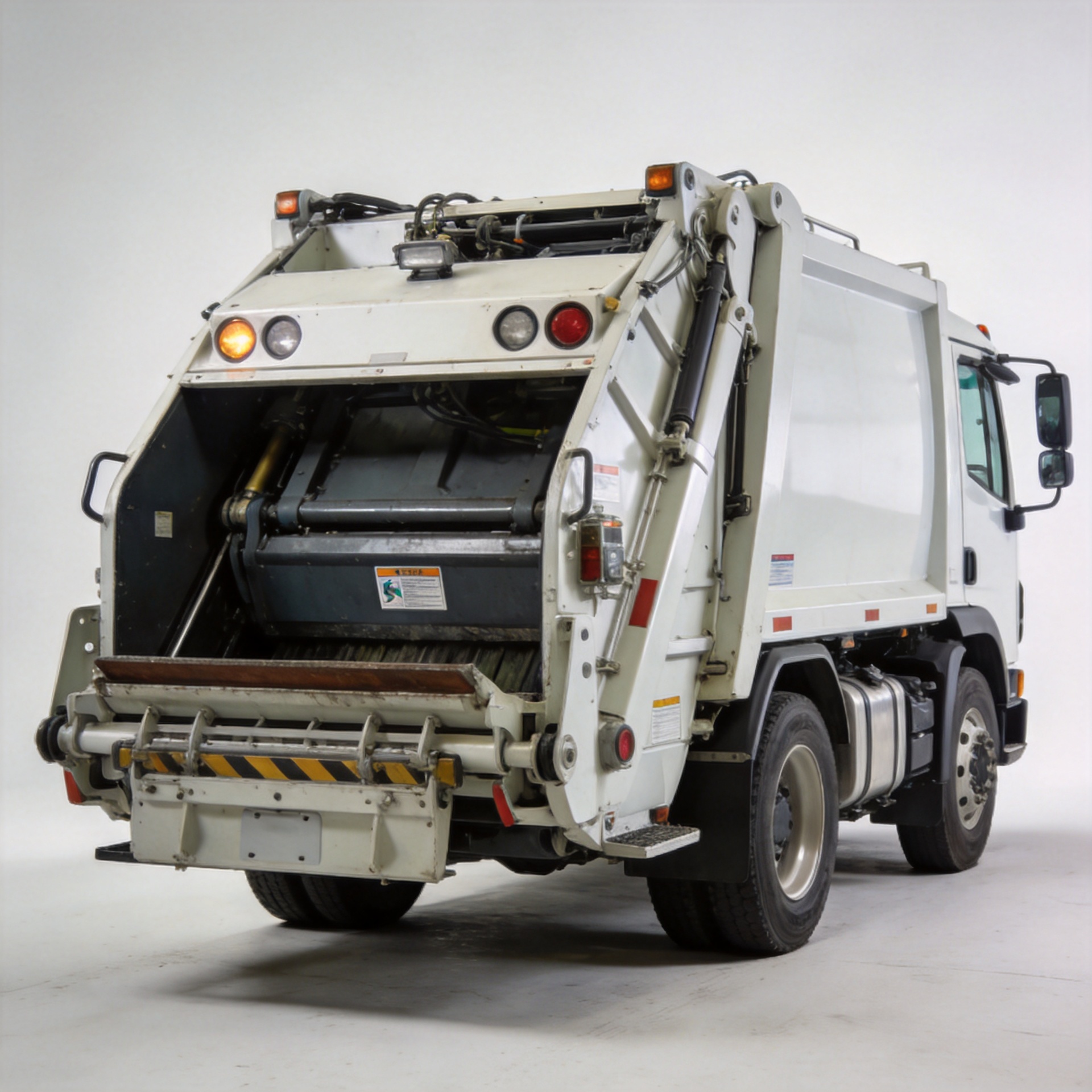
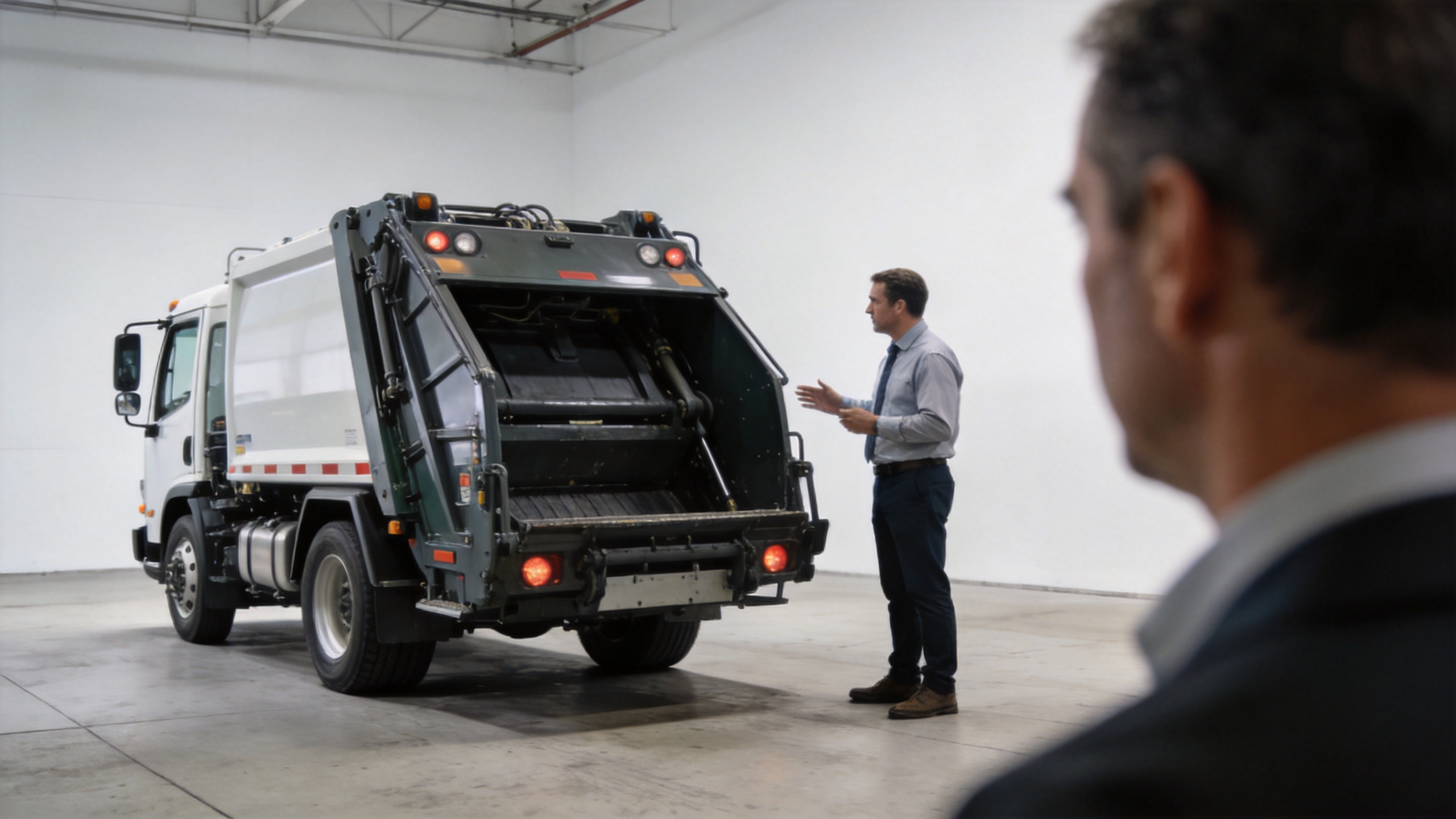
The loading system determines how a small trash truck works at every stop. Rear loaders can suit mixed bagged waste, manual collection, and variable collection points. Side-loading arrangements may support repeatable routes with standardized containers. Front-loading equipment is often associated with commercial dumpsters, yet its operating envelope, reach, and clearance requirements must be checked carefully on compact sites.
| Procurement question | Why it matters | Evidence to request |
|---|---|---|
| What enters the hopper? | Bagged waste, bins, and bulky items require different loading and sealing arrangements. | Hopper dimensions, accepted container types, loading demonstration. |
| Who performs collection? | Manual, semi-automated, and automated workflows affect crew safety and cycle time. | Operating sequence, controls, guarding, training plan. |
| How will compacted waste unload? | Discharge compatibility affects turnaround time and site safety. | Discharge procedure, body angle or ejection details, site-clearance drawing. |
| What is the daily duty cycle? | Short urban rounds and long transfer runs create different thermal and wear demands. | Duty-cycle assumptions, hydraulic layout, maintenance schedule. |
Comparing feature counts alone can be misleading. Ask instead whether operators can use the required functions safely and consistently in the intended route conditions. A simpler specification that crews can inspect and operate correctly may deliver better fleet availability than an option package that cannot be supported locally.
3. Verify the Chassis and Body as One Working System
A small trash truck is a chassis and refuse body working together. Ask suppliers to identify the chassis model, wheelbase, axle ratings, tire specification, engine and transmission configuration, PTO arrangement, hydraulic pump, cylinder layout, controls, and electrical architecture. Then compare those items against the expected payload and local registration rules.
Do not assume a compact body makes any chassis suitable. The body’s center of gravity, rear overhang, hopper loading pattern, and full-load axle distribution can change handling and legal compliance. If your route includes steep grades, uneven access roads, or frequent stop-start operation, ask for a written explanation of how the selected configuration addresses those conditions. Specifications measured under standard conditions can behave differently during continuous work in heat, dust, rain, or congested traffic.
For buyers evaluating a larger compactor configuration alongside a compact fleet option, the supplier’s HOWO 6×4 20cbm Compactor Garbage Truck with PLC Hydraulic System Rear Loading Rubbish Waste Management Vehicle is a real product-page reference. Its title identifies a 6×4, 20 cbm rear-loading compactor configuration; confirm every final body, chassis, PLC, capacity, and local-compliance detail directly with the supplier before procurement. It should not be treated as evidence that the same configuration fits a small-route project.
4. Turn the Specification into a Procurement Checklist
At the decision stage, a strong request for quotation separates mandatory requirements from preferred options. It also makes competing proposals easier to compare. Use the following checklist for each small trash truck bid:
- Route-fit evidence: turning envelope, overall dimensions, operating clearance, and a statement of assumptions.
- Weight and payload basis: chassis GVWR, axle ratings, body tare weight, expected payload basis, and limits under the applicable local rules.
- Compaction and loading evidence: waste types accepted, control sequence, cycle time assumptions, and safe operation requirements.
- Hydraulic and electrical documentation: circuit diagrams, component brands or specifications where available, service intervals, and fault-diagnosis process.
- Safety and compliance package: documents needed for the destination market, lighting and marking configuration, guarding, emergency stops, and inspection requirements.
- Delivery and acceptance plan: inspection points, pre-shipment photos or testing records, spare-parts list, operator training scope, and warranty terms.
Ask each bidder to respond in the same format. This avoids a common purchasing problem: one supplier submits a detailed technical schedule while another sends a short promotional list, leaving the team to reconstruct the missing comparison data. The lowest initial price is not automatically the lowest ownership cost when parts, training, downtime, and service access are considered.
5. Evaluate Supplier Support Before You Issue the Purchase Order
Commercial vehicle procurement does not end at the factory gate. Before committing, establish who will provide drawings, inspection records, packing information, spare-parts recommendations, remote troubleshooting, and warranty coordination. For export projects, also clarify the division of responsibility for destination-market approval, shipping documentation, and local commissioning.
CLW describes its business as a manufacturer and exporter of special-purpose vehicles, serving markets across Asia, Africa, South America, Oceania, and North America. That background can be relevant when discussing export handling, but it is not a substitute for a project-specific confirmation. Request the exact documents and support scope for your selected small trash truck, destination, and operating conditions.
For evaluation, prioritize verifiable commitments over broad promises. If a bidder states that spare parts or technical support will be available, ask what parts are recommended, what documentation will be delivered, who the contact point is, and what the process is when a hydraulic or electrical issue occurs.
RFQ Control Points for a Small Trash Truck
Use these requirements in a common quotation sheet. They help turn a small trash truck search into comparable, contract-ready evidence.
- Small trash truck route fit: submit access and turning assumptions.
- Small trash truck body: state nominal volume and tare mass.
- Small trash truck payload: state the axle-load basis.
- Small trash truck hopper: identify accepted waste and bin types.
- Small trash truck chassis: identify wheelbase and axle ratings.
- Small trash truck hydraulics: provide circuit and service details.
- Small trash truck controls: show normal and emergency controls.
- Small trash truck clearance: provide operating-envelope dimensions.
- Small trash truck documents: list delivery documentation.
- Small trash truck testing: define factory acceptance checks.
- Small trash truck training: define operator training.
- Small trash truck warranty: state coverage and exclusions.
- Small trash truck parts: provide recommended spares.
- Small trash truck support: define the fault-reporting process.
- Small trash truck approval: identify market-approval responsibilities.
- Small trash truck quote: separate mandatory and optional items.
- Small trash truck inspection: record serial and configuration checks.
- Small trash truck maintenance: define fluid and lubrication intervals.
- Small trash truck service: name the escalation contact in writing.
- Small trash truck contract: attach the approved technical schedule.
- Small trash truck acceptance: close nonconformities before sign-off.
6. Plan Acceptance Testing and Start-Up
Acceptance should reflect the requirements in the purchase order. Before shipment or handover, verify the vehicle identity, configuration, dimensions, safety devices, loading and discharge sequence, hydraulic response, controls, documentation, and agreed accessories. Record findings with photos, video where appropriate, and a signed checklist. If a test cannot be performed at the factory because it depends on site conditions, define how it will be checked after arrival.
Finally, train the people who will inspect and operate the truck. Even a well-selected small trash truck can underperform if daily checks, safe loading practices, lubrication, or fault reporting are inconsistent. Include a first-week operating review so the team can capture issues while supplier support and project records are easy to access.
Conclusion: Purchase the Route Solution, Not Just the Vehicle
A suitable small trash truck is one whose loading method, body size, chassis, legal weight basis, and support plan match the work it must do. Start with route evidence; translate it into a consistent technical specification; compare suppliers using written proof; and make acceptance testing part of the order, not an afterthought. That approach gives commercial buyers a clearer path from initial research to a defensible purchasing decision.